CONTACT
1
Want to get quotation of concrete batching plant at once? Contact Us. Quick reply is as efficient as our equipment.
+86-15978414719

Jul 14, 2026
A concrete plant is not selected by rated capacity alone. The right system must match placement demand, concrete mix designs, aggregate supply, transport distance, site constraints, and local permitting requirements. A plant that is too small creates delivery delays and rejected loads. A plant that is too large can leave capital, labor, and fuel capacity underused.
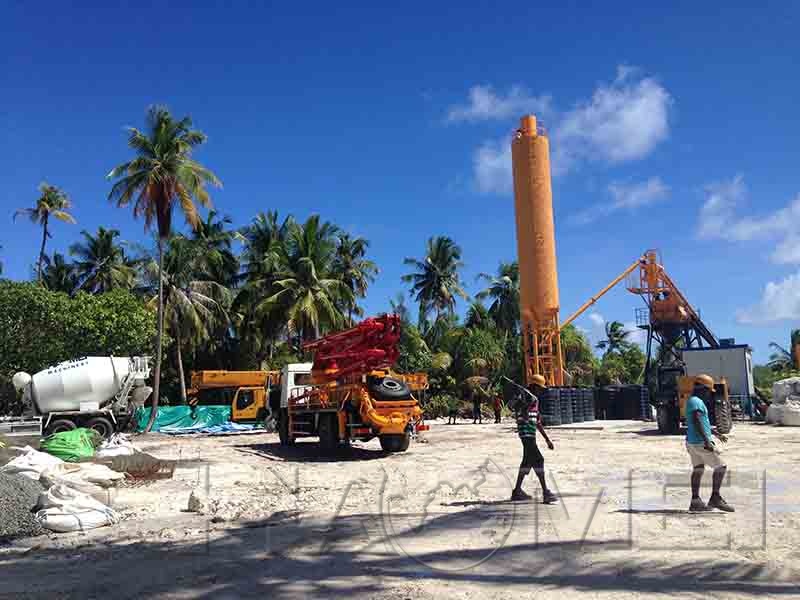
First, calculate the highest realistic hourly concrete demand, not average weekly consumption. Review pour schedules, pump output, truck cycle time, batch loading time, and contingency for equipment stoppages.
Use this basic planning check:
Required plant output = Peak placement volume per hour + operational allowance
The allowance should account for moisture corrections, truck loading delays, mixer cleaning, material replenishment, and maintenance. Ask each supplier whether its stated output is theoretical, nominal, or proven under a stated mix and loading condition.
| Operating condition | Better plant configuration | Reason |
|---|---|---|
| Long-term commercial ready-mix operation | Fixed foundation plant with larger aggregate storage | Supports repeat production and higher truck turnover |
| Bridge, road, or remote project | Relocatable or mobile unit | Reduces dismantling and reinstallation work |
| Small precast yard or local contractor | Compact plant with defined recipe range | Limits site footprint and capital exposure |
| High-strength or specialty concrete | Twin-shaft mixer and precise admixture dosing | Improves mixing energy and recipe repeatability |
| Multiple aggregate sizes | Larger bin count and conveyor system | Prevents manual aggregate changes between mixes |
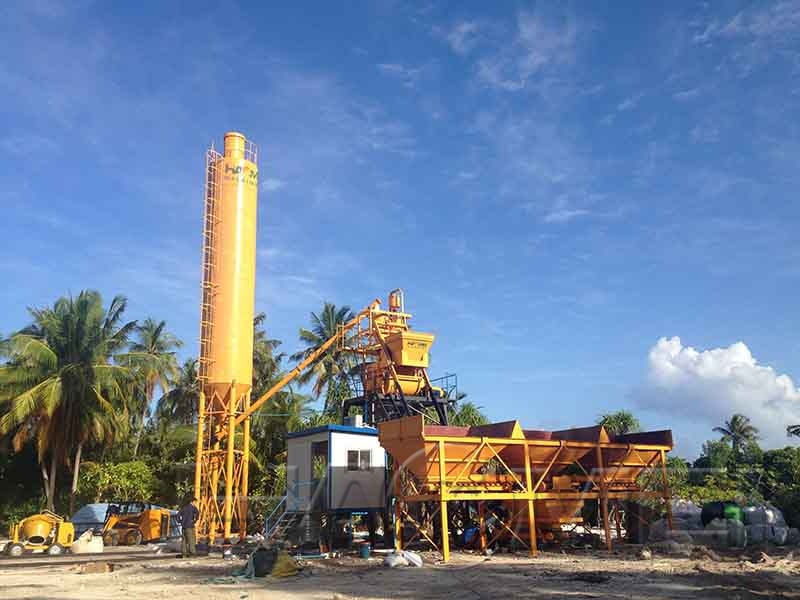
A fixed installation is generally appropriate where production will remain at one location for several years. A Stationary Batching Plant normally provides greater storage, wider configuration options, and easier integration with truck scales, recycling systems, and laboratory facilities.
For projects that move frequently, a Mobile Concrete Plant can reduce relocation time. Confirm the transport dimensions, axle arrangement, setup sequence, crane requirements, and local road-weight restrictions before ordering. Mobility does not remove the need for level ground, drainage, electrical supply, water storage, and dust control.
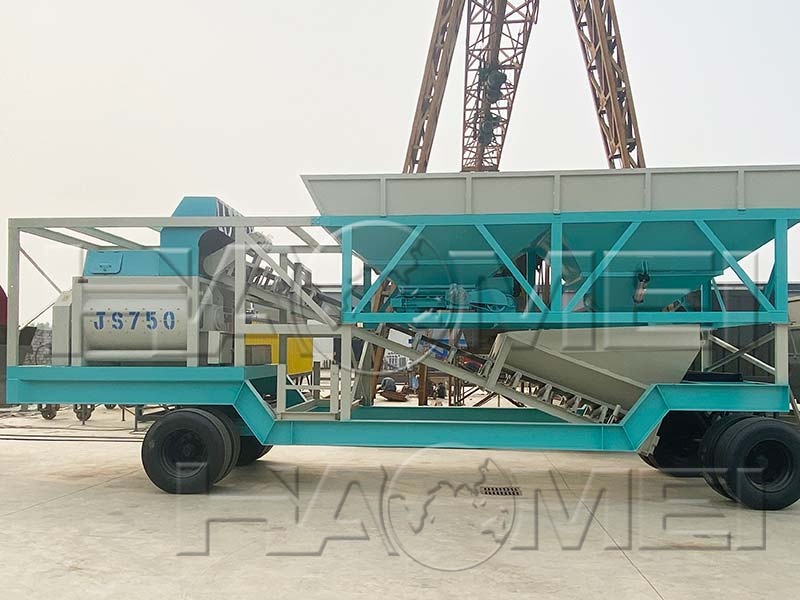
Request a technical data sheet that identifies the manufacturer and model of every major component. A low initial quote may omit silos, foundations, control-room equipment, dust collectors, water chilling, installation labor, or commissioning support.
| Component | What to verify | Problem prevented |
|---|---|---|
| Mixer | Type, batch volume, liner material, discharge gate design, motor power | Poor mixing consistency and excessive wear |
| Aggregate bins | Number of compartments, usable volume, gate control, vibration aids | Material bridging and limited mix flexibility |
| Weighing system | Scale capacity, load-cell brand, calibration procedure, batch records | Incorrect proportions and quality disputes |
| Cement silos | Capacity, filter area, pressure relief valve, level indication | Overfill incidents and cement dust release |
| Control system | Recipe management, audit trail, remote support, data export | Weak traceability and difficult troubleshooting |
| Water system | Meter accuracy, storage volume, heating or chilling options | Uncontrolled water-cement ratio |
For North American projects, ASTM C94/C94M specifies batching tolerances for concrete materials, including cementitious materials, aggregates, water, and admixtures. Project specifications may impose tighter requirements. Confirm that the plant can be calibrated and documented to meet the applicable specification rather than relying on a generic accuracy claim.
The mixer choice should follow the concrete product. Twin-shaft mixers are commonly selected for stiff, low-slump, high-strength, and precast mixes because of their mixing intensity. Planetary mixers are often used where fine materials, colored concrete, or specialized products require intensive mixing. Drum mixers can be suitable for simpler applications, but production and mix-design requirements should determine the choice.
Do not evaluate a concrete batching system only by equipment price. Compare delivered and installed cost over the expected operating period.
| Cost area | Include in the comparison |
|---|---|
| Civil works | Foundations, retaining walls, drainage, truck circulation, lighting |
| Utilities | Electrical connection, generator capacity, water supply, heating, fuel |
| Environmental controls | Bag filters, enclosed conveyors, washout area, wastewater handling |
| Installation | Freight, cranes, erection crew, commissioning, operator training |
| Operating cost | Power, fuel, wear liners, mixer blades, filter elements, labor |
| Downtime risk | Spare-parts stock, service response time, remote diagnostics |
Ask suppliers to separate these items in their quotation. This makes exclusions visible and prevents a low equipment price from becoming a high installed cost.
Site compliance must be reviewed before the purchase order. In the United States, airborne respirable crystalline silica is regulated under OSHA standards 29 CFR 1910.1053 for general industry and 29 CFR 1926.1153 for construction. OSHA machine-guarding requirements under 29 CFR 1910.212 and lockout/tagout requirements under 29 CFR 1910.147 may also apply, depending on the operation. State, local, and project rules can be more restrictive.
Plan for these controls:
Guard conveyor head and tail pulleys, mixer drives, and accessible moving parts.
Install emergency-stop devices that are visible, tested, and reachable from operating positions.
Use lockout/tagout procedures before servicing mixers, screw conveyors, and bin gates.
Provide dust collection at cement transfer points and inspect filters routinely.
Design truck routes to separate pedestrians from reversing mixers and loaders.
Build contained washout and recycling areas to prevent uncontrolled discharge of slurry water.
For used equipment, inspect the mixer shell, shaft seals, liners, blades, load cells, pneumatic valves, gearboxes, electrical cabinets, and cement-screw flighting. Request maintenance records, control-system backups, wiring diagrams, serial numbers, and evidence of prior calibration. Run a witnessed batch if possible, then compare actual batch weights, mix time, discharge performance, and control-system records against the stated specification.
Before committing to a concrete plant for sale, complete this procurement checklist:
Confirm peak hourly production and future demand.
Match mixer type to actual mix designs and slump range.
Verify site dimensions, truck circulation, foundation loads, and drainage.
Confirm power voltage, water availability, and fuel requirements.
Identify permit, dust, noise, wastewater, and silica-control obligations.
Require named component brands, warranty scope, spare-parts list, and commissioning plan.
Compare installed cost, not equipment price alone.
Define acceptance testing, operator training, calibration documents, and service response terms in the contract.
Original source: https://www.concretebatchplanthm.com/a/concrete-plant-for-sale.html
Tags: Concrete Plant for Sale Concrete Batching Plant
Prev: Planetary Concrete Mixer
Next: Pneumatic Cement Feeder Efficient Solution for Dust-Free Cement Conveying