CONTACT
1
Want to get quotation of concrete batching plant at once? Contact Us. Quick reply is as efficient as our equipment.
+86-15978414719

Jun 30, 2026
Across English Q&A searches and social discussions during the last quarter, people comparing road construction equipment have focused less on theory and more on practical decisions: output, cement use, plant layout, maintenance, and whether a soil cement plant is the same as a stabilized soil mixing plant. The answers below are written for teams preparing to purchase equipment for road base, airport subbase, industrial yards, and rural road upgrading.
| Popular question | Short answer | Why it matters |
|---|---|---|
| What is it used for? | Continuous mixing of soil, aggregate, cement, lime, fly ash, and water. | It determines whether the plant fits road base or subbase work. |
| What capacity is right? | Match tons per hour to paving width, layer thickness, haul distance, and work hours. | Oversizing raises cost; undersizing delays trucks and graders. |
| How much cement is needed? | Usually calculated as a percentage of dry aggregate weight. | Cement is often the largest variable cost. |
| Mobile or stationary? | Mobile suits frequent relocation; stationary suits long projects and high output. | Layout affects foundation, power, transport, and installation time. |
| What should be checked before purchase? | Mixer type, weighing accuracy, silo setup, controls, spare parts, and service response. | These points affect daily production stability. |
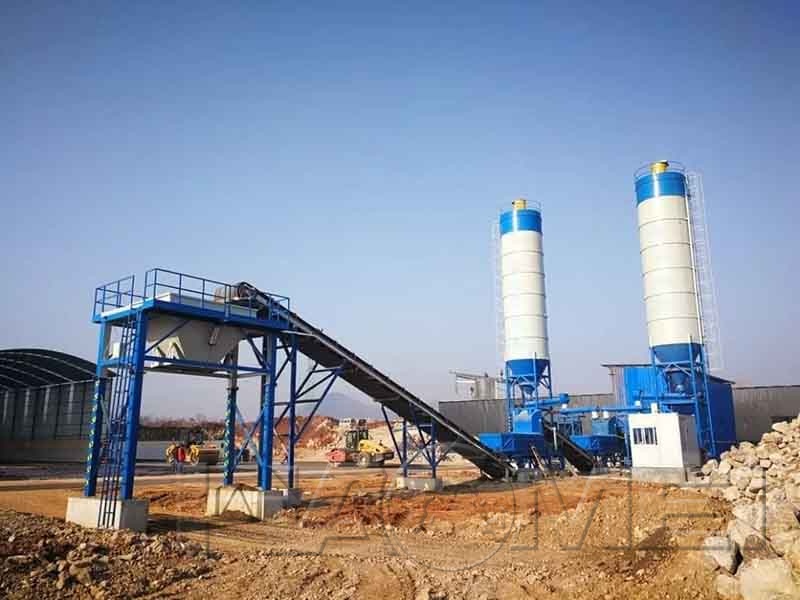
A soil cement plant produces a uniform stabilized mixture by feeding aggregate or soil through bins, adding cement or other binder, dosing water, and mixing everything continuously before discharge into trucks or a storage hopper. The finished material is normally used for road base, subbase, parking areas, airport foundations, and industrial platforms.
In many markets, the terms soil cement plant and stabilized soil mixing plant are used almost interchangeably. The difference is usually in local naming, not the core process. A plant described as a stabilized soil unit may handle cement-stabilized gravel, lime-stabilized soil, fly ash mixes, or multiple binder recipes. A soil cement plant name often highlights cement as the main binder.
For road base work, a Stabilized Soil Mixing Plant for Road Construction is often specified when the project requires continuous production, accurate cement dosing, and stable moisture control.
The right capacity depends on field consumption, not only the rated number on the brochure. A 600 t/h plant will not automatically deliver 600 tons every hour if trucks queue slowly, aggregate moisture changes, the loader cannot feed bins fast enough, or the jobsite has limited spreading equipment.
A practical way to estimate capacity is to start from the road section. Calculate the compacted volume per hour from paving width, layer thickness, and working speed. Then convert that volume into loose mixture tonnage using material density. Add a margin for truck cycle time and weather interruptions.
| Typical rated capacity | Suitable situation | Notes before selection |
|---|---|---|
| 300 t/h | Small roads, municipal repair, rural upgrades | Lower investment and easier relocation. |
| 400-500 t/h | County roads, industrial yards, medium highway sections | Often a balanced choice for mixed project sizes. |
| 600 t/h | Expressway base, airport subbase, long road sections | Needs reliable aggregate feeding and enough trucks. |
| 800 t/h and above | Large continuous projects | Requires strong site organization and power supply. |
If your project includes both stabilized base and asphalt surfacing, coordinate production plans with the later asphalt stage. For example, an Asphalt Mixing Plant may need different site access, fuel arrangements, and aggregate stockpile planning than a soil cement system.
Cement consumption is usually expressed as a percentage of dry aggregate or soil weight. If a project specifies 4 percent cement content, every 100 tons of dry material needs about 4 tons of cement. Actual consumption may change after laboratory tests, moisture correction, and field compaction trials.
A simple example helps. If the plant produces 500 tons per hour and the mix uses 4 percent cement, theoretical cement use is about 20 tons per hour. If cement arrives in 50-ton bulk tankers, the site needs a delivery schedule that prevents silo shortages during continuous operation.
| Cost item | What affects it | Practical note |
|---|---|---|
| Cement or binder | Mix design percentage and local price | Test the lowest qualified cement content, not the lowest possible number. |
| Aggregate handling | Loader distance, stockpile shape, moisture | Keep stockpiles separated and avoid contamination. |
| Power or diesel | Motor power, operating hours, generator efficiency | Confirm installed power, not only main mixer power. |
| Wear parts | Mixer blades, liners, conveyor belts | Abrasive aggregate increases replacement frequency. |
| Labor | Loader, operator, electrician, mechanic | Automation reduces manual adjustment but still needs trained staff. |
Do not judge a plant only by purchase price. Weighing accuracy, mixer durability, and control software can reduce waste. A small cement dosing error repeated all day may cost more than the price difference between two machines.
A mobile soil cement plant is attractive when the contractor moves between road sections or short-term jobs. It normally has modular frames, quicker installation, and reduced foundation work. However, mobile equipment may have limits in silo volume, maintenance space, and long-term operating comfort.
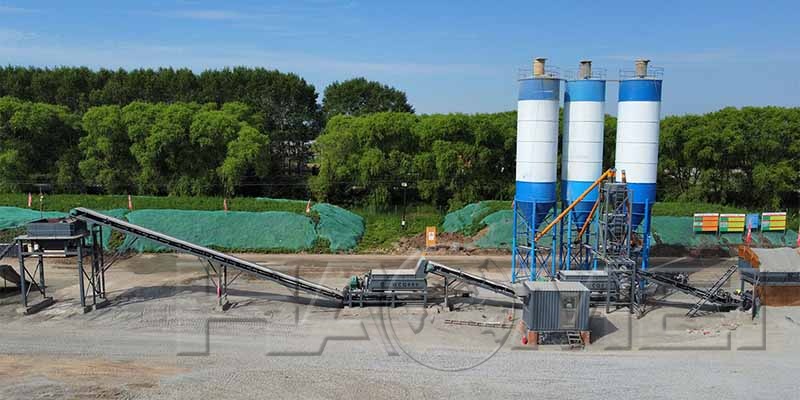
A stationary plant is usually better for high-volume work at one location. It can support larger aggregate bins, bigger cement silos, longer conveyors, and a more comfortable control room. Installation takes longer, but production can be smoother once the site is set up.
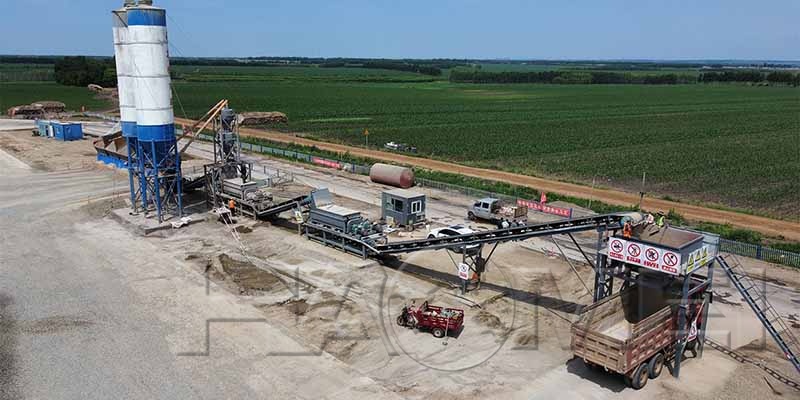
Choose mobile equipment when relocation cost is a major concern, the project schedule is fragmented, or the plant must follow the road alignment. Choose stationary equipment when output, storage, and long operating life are more important than fast movement.
Start with the mixing system. Twin-shaft continuous mixers are common because they create strong shearing and uniform blending. Ask about blade material, liner thickness, replacement access, and whether the mixer can handle your aggregate size and moisture range.
Next, check measuring accuracy. Aggregate belt scales, cement screw weighing, water flow meters, and automatic correction functions all affect mix quality. The control system should store recipes, production data, alarms, and calibration records. This helps when supervisors need proof that the mix met project requirements.
Also review the cement silo arrangement. One silo may be enough for a small project, but two silos provide better continuity when one is being refilled. Dust collection, safety valves, level indicators, and screw conveyor angle should be part of the discussion.
Before payment terms are finalized, request layout drawings, foundation loads, power requirements, installation schedule, spare parts list, and commissioning responsibilities. Ask the supplier to show production videos, factory test records, and references from projects using similar materials and capacity.
Original source: https://www.concretebatchplanthm.com/a/soil-cement-plant.html
Tags: Soil Cement Plant Stabilized Soil Mixing Plant Soil Cement Mixing Plant Road Base Equipment
Prev: When Should You Choose a Mobile Concrete Batching Plant