CONTACT
1
Want to get quotation of concrete batching plant at once? Contact Us. Quick reply is as efficient as our equipment.
+86-15978414719

Jul 07, 2026
Construction equipment purchasers often compare mixing machines by capacity, motor power, and price. In daily production, however, the real value comes from stable mixing quality, low wear cost, safe access, and easy fault handling. A planetary mixing unit is designed for these goals. Its pan structure, rotating arms, and intensive counter-current movement help produce uniform concrete in short cycles for precast plants, block lines, ready-mix stations, and specialty mortar production.
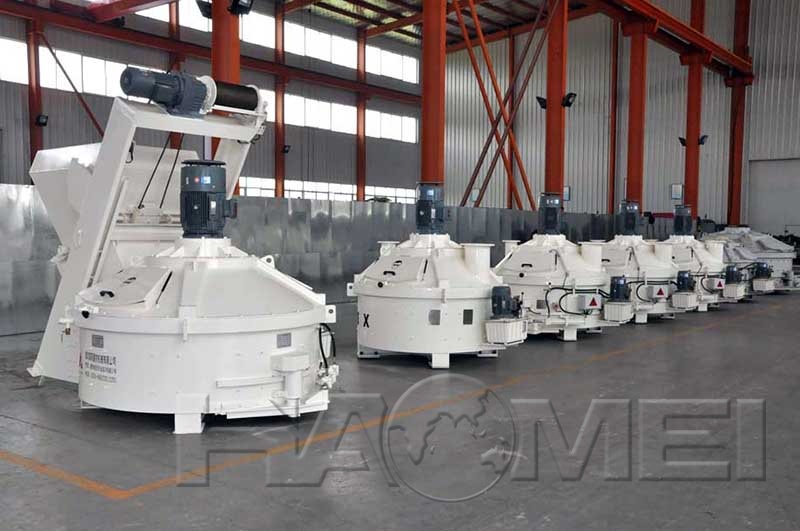
A planetary mixer uses a vertical mixing shaft and a pan-shaped mixing chamber. The mixing arms rotate around their own axis while also revolving around the center of the pan. This movement is similar to the path of planets, which is why the machine is named this way. The combined motion pushes material from the center to the wall and back again, reducing dead zones and improving cement, aggregate, water, admixture, and pigment distribution.
Scrapers are also important. Side scrapers prevent material from sticking to the inner wall, while bottom scrapers keep the pan floor clean during operation. This helps maintain batch consistency and reduces manual cleaning time. On well-designed models, scraper clearance can be adjusted as wear develops, which protects both mixing performance and liner life.
The discharge system is normally installed at the pan bottom. Pneumatic, hydraulic, or electric gate options may be used depending on plant design. A wide discharge opening supports fast unloading, while rubber seals or wear-resistant sealing strips help prevent slurry leakage. For plants comparing different mixing styles, a Concrete Mixer selection should consider not only rated output, but also mix type, aggregate size, discharge height, and automation level.
Modern units are often fitted with inspection doors, limit switches, centralized lubrication, overload protection, and moisture sensor ports. These details do not change the basic mixing principle, but they make daily operation safer and easier. A reducer mounted above the mixing chamber keeps the drive system away from wet concrete and helps simplify maintenance around the pan.
Material choice affects service life more than many operators expect. Concrete is abrasive, especially when hard aggregate, manufactured sand, or dry-cast formulas are used. For this reason, industrial mixers commonly use wear-resistant steel liners, alloy paddles, and strong cast or welded structures.
| Component | Common material choice | Practical advantage |
|---|---|---|
| Mixing pan liner | Wear-resistant alloy steel or high-manganese steel | Resists abrasion from sand and aggregate, extending replacement intervals |
| Mixing blades | Cast alloy steel, hard-faced steel, or replaceable wear parts | Maintains mixing shape and reduces power loss from worn paddles |
| Mixing arms | Cast steel or ductile iron with protective covers | Handles impact loads and protects the arm body from direct abrasion |
| Gear reducer housing | Heavy-duty cast iron or fabricated steel | Provides stable support for continuous production duty |
| Discharge gate seal | Rubber, polyurethane, or wear-resistant sealing strip | Limits slurry leakage and keeps the production area cleaner |
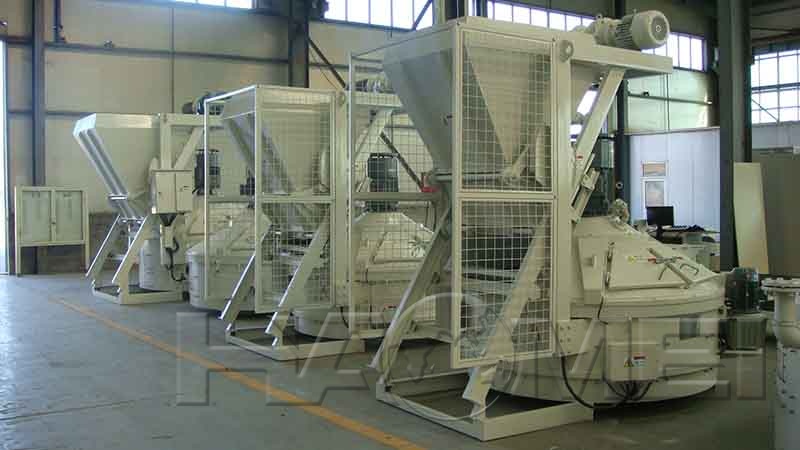
The main benefit of this mixing method is uniformity. Because material is repeatedly folded, sheared, and moved across the whole pan, the machine can handle plastic concrete, semi-dry concrete, colored concrete, fiber-reinforced mixes, and mortar. In precast production, this is helpful because molds require repeatable slump or workability from batch to batch.
Another advantage is compact installation. Compared with some horizontal mixers of similar batch volume, the vertical pan arrangement can fit into limited plant layouts. It is also convenient for feeding from aggregate scales above and discharging into skip hoists, belts, or concrete transport buckets below.
For producers planning a new batching system or upgrading an older machine, a Planetary Concrete Mixer for Sale should be evaluated by effective charging volume, motor power, liner thickness, reducer brand class, discharge method, and after-sales spare part supply. A lower initial price may not be economical if blades, liners, or seals are difficult to replace.
In daily operation, the equipment can improve production in several ways. Shorter mixing cycles increase plant output. Better dispersion reduces cement clumping and color variation. Cleaner discharge lowers material waste. Easier access to wear parts reduces downtime during scheduled maintenance. These advantages are especially valuable when the plant runs several shifts or produces high-value precast components.
Even a robust mixer needs disciplined maintenance. Operators should inspect liners, blades, scrapers, discharge seals, lubrication points, and electrical components at regular intervals. Before entering the mixing chamber, power must be isolated according to the plant safety procedure, and stored pneumatic or hydraulic energy should be released.
| Problem | Likely cause | Practical response |
|---|---|---|
| Uneven concrete color or strength variation | Worn blades, incorrect charging sequence, short mixing time, or water added too late | Check blade shape and clearance, confirm the formula sequence, and verify the set mixing time |
| Mixing time becomes longer than normal | Excessive liner build-up, blunt paddles, overloaded batch, or low motor efficiency | Clean hardened material, replace worn paddles, confirm batch weight, and inspect motor current |
| Abnormal noise from the top drive | Low reducer oil, bearing wear, loose bolts, or gear damage | Stop the machine, check oil level and condition, tighten mounting bolts, and arrange reducer inspection |
| Motor overload or frequent tripping | Overfilled pan, dry mix too stiff, jammed blade, or power supply imbalance | Reduce batch size to rated capacity, adjust water addition, remove obstruction, and test incoming voltage |
| Concrete leakage at discharge gate | Worn seal, gate not fully closed, aggregate trapped in the sealing area | Clean the gate seat, adjust the cylinder or actuator, and replace the seal if it is hardened or torn |
| Excessive material sticking to the wall | Scraper clearance too large, worn scraper plate, or mix with high adhesion | Adjust scraper gap, replace scraper plate, and review admixture dosage with the mix designer |
| Vibration during operation | Uneven material loading, loose foundation bolts, damaged arm, or unbalanced wear | Check feeding sequence, tighten anchor bolts, inspect arms, and replace wear parts in matched sets |
| Slow discharge | Gate opening too small, sticky mix, low air pressure, or hydraulic fault | Verify actuator pressure, clean the outlet, inspect valve function, and confirm the mix is within design range |
Original source: https://www.concretebatchplanthm.com/a/planetary-concrete-mixer.html
Tags: Planetary Concrete Mixer counter-current mixer wear-resistant liner concrete mixing equipment
Prev: How to Choose the Right Concrete Mixer Pump
Next: Concrete Plant for Sale