CONTACT
1
Want to get quotation of concrete batching plant at once? Contact Us. Quick reply is as efficient as our equipment.
+86-15978414719

Nov 02, 2026
Small and medium construction projects often face a familiar challenge: how to mix and deliver concrete efficiently without investing in oversized equipment or relying heavily on manual labor. Whether you are building rural homes, small commercial structures, drainage channels, foundations, roads, or agricultural facilities, selecting the right pumping and mixing solution can have a major impact on project cost, speed, and concrete quality.
A concrete mixer with pump combines concrete mixing and pumping functions in one machine. Instead of preparing concrete separately and then transporting it to a pump, contractors can mix materials on site and pump the fresh concrete directly to the required location. However, not every model is suitable for every job. Here are the key factors to consider before making a purchase.
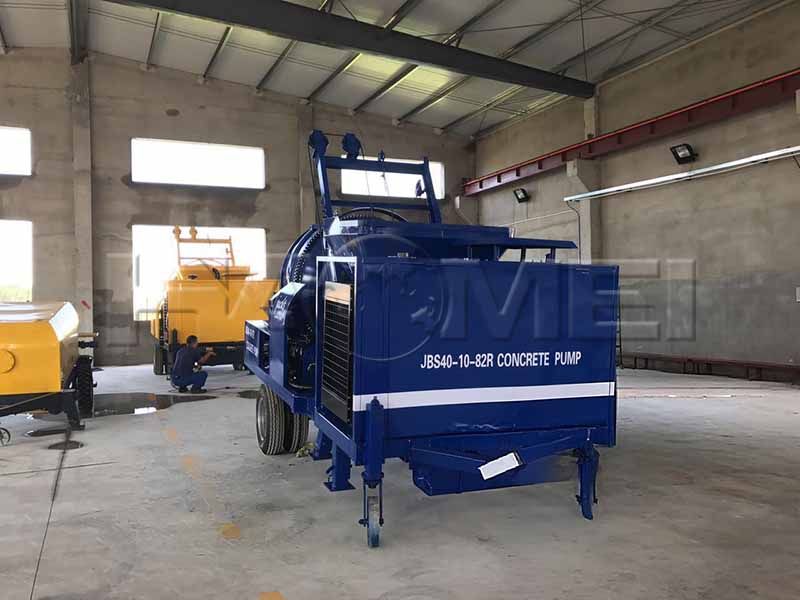
The first step is to understand the type and scale of projects you handle most frequently. Consider the following questions:
What is the average concrete demand per day?
How far must the concrete be pumped horizontally?
How high must the concrete be pumped vertically?
What types of concrete mixes will be used?
Will the equipment operate on urban sites, rural areas, or difficult terrain?
How frequently will the machine be used?
For small residential projects, a compact model with moderate output may be enough. For medium-sized commercial buildings, bridge works, or municipal projects, you may need a machine with greater pumping pressure, larger mixing capacity, and a stronger power system.
Choosing equipment that is too small can delay your schedule and overload the machine. On the other hand, selecting a unit that is too large may increase initial investment, fuel consumption, and maintenance costs unnecessarily.
Mixing capacity and pumping output are two of the most important technical indicators.
Mixing capacity refers to how much concrete the machine can produce during a certain period. Pumping output refers to the volume of concrete that can be delivered per hour. These two values should be well matched. If the mixer produces concrete more slowly than the pump can transport it, pumping may become intermittent. If the mixer produces too much concrete for the pumping system, material may accumulate and reduce efficiency.
For many small and medium construction projects, a production capacity of approximately 20 to 40 cubic meters per hour can be practical. However, the ideal range depends on labor availability, project schedules, concrete mix design, and site conditions.
A reliable concrete mixer machine with pump should maintain stable performance rather than only offering a high maximum output on paper. Ask suppliers for actual operating data, not just theoretical specifications.
Pumping distance is especially important for projects involving multi-story buildings, long foundations, tunnels, retaining walls, or remote placement areas.
You should check both:
Maximum horizontal pumping distance
Maximum vertical pumping height
Remember that actual performance can be affected by pipe length, bends in the pipeline, concrete slump, aggregate size, weather, and pipe wear. A machine may have a high stated pumping distance, but real working conditions can reduce its effective range.
For projects with demanding delivery requirements, choose a model with sufficient pressure reserve. This helps ensure stable pumping performance when concrete must travel farther or higher than usual.
Not all concrete mixes are equally easy to pump. The aggregate size, cement content, water-cement ratio, slump, additives, and sand ratio all influence pumpability.
Before choosing a machine, confirm the maximum aggregate size it can handle. If your projects require coarse aggregates, you need a pumping system with suitable valve design, cylinder diameter, and pipeline configuration.
The machine should also be compatible with the type of concrete you commonly use. For example, fine aggregate concrete may be suitable for some smaller pumps, while mixes containing larger gravel may require more robust equipment.
Poorly matched equipment can lead to pipe blockages, unstable pumping, higher wear, and inconsistent concrete quality. Working with an experienced supplier can help you select a machine designed for your typical material conditions.
Small and medium projects are often located in places with limited access to stable electricity. Therefore, power configuration is a major purchasing consideration.
Diesel-powered models are usually more suitable for remote sites, road construction, rural housing, and areas with unreliable electrical supply. They offer greater mobility and can work independently of the local grid.
Electric models may be preferable for urban projects, indoor work, or sites with strict noise and emission regulations. They can also offer lower operating costs when stable electricity is available.
Mobility is another essential factor. A trailer-mounted unit can be moved conveniently between job sites, while a compact design may be better for narrow roads or confined construction areas. Make sure the machine dimensions and weight are compatible with your transportation conditions.
For contractors, equipment downtime can be more expensive than the original purchase price. Select a machine with durable components, a simple operating system, and convenient maintenance access.
Key parts to inspect include the hydraulic system, mixing drum or mixer, pumping cylinders, wear plates, valves, hopper, electrical controls, and lubrication system. Quality components can reduce breakdowns and extend service life.
It is also important to ask about spare parts availability. A machine may be affordable initially, but if replacement parts are difficult to obtain, repair delays can affect your entire project schedule.
Choose a manufacturer or supplier that provides technical support, operating instructions, installation guidance, and after-sales service.
Price matters, but the cheapest option is not always the best investment. Consider the total cost of ownership, including fuel or electricity consumption, maintenance, spare parts, labor savings, transportation, and expected service life.
A well-selected concrete mixing pump can reduce dependence on separate mixers, pumps, loaders, and manual concrete transportation. Over time, this can improve productivity and profitability for contractors handling repeated small and medium projects.
The right choice is a machine that fits your real workload, site conditions, budget, and future business growth. By carefully comparing capacity, pumping range, power source, material compatibility, mobility, and after-sales support, you can invest in equipment that delivers reliable performance for years.
Original source: https://www.concretebatchplanthm.com/a/how-to-choose-the-right-concrete-mixer-pump-for-small-and-medium-construction-projects.html
Tags: concrete mixing pump
Prev: Cement Silo For Sale