CONTACT
1
Want to get quotation of concrete batching plant at once? Contact Us. Quick reply is as efficient as our equipment.
+86-15978414719

Oct 21, 2026
Twin shaft mixers are widely used in ready-mix plants, precast operations, block production lines, and other applications that require consistent concrete quality at high output. Their two horizontal shafts rotate in opposite directions, creating a strong overlapping mixing zone. This action moves aggregates, cement, water, admixtures, and supplementary materials through the full chamber instead of relying on material flow near one central shaft.
For construction equipment selection, the mixer should be assessed as part of the whole batching system. Required output, aggregate size, concrete slump, discharge schedule, available power supply, and maintenance access all affect the appropriate model and configuration. A properly selected unit can support stable production while reducing variation between batches.
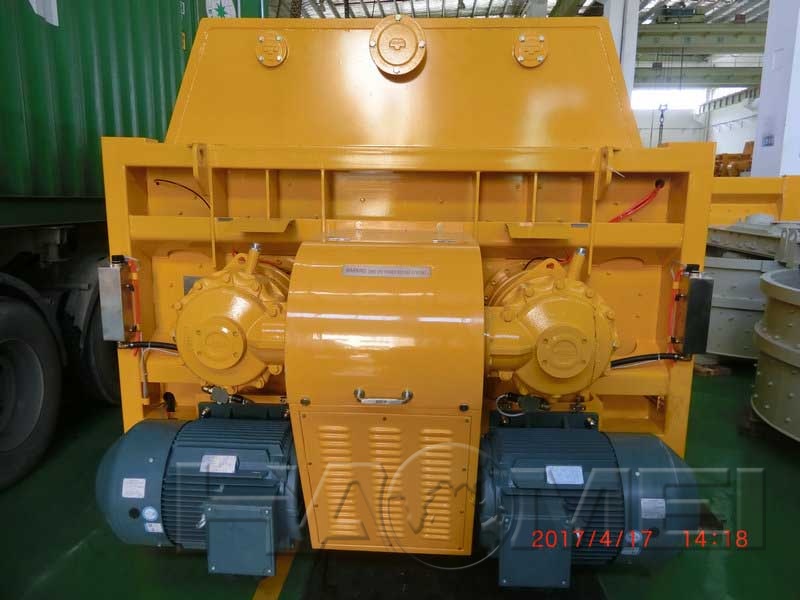
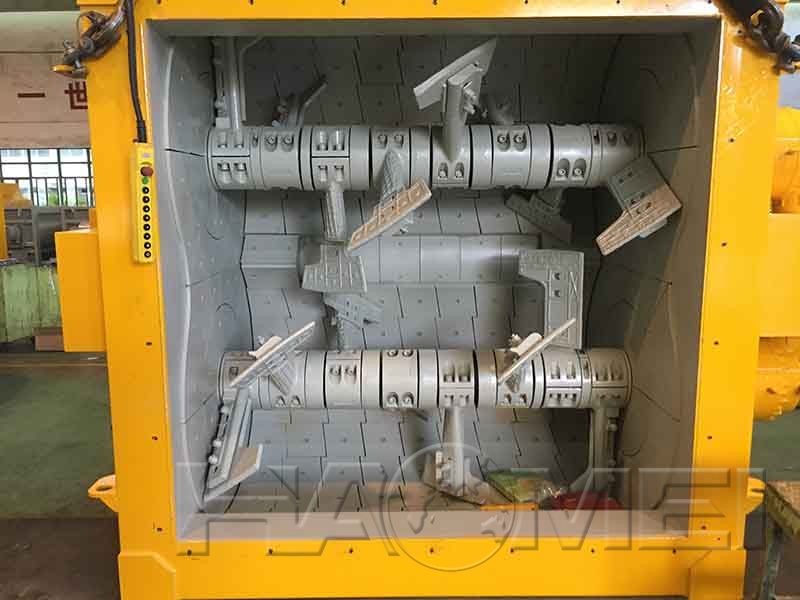
The central feature of this equipment is the horizontal mixing chamber. Two synchronized shafts carry arms and paddles that sweep through intersecting paths. The resulting circulation breaks up material pockets and distributes cement paste through the aggregate mass. This configuration is particularly suitable for low-slump, stiff, and aggregate-rich concrete mixes that can be more difficult for simpler mixer designs.
The chamber is normally designed with a robust steel structure to withstand vibration, repeated loading, and the abrasive action of aggregate. Replaceable liners protect the inner walls, while replaceable paddles and arms allow wear parts to be serviced without changing the complete mixing assembly. Actual liner material selection varies by manufacturer and application, but manganese steel, alloy steel, and high-chromium wear-resistant materials are commonly used where abrasion resistance is required.
| Component | Typical Design Purpose | Material Advantage |
|---|---|---|
| Mixing chamber | Holds and circulates the batch | Heavy steel construction supports repeated production cycles |
| Wall and floor liners | Protect chamber surfaces | Wear-resistant alloy options reduce abrasion damage |
| Paddles and arms | Move and shear materials | Replaceable construction simplifies maintenance planning |
| Shaft seals | Prevent slurry leakage near shaft ends | Multi-stage sealing systems help protect bearings when maintained correctly |
| Gearbox and drive system | Transmit power to both shafts | Synchronized rotation supports stable mixing action |
| Discharge door | Releases mixed concrete efficiently | Hydraulic or pneumatic actuation can improve discharge control |
A well-designed sealing system is especially important. Cement slurry entering the shaft-end area can damage seals, bearings, and related components. Many industrial units use a combination of sealing rings, grease lubrication, and pressure or flushing arrangements. Plant personnel should follow the manufacturer's lubrication intervals and use the specified grease type, because incorrect lubrication can shorten seal life.
For applications requiring dependable industrial construction, a Sicoma Twin Shaft Mixer can be considered where production requirements call for durable chamber components and controlled mixing performance.
The counter-rotating shafts create intensive movement throughout the batch. Instead of material simply rolling around the chamber, particles are lifted, folded, and redirected repeatedly. This can help achieve a more uniform distribution of cement, water, sand, stone, fibers, and admixtures within a controlled mixing period.
Key operating advantages include the following:
Fast blending action for common concrete, mortar, and precast formulations.
Good performance with dry and semi-dry mixes used for blocks, pipes, and precast elements.
Consistent batch quality when aggregate moisture, weighing accuracy, and mixing time are controlled.
Large discharge openings that can reduce waiting time between the mixer and receiving hopper, truck, or mold line.
Replaceable internal wear parts that support planned maintenance rather than complete chamber replacement.
Compatibility with automated batching controls, moisture correction systems, and admixture dosing equipment.
Mixing time should not be set only by a fixed number on a control screen. It should be verified through plant trials and concrete quality checks. Excessive mixing can increase wear and power consumption, while insufficient mixing may lead to inconsistent slump, uneven color, poor aggregate distribution, or variable strength results. Regular testing of fresh concrete properties remains necessary, particularly when changing aggregate sources, cement types, admixtures, or moisture conditions.
Equipment size should match the production line rather than simply selecting the largest available chamber. For example, a JS1500 Twin Shaft Mixer may suit projects needing substantial batch capacity, but the batching plant must also provide adequate aggregate feeding, cement delivery, water supply, discharge handling, and electrical capacity. A mixer cannot maintain its rated production potential if upstream weighing or downstream transport becomes the limiting point.
Routine inspection prevents many unplanned shutdowns. Before each production shift, operators should inspect chamber cleanliness, paddle condition, discharge-door movement, lubrication points, hydraulic lines, and unusual gearbox noise. Lockout and isolation procedures must be followed before entering or servicing the chamber.
| Symptom | Likely Cause | Practical Action |
|---|---|---|
| Uneven concrete consistency | Incorrect mixing time, worn paddles, inaccurate water dosing, or variable aggregate moisture | Check moisture correction, inspect paddle clearance, verify water meter accuracy, and adjust the validated mixing cycle |
| Material remains in chamber after discharge | Worn discharge-door seals, hardened buildup, or incomplete actuator travel | Clean hardened concrete safely, inspect door movement, and replace damaged seals or actuator components |
| Abnormal noise or vibration | Loose fasteners, worn bearings, damaged paddles, or gearbox issues | Stop operation, inspect mounting bolts and rotating parts, then have trained technicians assess bearings and drive components |
| Shaft-end leakage | Worn seals, insufficient lubrication, incorrect grease, or slurry buildup | Clean the area, confirm lubrication flow, inspect seal components, and replace worn parts promptly |
| High motor current | Overloaded batch, hardened material, mechanical drag, or incorrect paddle clearance | Remove buildup, confirm batch weight, inspect rotation resistance, and check the drive system before restarting |
| Slow or incomplete discharge | Low hydraulic pressure, air supply problem, blocked door area, or worn cylinder seals | Verify hydraulic or pneumatic supply, clear obstructions, and inspect cylinders, valves, and control signals |
Cleaning should occur before concrete hardens in the chamber. At the end of production, operators should discharge the remaining batch fully and wash the interior according to site procedures. Excess water should not be used as a substitute for controlled cleaning, because it can create slurry accumulation around seals and discharge areas.
Wear parts should be replaced based on measured condition, not only on calendar intervals. Monitor paddle thickness, liner wear, arm deformation, shaft-end leakage, and door-seal condition. Keeping commonly used paddles, liners, seals, and lubrication items in stock can reduce production interruptions when maintenance is required.
Original source: https://www.concretebatchplanthm.com/a/twin-shaft-mixers.html
Tags: Twin Shaft Mixers Concrete Mixing Equipment
Prev: Batch Plant vs. Drum Plant: Choosing the Right HMA Production System