CONTACT
1
Want to get quotation of concrete batching plant at once? Contact Us. Quick reply is as efficient as our equipment.
+86-15978414719

Oct 27, 2026
A cement silo is not simply a steel tank. It is a material-handling system that must match cement demand, delivery methods, batching output, site access, and local dust-control requirements. Selecting the wrong size or discharge arrangement can cause production stoppages, excess freight expense, cement bridging, or difficult relocation.
Start with the plant's actual cement use, not the nominal output of the batching plant. A concrete mix design might use 250 kg to 450 kg of cementitious material per cubic meter, but the correct figure is the approved mix design for the work.
Use this starting calculation:
Required storage capacity = Average daily cement use x Days between deliveries x Contingency factor
A contingency factor of 1.2 to 1.5 is commonly evaluated to cover delivery delays, weather, and demand variation. The final capacity should be confirmed against the supplier's bulk density data and the usable silo volume. A silo cannot normally be filled to its geometric volume because freeboard is needed for safe pneumatic filling and filter performance.
| Project condition | Practical silo approach | Operational reason |
|---|---|---|
| Small or temporary batch plant | 30 t to 50 t portable unit | Faster relocation and lower foundation demand |
| Regular ready-mix or precast production | 80 t to 120 t vertical unit | Reduces delivery frequency and supports steady batching |
| Remote project with uncertain cement deliveries | Two smaller silos rather than one large unit | Allows one compartment to remain available during maintenance or supply changes |
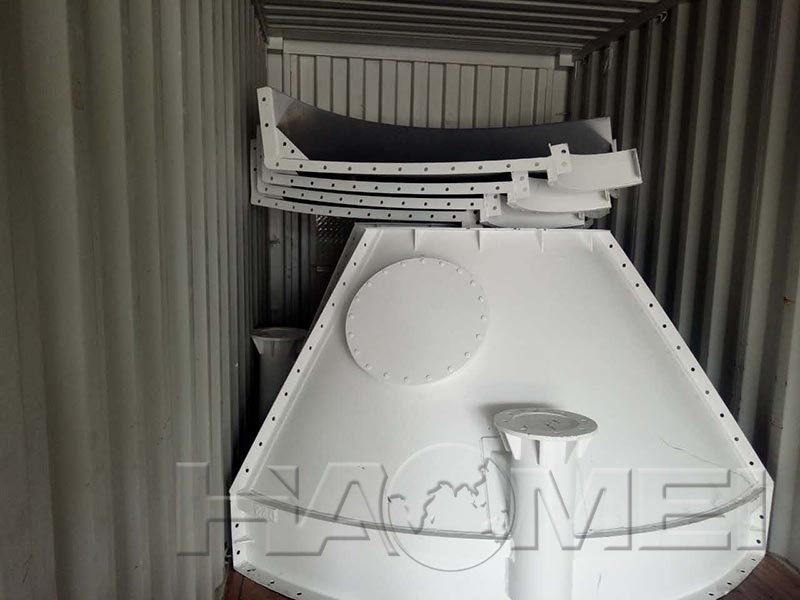
| Containerized or restricted-access site | Bolted model | Panels can be shipped and erected where one-piece transport is impractical |
A 100 t model may be appropriate for continuous work, but nominal tonnage alone is not enough. Confirm the usable capacity for the cement type, the truck tanker payload, and the plant's peak-day demand. Also check that site roads and turning areas can safely accommodate bulk pneumatic tankers.
For locations with limited transport access, a Bolted Cement Silo for Sale can reduce shipment dimensions. However, it requires controlled field assembly, sealed panel joints, and inspection of bolts after initial operation.
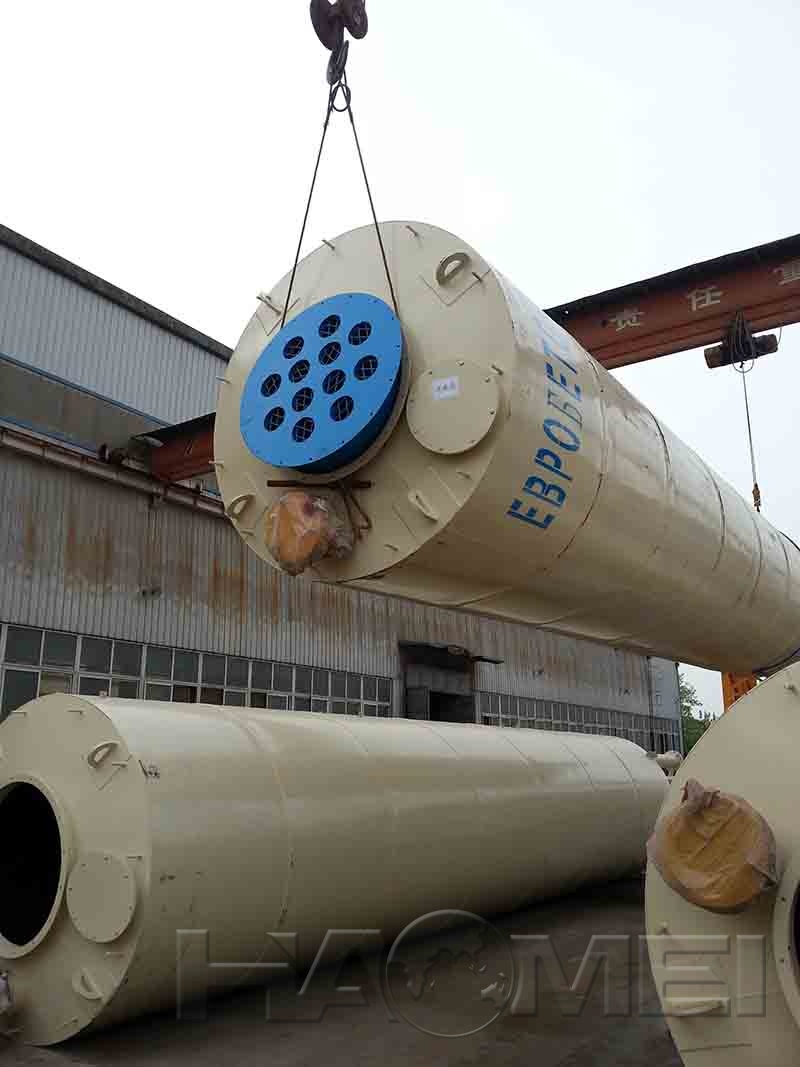
The shell style should follow the project duration and logistics plan. A welded vertical silo generally has fewer field joints and is suited to long-term installations. A bolted version is easier to transport in sections. A horizontal portable unit can be useful where height restrictions, rental fleets, or frequent moves outweigh its lower installed storage capacity.
| Item to specify | What to verify before ordering | Why it matters |
|---|---|---|
| Capacity | Nominal tonnes, usable volume, material bulk density assumption | Prevents overstating available inventory |
| Discharge cone | Cone angle, outlet diameter, fluidizing pads or air jets | Affects flow of cement and bridging risk |
| Screw conveyor | Diameter, length, motor power, rated throughput | Must match batch plant demand without overloading |
| Dust collector | Filter area, cleaning method, emissions documentation | Controls pressure during tanker filling and limits dust release |
| Level indicators | High-level alarm, low-level indication, independent overfill protection | Avoids overfilling and unexpected shutdowns |
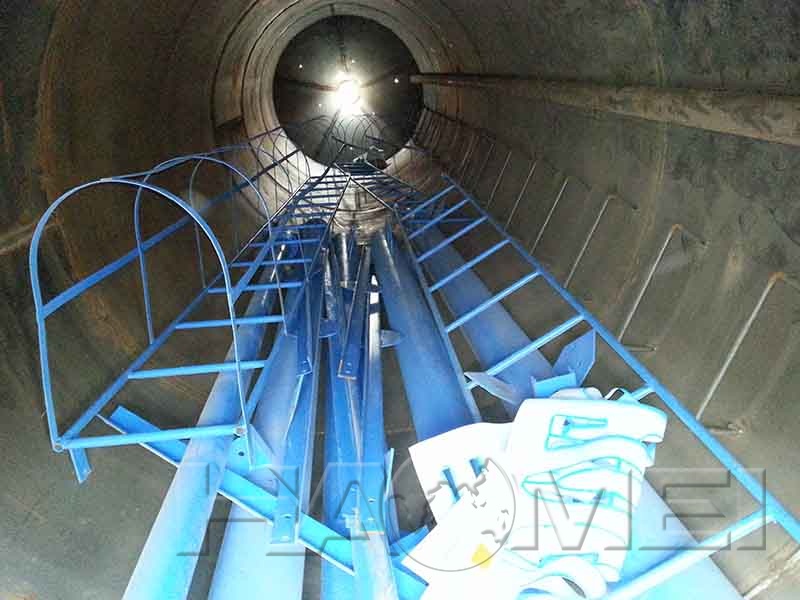
| Safety equipment | Pressure relief valve, access ladder, platform, guardrails | Reduces hazards during filling and maintenance |
| Foundation loads | Empty, full, wind, seismic, and tanker-fill load cases | Determines civil design and anchoring requirements |
Do not accept a quotation that only states tank volume and motor power. Request a scope list identifying the filter, pressure-relief device, level sensors, screw conveyor, electrical controls, supports, access platform, anchor bolts, and installation labor. Separate the supplied equipment from civil works, crane work, electrical connection, and commissioning.
For a fixed batching operation, a Vertical Cement Silo for Sale should be assessed with the loading plan for bulk tankers, the conveyor route, and the clearance needed for maintenance on the filter and top-mounted instruments.
Cement transfer creates pressurized-air and dust hazards. The U.S. Occupational Safety and Health Administration, OSHA, regulates respirable crystalline silica exposure in construction under 29 CFR 1926.1153 when silica-containing materials and work practices create exposure. Cement handling may also be subject to local occupational exposure, environmental permitting, and nuisance-dust rules. Requirements vary by jurisdiction, so the site operator should verify applicable rules with the local authority and its safety professional.
During pneumatic filling, keep personnel away from the top of the silo and do not bypass the pressure-relief device or high-level shutoff. A blocked filter or failed relief valve can cause dangerous overpressure. Lockout and tagout procedures are needed before servicing the screw conveyor, rotary valve, or any moving component.
Use this pre-purchase checklist:
Price comparisons should use total installed cost, not equipment price alone. A lower-priced silo can become expensive when freight, erection, crane mobilization, foundations, electrical work, filters, or replacement parts are omitted. Ask suppliers for itemized quotations in the same capacity class and compare freight terms, delivery schedule, warranty coverage, and exclusions.
For operating cost control, record each delivery tonnage, silo level, batch plant consumption, filter differential pressure, and conveyor running hours. These data points can identify unexplained inventory loss, filter blockage, inaccurate level sensing, or falling screw-conveyor performance before production is interrupted. Digital level monitoring and delivery records are increasingly valuable where several silos or project sites are managed from one office.
A weekly inspection should include filter condition, pressure-relief function, ladder and platform integrity, anchor-bolt condition, hose connections, screw-conveyor guards, and signs of water ingress. Moisture entering cement storage can cause caking and discharge problems, so inspect hatch seals and fill-pipe connections after severe weather and before extended shutdowns.
Original source: https://www.concretebatchplanthm.com/a/cement-silo-for-sale.html
Tags: Cement Silo Bolted Cement Silo
Prev: Compulsory Mixing vs. Drum Mixing: Why Batch Plants Deliver Better Asphalt Quality