CONTACT
1
Want to get quotation of concrete batching plant at once? Contact Us. Quick reply is as efficient as our equipment.
+86-15978414719

May 07, 2026
A concrete batch plant for sale today is not only a mixer with aggregate bins. It is a coordinated production system built for accurate dosing, stable mixing, lower cement waste, and easier daily maintenance. For contractors, precast yards, road projects, and ready-mix suppliers, the right plant can improve concrete consistency while reducing labor pressure on site.
Modern plants are usually supplied in stationary, mobile, and compact layouts. A fixed production base often benefits from a Stationary Batching Plant, while temporary projects and remote jobs may prefer a Mobile Concrete Plant that can be relocated with less foundation work.
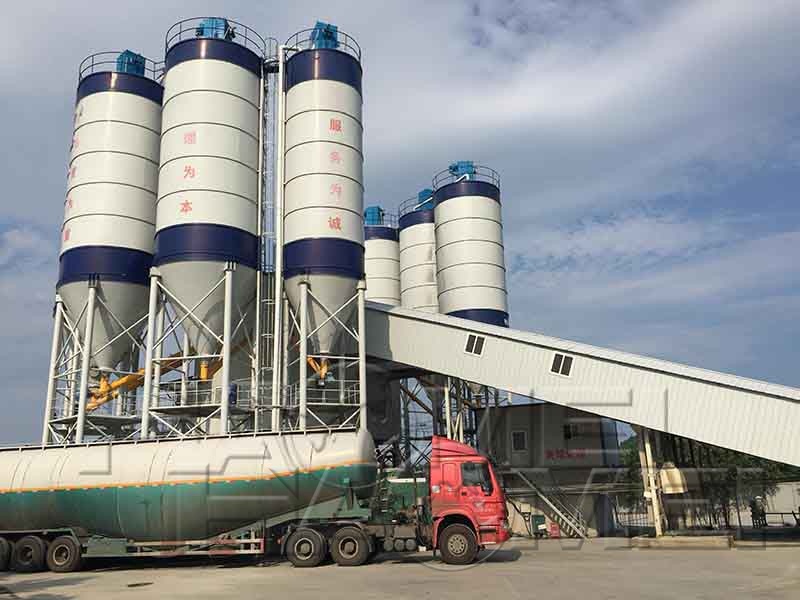
The heart of a batching plant is its weighing and mixing system. Aggregates, cement, water, and admixtures must be measured according to the mix design. In many projects, ready-mixed concrete is specified under standards such as ASTM C94/C94M or local equivalents, so stable batching accuracy is not optional. A good plant uses independent weighing hoppers, calibrated load cells, and a PLC control system to reduce human error.
Aggregate batching can use belt weighing or hopper weighing. Belt feeding is suitable for continuous high-output production, while hopper weighing is compact and simple to maintain. Cement and fly ash are normally weighed in sealed hoppers to reduce dust and moisture influence. Water and liquid admixtures are measured with flow meters or weighing tanks, depending on the plant configuration.
The mixer is another design focus. Twin-shaft mixers are common for commercial concrete because they provide strong forced mixing, short cycle times, and good uniformity for low-slump or medium-slump concrete. Planetary mixers are often used for precast products where color, fiber, or special admixture distribution must be very even.
| System Area | Design Detail | Practical Value |
|---|---|---|
| Aggregate storage | Multiple bins with individual gates | Supports several aggregate sizes and faster recipe changes |
| Weighing system | Load cells with digital signal processing | Helps maintain repeatable batch accuracy |
| Mixer | Wear-resistant liners and replaceable blades | Extends service life and lowers repair downtime |
| Control cabinet | PLC, touch screen, alarm records | Makes operation easier and fault tracing faster |
| Dust control | Cement silo filter and sealed screw conveyor | Improves site cleanliness and material recovery |
A well-designed control room also matters. Operators should be able to select formulas, monitor batch weights, print production records, and see alarm prompts from one screen. Interlocking logic is built into the program so that the mixer, discharge gate, belt conveyor, screw conveyor, and weighing hoppers work in the correct sequence.
Material choice affects both service life and operating cost. The main frame is usually made from carbon steel sections with shot blasting and anti-rust coating. For coastal areas, humid regions, or chemical exposure, stronger surface treatment and regular repainting intervals are recommended. Cement silos require reliable welding, proper venting, a pressure relief valve, and a dust collector to support safe loading from bulk tankers.
Wear parts should be chosen with special care. Mixer liners and blades are commonly made from high-chromium cast iron or wear-resistant alloy steel. These materials cost more than ordinary steel, but they resist abrasion from sand, stone, and cement paste far better. That means fewer shutdowns for replacement and more stable mixing clearance over time.
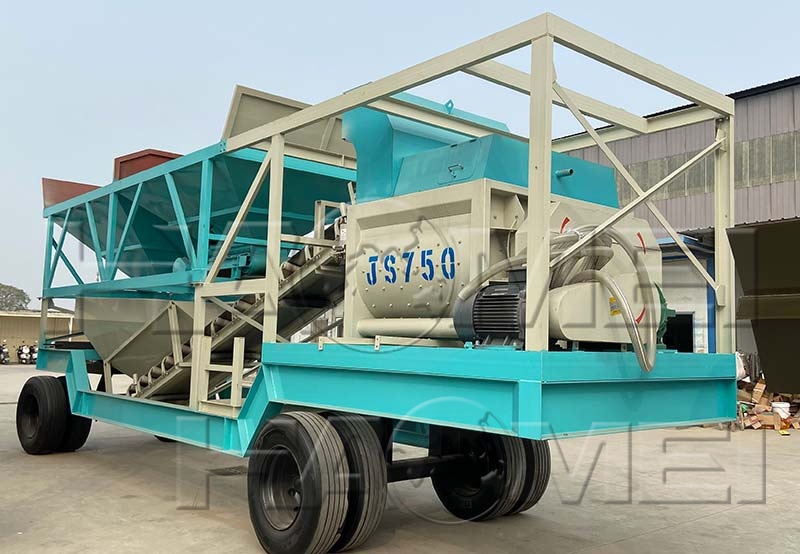
The advantages of using this equipment are seen in production control, labor savings, and material management. Manual mixing is difficult to repeat accurately, especially when several trucks or pouring points are working at once. A batching plant stores mix formulas, measures each material automatically, and discharges concrete in planned cycles. This helps reduce cement overuse, water variation, and inconsistent slump.
| Plant Type | Suitable Application | Main Advantage |
|---|---|---|
| Small compact plant | Rural roads, small buildings, repair work | Lower investment and simple installation |
| Mobile plant | Highway, bridge, temporary project sites | Fast relocation and reduced civil foundation work |
| Stationary plant | Ready-mix supply, large infrastructure, precast base | High output and long-term production stability |
| Containerized plant | Sites with transport limits or export projects | Easier shipping and modular assembly |
Energy efficiency also improves with proper layout. Shorter conveyor routes, correctly sized motors, and automatic start-stop control reduce idle running. Sealed conveying and dust collection help recover fine material instead of losing it to the air. Water systems can include recycling tanks where local regulations allow, although recycled water quality must be checked because it can affect setting time and concrete strength.
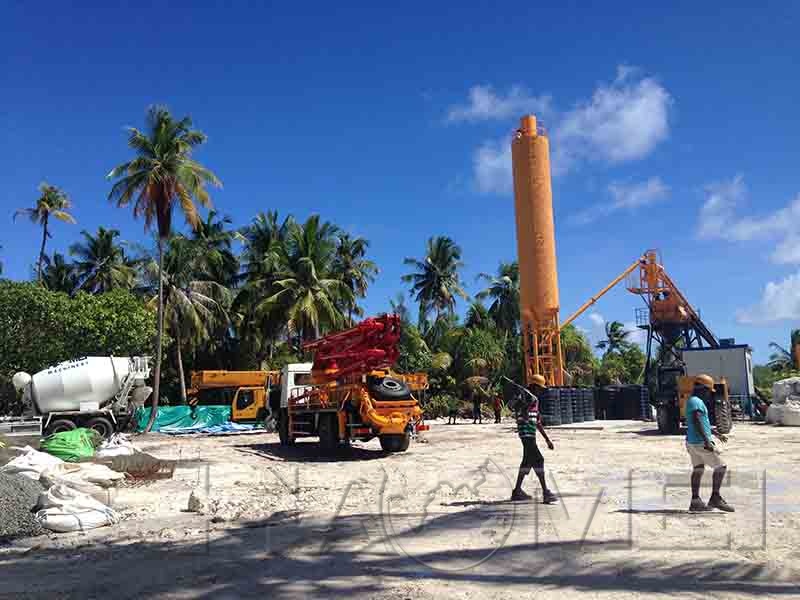
For daily operation, safety devices should not be treated as accessories. Emergency stop buttons, belt pull-cord switches, mixer access limits, silo pressure protection, and electrical overload protection all reduce risk. The safest plant is one where operators can clean, inspect, and replace parts without entering dangerous areas during operation.
Even a high-quality batching system can develop problems if calibration, cleaning, lubrication, or electrical inspection is ignored. The most effective maintenance method is to record symptoms early, confirm the affected system, and fix the cause instead of only clearing the alarm.
| Problem | Possible Cause | Practical Solution |
|---|---|---|
| Unstable aggregate weight | Material bridging, sticky sand, load cell drift | Clean bin walls, check moisture, recalibrate the scale |
| Cement weighing is slow | Blocked silo outlet, worn screw conveyor blade, poor venting | Inspect aeration pads, clean screw conveyor, check silo filter |
| Mixer current is too high | Overloaded batch, dry material buildup, worn bearing | Reduce batch size, wash mixer chamber, inspect bearings and seals |
| Slump changes between batches | Water error, aggregate moisture change, admixture pump fault | Test moisture, verify water scale, clean admixture pipeline |
| Discharge gate leaks | Seal wear, air cylinder problem, hardened concrete on gate | Replace seals, check air pressure, remove hardened buildup |
| PLC alarm appears repeatedly | Loose sensor cable, limit switch damage, unstable power supply | Tighten terminals, replace faulty switch, check voltage stability |
Calibration should be scheduled, not left until a complaint appears. Scales should be checked with certified test weights according to local metrology requirements. If the displayed weight changes when the hopper is empty, inspect the load cell mounting bolts, junction box moisture, and cable shielding.
Cleaning is equally important. Concrete buildup inside the mixer changes blade clearance and increases motor load. At the end of each shift, the mixer, discharge chute, aggregate weighing hopper, and belt tail area should be washed or cleared as required. Cement screw conveyors should not be washed with water internally unless the manufacturer allows it, because cement hardening inside the tube can cause serious blockage.
Lubrication points include mixer shaft seals, reducer bearings, conveyor bearings, and air compressor components. Use the oil or grease grade recommended by the equipment manufacturer. Mixing different grease types can reduce lubrication performance, so maintenance teams should label lubricants clearly and keep records.
When selecting a plant, compare the project output demand, concrete type, installation space, local power supply, aggregate conditions, and expected relocation frequency. A machine with the correct capacity and material configuration will be easier to operate than an oversized or undersized unit, and it will support more stable concrete production throughout its service life.
Original source: https://www.concretebatchplanthm.com/a/concrete-batch-plant-for-sale.html
Tags: Concrete batch plant concrete mixing equipment
Prev: What To Check Before Buying a Stationary Batching Plant