CONTACT
1
Want to get quotation of concrete batching plant at once? Contact Us. Quick reply is as efficient as our equipment.
+86-15978414719

Apr 28, 2026
In the last 3 months, English Q&A searches around stabilized soil mixing plant selection have focused less on theory and more on capacity, setup, mix accuracy, mobility, and real project fit. The questions below follow the practical wording seen on Quora-style discussions, Google searches, and road construction equipment forums, with original answers written for contractors comparing new equipment options.
| No. | Recent Question Style | What The Question Usually Means |
|---|---|---|
| 1 | What is a stabilized soil mixing plant used for? | The user wants to know whether it fits road base work. |
| 2 | How many tons per hour do I need? | The user is trying to match plant output with project progress. |
| 3 | What materials can it mix? | The user wants to confirm soil, aggregate, cement, lime, and water compatibility. |
| 4 | Is a mobile plant better than a stationary plant? | The user is comparing relocation needs and installation cost. |
| 5 | What affects the final price? | The user wants a realistic purchase budget, not only the machine price. |
A stabilized soil mixing plant is mainly used to produce cement-stabilized base, lime-stabilized soil, and other semi-rigid base materials for roads, highways, airports, industrial yards, parking areas, and municipal projects. It continuously doses aggregate or soil, cement or lime, water, and sometimes additives, then mixes them into a uniform material that can be transported to the paving site.
It is not the same as a concrete batching plant. A concrete plant focuses on concrete with stricter slump and strength requirements for structural use. A stabilized soil plant focuses on high-volume base material with controlled moisture and binder content. The finished material is usually compacted by rollers rather than poured into formwork.
For road contractors planning base layer production, a Stabilized Soil Mixing Plant for Road Construction is often selected when the project requires continuous output, stable grading, and lower unit material cost compared with outsourcing.
Capacity should be selected according to daily laying volume, working hours, truck cycle time, and paving width. Choosing the largest model is not always the best decision. If trucks, graders, pavers, or rollers cannot keep up, the plant may idle often, wasting fuel and labor.
| Plant Capacity | Suitable Project Type | Practical Notes |
|---|---|---|
| 300 t/h | County roads, urban streets, small industrial yards | Easier to operate, lower investment, suitable for moderate demand. |
| 400 t/h | Standard highway sections and city infrastructure | A balanced option for many contractors. |
| 500 t/h | Long road sections with steady truck supply | Requires organized site logistics and enough hauling vehicles. |
| 600 t/h or above | Expressways, airports, large base construction | Best for high-volume continuous production. |
A simple estimate helps. If your project needs 2,400 tons of stabilized base per day and you plan 8 effective working hours, a 300 t/h plant can theoretically meet the target. However, rain, truck waiting time, calibration, and shift changes reduce real output. Many planners allow a 15% to 25% production margin.
Most plants can handle graded aggregate, natural soil, crushed stone, sand, cement, lime, fly ash, and water. The exact mix depends on local specifications and laboratory design. A common cement-stabilized base may contain 3% to 6% cement by weight, but this is not universal. Heavy-duty highways may require different gradation and strength targets than rural roads.
Material accuracy matters more than many new equipment investors expect. If cement dosing fluctuates, strength becomes uneven. If water control is poor, compaction becomes difficult. If aggregate feeding is inconsistent, the final base may segregate.
| Material System | What To Check Before Purchase |
|---|---|
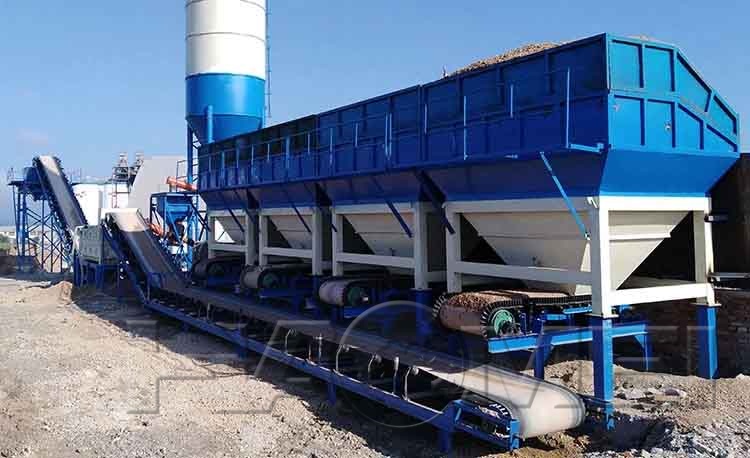
| Aggregate bins | Number of bins, belt width, anti-blocking design, feeding accuracy. |
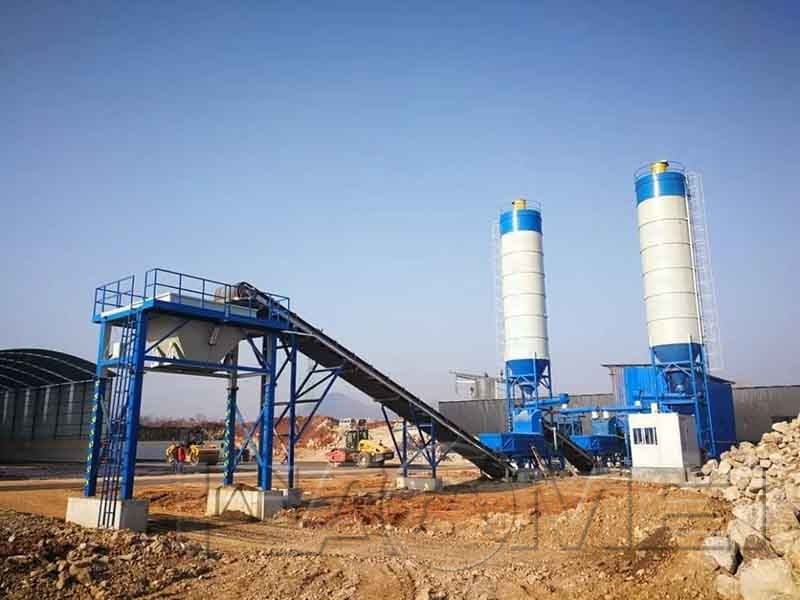
| Cement silo and screw conveyor | Silo capacity, dust filter, level indicator, screw conveyor stability. |
| Water system | Flow meter accuracy, pump reliability, automatic adjustment. |
| Mixer | Mixing time, blade wear resistance, liner quality, easy maintenance. |
| Control system | Formula storage, automatic weighing, alarm records, calibration support. |
Ask the manufacturer whether the plant can save multiple formulas. This is useful when one project needs different base layers or when the machine serves several job sites.
A mobile plant is better when the project moves often, the construction period is short, or the contractor needs to reduce foundation work. It usually has modular units, faster assembly, and easier relocation. A stationary plant is better when the site is fixed, production will continue for years, or the owner wants larger silos, wider aggregate bins, and heavier-duty support structures.
| Comparison Item | Mobile Type | Stationary Type |
|---|---|---|
| Relocation | Faster and easier | Slower, needs more dismantling work. |
| Foundation | Usually lighter | More civil work required. |
| Output range | Medium to high | Medium to very high. |
| Long-term stability | Good for temporary sites | Strong for fixed production bases. |
| Initial site work | Lower | Higher. |
For contractors already running asphalt paving operations, the decision should also match the whole roadbuilding chain. If the base course plant feeds the same projects as an Asphalt Mixing Plant, scheduling both plants together can reduce truck waiting, improve paving continuity, and make project management easier.
The final cost is shaped by more than rated capacity. Major factors include the number of aggregate bins, cement silo size, weighing accuracy, mixer structure, automation level, dust collection, steel thickness, electrical components, installation service, freight distance, and local compliance requirements.
A low quotation may exclude silos, control room, air compressor, installation tools, or commissioning support. It may also use lighter steel, a smaller mixer, or limited automation. That can look attractive at the purchase stage but become expensive if the plant stops often during peak construction.
| Cost Factor | Why It Matters |
|---|---|
| Capacity | Higher output requires larger belts, mixer, motors, and structure. |
| Automation | Better controls reduce manual error and help stabilize mix quality. |
| Silo configuration | Larger storage reduces cement delivery pressure. |
| Mixer quality | Wear-resistant parts lower downtime during abrasive aggregate use. |
| Freight and installation | Long-distance transport and crane work can change the total budget. |
| After-sales support | Fast spare parts supply protects production schedules. |
Before placing an order, request a configuration sheet, layout drawing, power list, foundation requirements, wearing parts list, and commissioning plan. Also ask for calibration procedures for cement, aggregate, and water. These documents show whether the quoted plant is ready for real production or only attractive on paper.
A strong purchase decision comes from matching the plant to project volume, material conditions, site mobility, and maintenance ability. When those points are clear, a stabilized soil mixing plant becomes a dependable production center for road base construction rather than just another piece of heavy equipment.
Original source: https://www.concretebatchplanthm.com/a/stabilized-soil-mixing-plant.html
Tags: Stabilized Soil Mixing Plant soil cement plant road construction equipment cement stabilized base
Prev: Different Types of Cement Silos Which one to Choose
Next: What To Check Before Buying a Stationary Batching Plant