CONTACT
1
Want to get quotation of concrete batching plant at once? Contact Us. Quick reply is as efficient as our equipment.
+86-15978414719

Jul 21, 2026
Recent English-language searches and Q&A discussions often focus on whether a twin shaft concrete mixer can deliver stable output, handle demanding mixes, and justify its operating cost. The five questions below reflect the practical concerns raised by contractors, batching-plant operators, and precast producers evaluating new mixing equipment.
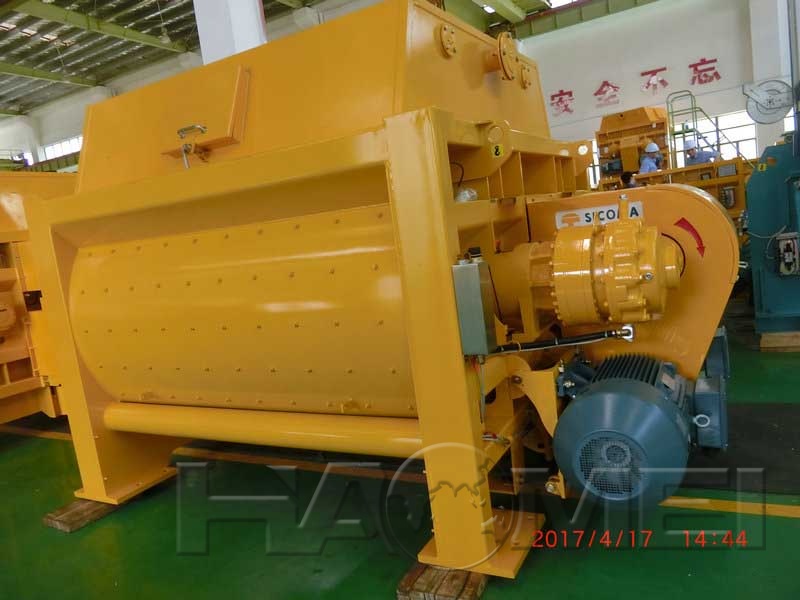
A twin shaft concrete mixer is usually better for medium- to high-volume work and for mixes that are difficult to blend evenly. Its two horizontal shafts rotate in opposite directions, creating a vigorous mixing zone throughout the chamber. This action helps distribute cement paste, sand, aggregate, water, admixtures, fibers, and pigments more consistently than the rolling action of a drum mixer.
A drum mixer can still be suitable for small site jobs, simple conventional concrete, and applications where output requirements are modest. However, a twin shaft design is generally preferred when mix uniformity affects product quality, such as ready-mix production, pavers, blocks, precast elements, high-strength concrete, and low-slump mixes.
| Mixer Type | Typical Strength | Typical Limitation | Suitable Applications |
|---|---|---|---|
| Twin shaft mixer | Fast, intensive, uniform mixing | Higher initial equipment and maintenance cost | Batching plants, precast, blocks, high-performance concrete |
| Drum mixer | Simple operation and lower investment | Slower mixing and less aggressive blending | Small projects and conventional site concrete |
| Planetary mixer | Excellent for dry and colored mixes | Usually lower capacity per batch | Pavers, refractory products, special precast |
For projects requiring repeatable batch quality, a twin shaft mixer provides better control over the finished concrete than a basic rotary mixer.
Capacity should be selected by required concrete output per hour, not only by the nominal mixer model number. Manufacturers may state a discharge capacity, charging capacity, or compacted concrete capacity, and these figures are not always identical. A practical calculation should include batch volume, mixing time, material charging time, discharge time, truck loading rhythm, and expected downtime.
For example, a 0.75 m3 discharge mixer running approximately 40 to 50 batches per hour may support output near 30 m3 to 37.5 m3 per hour under favorable material handling conditions. Actual production can be lower when aggregate delivery, weighing accuracy, or truck availability slows the cycle.
| Nominal Mixer Size | Approximate Discharge Volume | Common Plant Output Range | Typical Use |
|---|---|---|---|
| JS500 | 0.5 m3 | 20-25 m3/h | Small commercial yards, blocks, site supply |
| JS750 | 0.75 m3 | 30-37.5 m3/h | Small to medium batching plants |
| JS1000 | 1.0 m3 | 45-60 m3/h | Ready-mix and precast production |
| JS1500 | 1.5 m3 | 60-75 m3/h | Higher-output commercial concrete plants |
A JS750 Twin Shaft Concrete Mixer is often considered when a plant needs a balanced combination of output, transportability, and moderate power consumption. Select the model only after confirming the capacity of the aggregate batching machine, cement silo, conveyor, and control system.
Yes, this is one of the main reasons operators choose this mixer type. Twin shafts create intersecting material paths, helping break up dry pockets and circulate coarse aggregate through the cement paste. This is particularly useful for low water-cement ratio concrete, roller-compacted concrete, fiber-reinforced mixes, and mixes containing mineral additives such as fly ash, slag, or silica fume.
The mixer should still be configured for the actual recipe. Low-slump concrete may need stronger drive motors, abrasion-resistant liners, and a suitable paddle arrangement. Fiber mixes require a controlled feeding sequence so fibers do not form balls. Adding fibers gradually after part of the mortar phase has formed normally produces more even distribution.
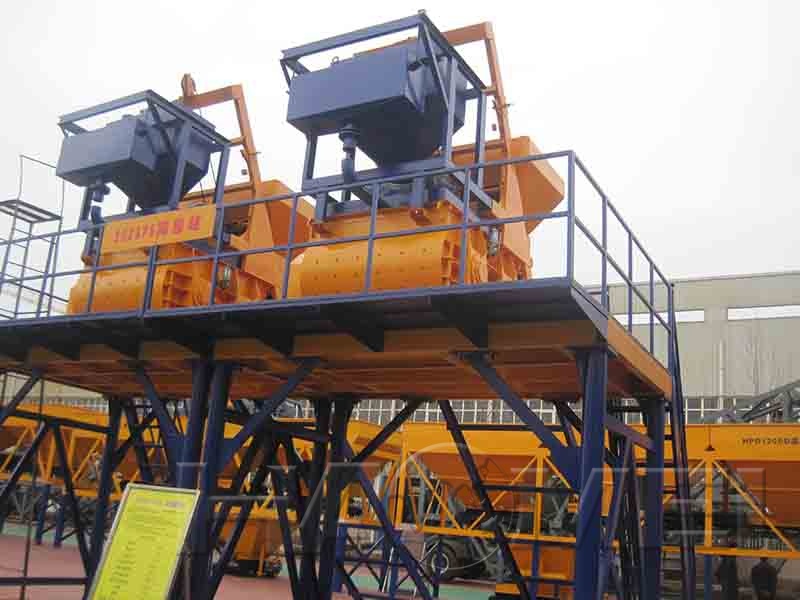
Mixing time also matters. Running a batch too briefly can leave uneven moisture and cement distribution. Running it too long can increase wear and may cause aggregate degradation in sensitive recipes. Many plants establish their mixing time through trial batches and routine slump, temperature, and strength checks.
Power demand depends on mixer size, aggregate grading, moisture content, batch volume, and concrete stiffness. A small model may use two motors in the 18.5 kW to 30 kW range, while larger production mixers can require substantially more installed power. The motor rating does not mean the mixer consumes that maximum level continuously, but it should be used when sizing the electrical supply and generator.
Energy use per cubic meter can be improved by operating near the recommended batch volume, maintaining correct blade clearances, and preventing excessive mixing time. Underfilled batches may seem easier on the machine, but they can lower plant efficiency because the same charging and discharge cycle is repeated more often.
Before ordering, verify these electrical details with the supplier:
For operations using a recognized mixing-platform design, a Sicoma Twin Shaft Mixer configuration can be evaluated for its drive arrangement, wear components, and compatibility with automated batching controls.
Wear parts are normal operating items in a twin shaft concrete mixer. The fastest-wearing components are typically mixing blades, arms, side scrapers, floor liners, wall liners, discharge-gate seals, and the discharge-gate mechanism. Their service life varies widely because abrasive aggregate, dry mixes, improper cleaning, and excessive blade clearance can accelerate wear.
Inspect the mixer chamber daily after production. Blades that sit too far from the liner allow material to build up, reducing mixing efficiency and placing extra load on the drive system. Most models allow blade adjustment as the liners wear. Replacing a worn blade early is usually less expensive than allowing it to damage an arm or mixer shell.
| Inspection Area | Recommended Check | Warning Sign |
|---|---|---|
| Mixing blades and scrapers | Daily visual inspection | Rounded edges, poor material movement, buildup |
| Liners | Weekly thickness check | Uneven wear, exposed fasteners, thin sections |
| Shaft seals | Daily leak inspection | Cement slurry or grease escaping near shafts |
| Gearboxes and motors | Scheduled oil and temperature checks | Noise, vibration, overheating |
| Discharge gate | Check every shift | Slow opening, leakage, incomplete discharge |
A reliable maintenance routine should include washing the chamber before concrete hardens, lubricating specified points, checking fastener torque, and recording wear-part replacement dates. These simple controls help preserve mix quality and prevent unplanned stoppages during production.
Original source: https://www.concretebatchplanthm.com/a/twin-shaft-concrete-mixer.html
Tags: Twin Shaft Concrete Mixer Twin Shaft Mixer Concrete Mixing Equipment JS750 Twin Shaft Concrete Mixer
Prev: Pneumatic Cement Feeder Efficient Solution for Dust-Free Cement Conveying