CONTACT
1
Want to get quotation of concrete batching plant at once? Contact Us. Quick reply is as efficient as our equipment.
+86-15978414719

Sep 30, 2026
A double shaft paddle mixer is designed for rapid, uniform blending of cement, aggregates, water, admixtures, and other construction materials. Its two horizontal shafts rotate in opposite directions, creating an intensive overlapping mixing zone. This action breaks up material clusters and distributes cement paste around aggregate particles efficiently.
For concrete plant operators and equipment investors, this mixer type is valued for its high output, reliable consistency, and ability to process relatively stiff concrete mixes. Equipment selection should consider the required batch capacity, aggregate size, discharge arrangement, power supply, daily operating hours, and local maintenance support.
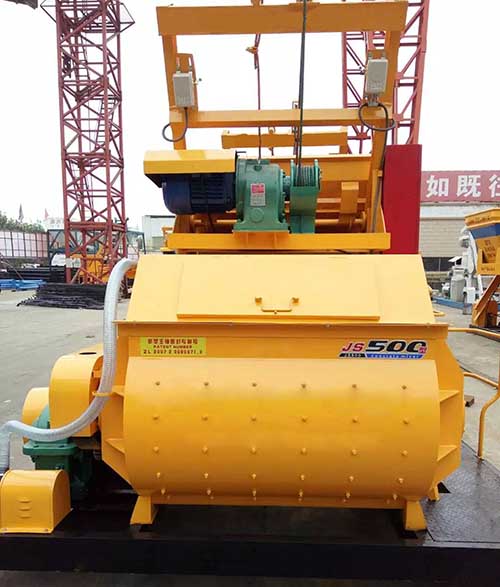
The mixing chamber is normally formed from a heavy-duty steel shell with replaceable internal liners. Two parallel shafts carry paddles arranged at calculated angles. During operation, the shafts move material from the tank ends toward the central mixing area while also lifting, folding, and shearing the batch. The resulting three-dimensional material movement is more intensive than the movement produced by simple drum-style equipment.
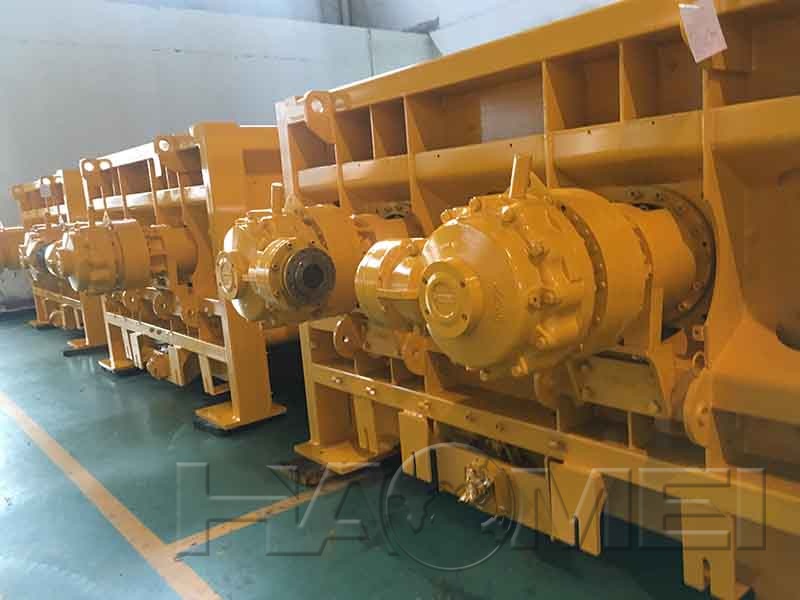
A dependable drive system commonly includes an electric motor, reduction gearbox, flexible coupling, and synchronized shaft transmission. The gearbox reduces motor speed while increasing torque, allowing the paddles to mix dense material without frequent overload. Shaft-end seals are especially important because they protect bearings and transmission parts from cement slurry, fine sand, and moisture.
Many units use a large discharge door on the bottom of the chamber. A pneumatic or hydraulic actuator opens the door quickly after mixing, helping reduce batch cycle time and limiting leftover material in the tank. For medium-capacity applications, a JS500 Twin Shaft Concrete Mixer can be suitable where stable output and compact installation are required.
| Main Component | Design Function | Practical Advantage |
|---|---|---|
| Twin mixing shafts | Rotate in opposite directions | Creates strong cross-flow and uniform mixing |
| Paddles and arms | Lift, split, and push material | Reduces unmixed pockets in the chamber |
| Wear liners | Protect the chamber shell | Extends service life and simplifies repairs |
| Shaft-end seals | Keep slurry away from bearings | Reduces leakage and bearing damage |
| Bottom discharge door | Releases finished concrete quickly | Supports shorter batching cycles |
The materials used in high-wear areas directly affect operating cost. Mixing paddles, arms, and chamber liners are often made from abrasion-resistant alloy steel or high-chromium wear-resistant cast iron. These materials are selected because aggregate particles continuously strike and slide across the internal surfaces. Correct hardness and toughness are both necessary. A part that is very hard but too brittle may crack under impact, while a soft part may wear too quickly.
The main mixer body is generally fabricated from structural steel plate with reinforced sidewalls and end plates. Shafts are typically produced from high-strength alloy steel and machined carefully to maintain alignment. Good shaft alignment lowers vibration, protects seals, and avoids uneven paddle-to-liner clearance.
Compared with lower-intensity mixing equipment, this design offers several construction-production advantages:
The actual output depends on mix design and operating conditions. Large aggregate, low water content, high powder content, and extended mixing time can increase power demand. Do not overload the rated capacity. Overfilling reduces material circulation, increases motor current, accelerates wear, and may produce inconsistent concrete.
For higher-volume batching plants, a JS1500 Twin Shaft Mixer may offer the chamber capacity needed for larger batches, provided the aggregate feeding and discharge systems are matched to its production rate.
Routine inspection prevents most unplanned stoppages. Before starting the equipment, check that the chamber is empty, paddles are secure, lubricants are at the correct level, guards are installed, and the discharge door closes fully. After production, clean residual concrete before it hardens. Hardened buildup changes paddle clearance, increases mixing resistance, and can cause imbalance.
| Problem | Likely Cause | Recommended Action |
|---|---|---|
| Motor overload or high current | Overfilled chamber, hardened buildup, damaged bearing, incorrect mix sequence | Reduce batch load, clean chamber, inspect bearings, confirm charging order |
| Poor concrete uniformity | Worn paddles, incorrect mixing time, poor aggregate grading, insufficient water distribution | Measure wear clearance, adjust mixing time, verify material quality, inspect spray pipes |
| Material leakage at shaft end | Worn seal parts, inadequate lubrication, misaligned shaft | Stop operation, inspect seal assembly, lubricate as specified, check alignment |
| Excessive vibration or noise | Loose fasteners, worn gearbox, paddle contact, bearing damage | Tighten fasteners, inspect gearbox oil, check paddle clearance, replace faulty bearings |
| Discharge door does not open or close fully | Low air pressure, hydraulic fault, buildup around door, damaged limit switch | Check pressure and actuator, remove buildup, test electrical limit devices |
When paddles and liners wear, replace them before the chamber shell is exposed. Record wear-part replacement dates and measure paddle-to-liner clearance during scheduled maintenance. If the clearance becomes too large, mixing efficiency declines because material passes through the gap instead of being moved and sheared effectively.
Lubrication must follow the equipment manufacturer's schedule. Grease points, gearbox oil, and hydraulic or pneumatic systems require the correct lubricant type and clean working conditions. Mixing equipment should be locked out and isolated from electrical, pneumatic, and hydraulic energy before maintenance begins. Only trained personnel should enter the mixing chamber, and entry procedures should follow site safety rules.
A well-maintained double shaft paddle mixer provides consistent concrete quality, predictable cycle times, and long-term value for batching plants, precast yards, road projects, and other demanding construction applications.
Original source: https://www.concretebatchplanthm.com/a/double-shaft-paddle-mixer.html
Tags: Double Shaft Paddle Mixer Twin Shaft Concrete Mixer
Prev: Twin Shaft Paddle Mixer
Next: Where to Find A Reliable Diesel Concrete Mixer Pump Manufacturer