CONTACT
1
Want to get quotation of concrete batching plant at once? Contact Us. Quick reply is as efficient as our equipment.
+86-15978414719

Nov 11, 2026
Choosing the right batching plant capacity is one of the most important decisions for a concrete producer, contractor, or project investor. While a higher-capacity plant may appear to be the obvious choice, the best option depends on your actual production requirements, project duration, budget, transportation conditions, and future expansion plans.
For many small and medium-sized projects, the decision often comes down to a 25 m³/h plant or a 35 m³/h plant. Both are compact, practical, and suitable for a wide range of concrete applications. However, their differences in output, operating cost, equipment configuration, and project suitability can significantly affect your return on investment.
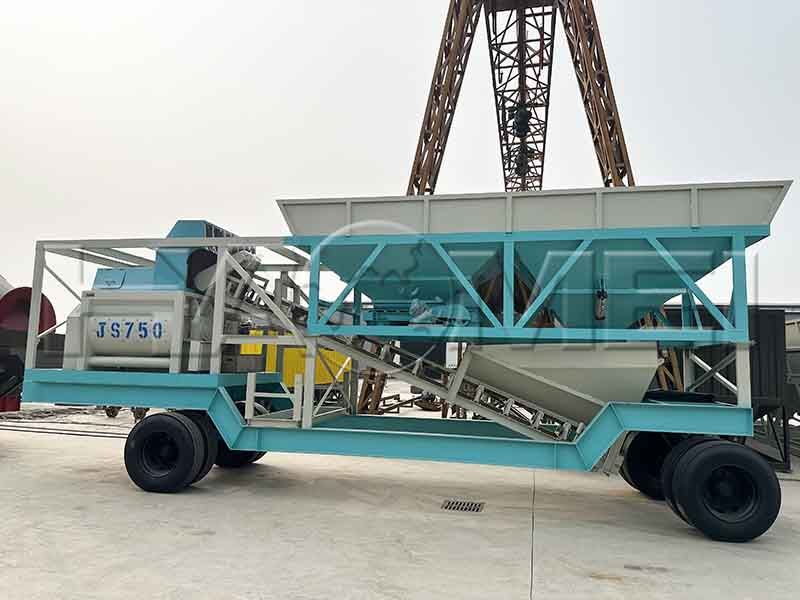
The nominal capacity of a batching plant refers to its theoretical output under ideal conditions. In real operation, actual production can be affected by material supply, operator efficiency, truck availability, concrete mix design, weather, and equipment maintenance.
A 25 m³/h plant can theoretically produce 25 cubic meters of concrete per hour. Over an eight-hour working shift, its maximum theoretical production is around 200 cubic meters. In practice, most users may achieve approximately 150 to 180 cubic meters per day, depending on the production environment.
A 35 m³/h plant offers about 40% more hourly capacity. Under normal working conditions, it can produce roughly 210 to 250 cubic meters per day. This difference may be highly valuable when a project has strict deadlines, frequent concrete pours, or several construction locations requiring supply at the same time.
Therefore, the first question to ask is not simply, “Which plant is bigger?” Instead, ask, “How much concrete do I need to supply every day?”
A 25 m³/h batching plant is generally suitable for smaller construction projects and customers with moderate concrete demand. It is commonly used for rural road construction, small commercial buildings, precast yards, municipal projects, drainage works, and local ready-mix operations.
The main advantage of this capacity is affordability. The initial investment is usually lower than that of a 35 m³/h model, not only for the plant itself but also for supporting facilities such as aggregate storage, cement silos, loading equipment, and concrete mixer trucks.
A smaller plant also typically requires less installation space. This is especially useful for projects located in urban areas, remote sites, islands, or locations with limited land availability. If your jobsite changes frequently, a compact configuration can reduce relocation time and transportation costs.
For buyers seeking a cost-effective solution, a 25m3 concrete plant can offer reliable output without creating excessive financial pressure. It is particularly appropriate when daily concrete demand is stable but not high enough to justify a larger machine.
A 35 m³/h plant is a better option for contractors or commercial concrete suppliers who need greater productivity and operational flexibility. It can support larger pours, higher daily output, and multiple delivery schedules more comfortably than a 25 m³/h unit.
This capacity is often suitable for medium-sized building projects, bridge construction, road and highway works, industrial plants, concrete product factories, and growing ready-mix businesses. If your project regularly requires more than 180 cubic meters of concrete per day, a 35 m³/h plant may prevent delays and reduce the risk of production bottlenecks.
The higher output can also improve profitability. When demand is consistent, producing more concrete within the same operating period can help spread labor, electricity, and management costs across a larger volume of finished product.
However, buyers should remember that a 35 m³/h plant may require a larger site, more robust aggregate handling equipment, and better coordination with cement and aggregate suppliers. It may also need more mixer trucks to ensure that finished concrete is delivered without interruption.
If your business involves moving from one project site to another, mobility should be a key selection factor. Mobile batching plants are designed for faster transportation, simplified installation, and convenient relocation.
A mobile 25 m³/h unit is often favored by contractors working on temporary projects. It can be installed quickly and may reduce the need for expensive foundations. Buyers searching for a yhzs25 mobile concrete mixing plant for sale should evaluate trailer design, control system automation, mixer type, silo configuration, and transport dimensions before making a purchase.
Although 35 m³/h plants can also be designed as mobile or semi-mobile units, they may require more preparation during transport and installation because of their larger structure and higher material-handling demands.
The purchase price should not be the only factor in your decision. A batching plant creates long-term operating costs, including fuel or electricity, spare parts, labor, maintenance, material storage, transport, and site preparation.
A 25 m³/h plant usually has lower operating costs and is easier to manage with a smaller team. It is a safer choice for first-time investors or businesses entering the concrete supply market.
A 35 m³/h plant requires a larger initial budget, but it can generate stronger returns when demand is sufficient. Buying a larger plant without enough orders may lead to idle capacity and unnecessary financial pressure. On the other hand, choosing a plant that is too small may cause missed opportunities when your business begins to grow.
Choose a 25 m³/h batching plant if you have limited space, a modest budget, temporary projects, or daily concrete demand below approximately 180 cubic meters. It provides an economical and flexible solution for small to medium construction operations.
Choose a 35 m³/h batching plant if you expect stable high-volume demand, need to support larger pours, or plan to expand your ready-mix concrete business. Its higher output can improve scheduling, delivery capability, and long-term profitability.
Ultimately, the best capacity is the one that matches your current project requirements while leaving reasonable room for future growth.
Original source: https://www.concretebatchplanthm.com/a/25-m3h-vs-35-m3h-batching-plant-which-capacity-should-you-choose.html