CONTACT
1
Want to get quotation of concrete batching plant at once? Contact Us. Quick reply is as efficient as our equipment.
+86-15978414719

Sep 21, 2026
A JS3000 concrete mixer is commonly specified as a twin-shaft, forced-action mixer with a nominal 3 m3 discharged concrete capacity. It is typically selected for commercial ready-mix plants, precast yards, road projects, and large-volume building work where a smaller 1 m3 or 2 m3 machine creates a production bottleneck.
However, JS3000 is a model designation used by multiple manufacturers, not a single globally standardized specification. Do not purchase from the model name alone. Confirm the rated discharged volume, charging volume, motor configuration, aggregate size limit, discharge gate design, control system, and spare-parts support in the supplier's signed technical offer.
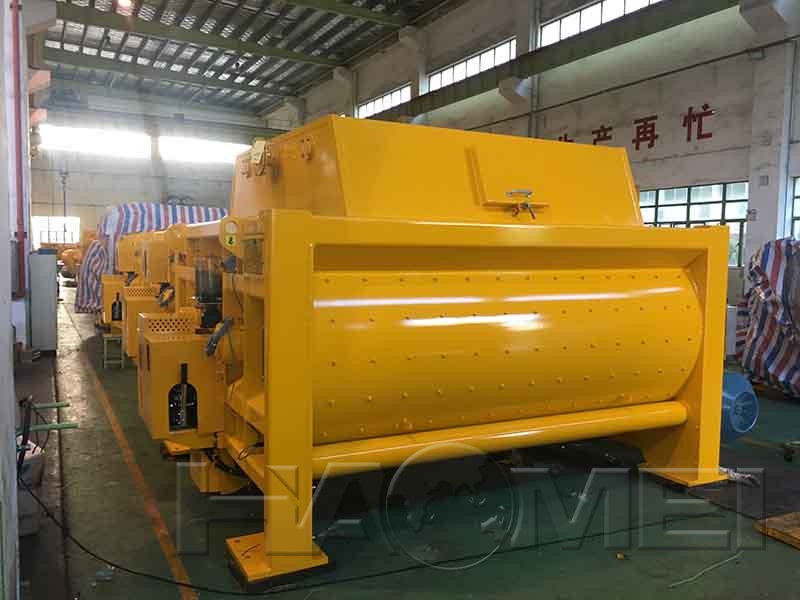
The first selection task is to distinguish batch volume from hourly plant output. A 3 m3 discharge volume does not guarantee 180 m3/h of usable production. Real output depends on batching speed, aggregate moisture correction, truck dispatching, loading time, slump requirements, cleaning intervals, and operator practice.
Use this planning calculation before selecting a mixer:
Practical output = discharged batch volume x batches per hour x operating efficiency
For example, if a 3 m3 mixer completes 24 batches per hour at 80 percent operating efficiency, estimated practical output is:
3 x 24 x 0.80 = 57.6 m3/h
This calculation is more useful for project planning than an advertised theoretical plant capacity. Request cycle-time evidence for the intended mix design, especially if the project uses low-slump concrete, manufactured sand, fibers, supplementary cementitious materials, or high aggregate moisture.
| Selection item | What to verify | Why it matters |
|---|---|---|
| Discharged capacity | Confirm whether 3 m3 is compacted concrete output or nominal geometric volume | Prevents under-sized production planning |
| Charging capacity | Obtain the supplier's rated feed volume | Overcharging reduces mixing quality and accelerates wear |
| Aggregate size | Compare the approved maximum aggregate size with project mix designs | Oversized stone can damage paddles, liners, and discharge components |
| Mixing cycle | Verify charging, mixing, discharge, and gate-close times | Determines actual batches per hour |
| Motors and gearbox | Confirm installed kW, motor protection class, gearbox brand, and service access | Supports duty-cycle reliability |
| Control system | Check moisture correction, recipe storage, traceability, alarms, and calibration functions | Reduces batch variability |
| Site electrical supply | Confirm voltage, frequency, transformer capacity, protection, and cable sizing | Avoids nuisance trips and motor damage |
For plants below this production class, a JS2000 Electric Concrete Mixer may offer a better match when truck turnaround and daily concrete demand do not justify 3 m3 batches. For higher-volume central-mix operations, compare the discharge and batching system with a JS4000 Large Concrete Mixer rather than assuming a larger vessel alone will raise plant output.
A twin-shaft mixer uses two horizontal shafts fitted with arms and paddles. Their counter-rotating action provides intensive mixing, but the wear system becomes a major operating cost. Inspection should focus on parts that contact abrasive aggregate and concrete.
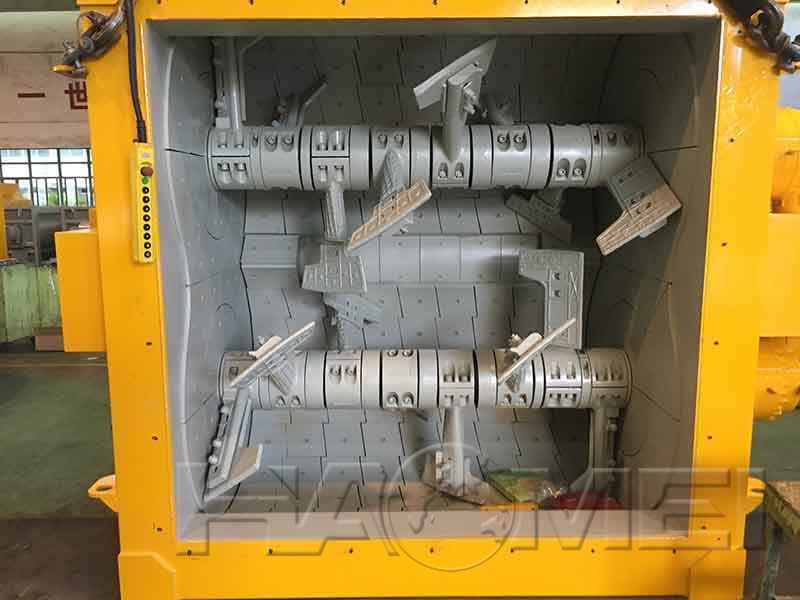
Use this pre-contract inspection checklist:
Request general arrangement drawings showing foundation loads, discharge height, access platforms, and maintenance clearances.
Confirm liner material, liner thickness, paddle material, and the replacement method. Obtain part numbers and a priced spare-parts list.
Inspect shaft-end sealing design. Ask whether lubrication is manual, centralized, or automatic, and identify the recommended lubricant.
Verify the gate actuator type, emergency release arrangement, limit switches, and gate seal replacement procedure.
Ask for motor nameplate data, electrical drawings, and the control-panel component list.
Require a factory test record showing rotation direction, no-load operation, discharge-gate movement, and safety interlock checks.
Define commissioning scope, operator training, warranty exclusions, and local service response commitments in the contract.
Do not compare quotations only by purchase price. A lower initial figure can become expensive when liners, paddles, shaft seals, or gearboxes are non-standard and stocked far from the project. Ask each supplier to price a 12-month recommended wear-parts package using the same assumed operating hours and mix abrasiveness.
Concrete mixer hazards include rotating shafts, pinch points at the discharge gate, unexpected startup, falling during inspection, electrical exposure, and entry into a confined space. In the United States, machine guarding requirements are addressed in OSHA 29 CFR 1910.212, while energy-control procedures are addressed in OSHA 29 CFR 1910.147. Local construction and electrical requirements may impose additional duties.
Minimum operating controls should include:
Isolate electrical energy and apply lockout/tagout before cleaning, liner replacement, paddle adjustment, or internal inspection.
Never permit personnel inside the drum or mixing chamber unless the written isolation procedure, permit requirements, and rescue arrangements are in place.
Keep guards installed over couplings, shafts, drives, and accessible moving components.
Test emergency-stop devices, gate limit switches, alarms, and interlocks at scheduled intervals.
Record aggregate moisture, water additions, batch weights, mixing time, slump or workability tests, and rejected loads.
Clean residual concrete before buildup interferes with paddle clearance, liner condition, or discharge-gate sealing.
Concrete quality should be verified using the project specification and applicable test standards. In U.S. projects, ASTM C94/C94M addresses ready-mixed concrete, while ASTM C143/C143M covers slump testing and ASTM C31/C31M covers making and curing test specimens in the field. These standards do not replace the project specification, but they provide recognized procedures for documenting consistency.
For investment analysis, calculate annual ownership cost rather than relying on the equipment invoice. Include financing, depreciation, insurance, installation, civil works, electrical connection, labor, energy, wear parts, planned maintenance, unplanned downtime, and production losses from rejected concrete.
| Cost area | Data to collect | Decision use |
|---|---|---|
| Capital installation | Mixer, steelwork, foundation, wiring, controls, freight, commissioning | Establishes real project cost |
| Operating energy | Motor kW, actual run hours, local electricity tariff | Compares energy cost per m3 |
| Wear parts | Liner, paddle, arm, seal, and gate-seal replacement history | Forecasts maintenance budget |
| Downtime | Failure frequency, repair duration, spare-part lead time | Measures lost production exposure |
| Quality loss | Rework, rejected loads, returned concrete, corrective water additions | Identifies process-control value |
A well-specified 3 m3 twin-shaft unit should be selected as part of a complete batching process, not as an isolated machine. The most reliable installation combines verified mix-design performance, adequate electrical and aggregate handling capacity, documented safety procedures, traceable batch records, and locally obtainable wear parts.
Original source: https://www.concretebatchplanthm.com/a/js3000-concrete-mixer.html
Tags: JS3000 Concrete Mixer Twin Shaft Concrete Mixer
Prev: How to Choose the Right Mini Hot Mix Plant for a Contractor
Next: HZS50 Concrete Batching Plant VS HZS60 Concrete Batching Plant