CONTACT
1
Want to get quotation of concrete batching plant at once? Contact Us. Quick reply is as efficient as our equipment.
+86-15978414719

Sep 15, 2026
A self loading concrete mixer combines aggregate loading, weighing, water dosing, mixing, transport, and discharge in one mobile machine. It is designed for projects where ready-mix supply is distant, access roads are limited, or concrete demand changes throughout the day. Typical applications include rural roads, housing foundations, utility work, farm construction, precast yards, and small to medium infrastructure projects.
Unlike a conventional mixer truck that normally receives ready-mixed material from a batching plant, this equipment produces concrete directly on site. The operator uses the front loading bucket to collect sand, stone, and cement, then transfers the materials into the drum. Water is added through the onboard tank and metering system. This integrated process can reduce material handling steps and give the site team more control over batch timing.
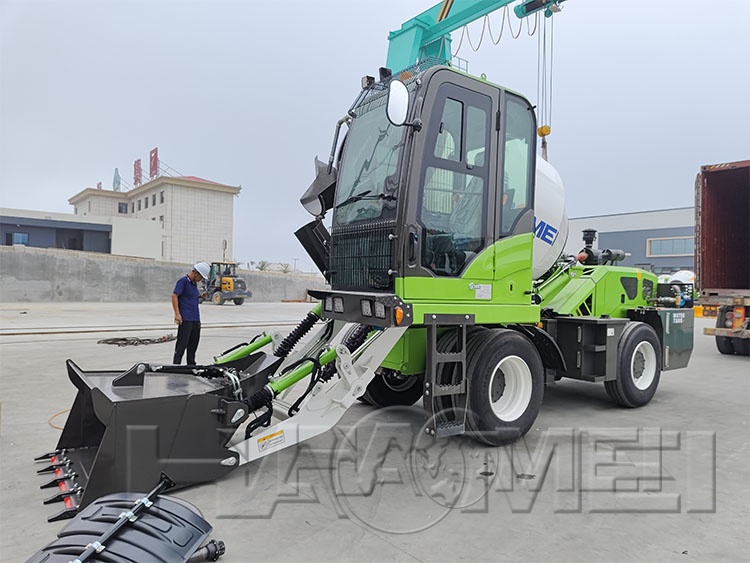
The main structure starts with a heavy-duty articulated or rigid chassis, depending on the machine configuration. Articulated steering is common on compact models because it improves maneuverability on narrow work areas. A four-wheel-drive arrangement can provide better traction on uneven ground, while a low center of gravity helps support stable travel when the drum is loaded. Actual travel capability depends on tire condition, grade, ground bearing capacity, and the manufacturer's operating limits.
At the front of the machine, the hydraulic loading bucket performs several jobs. It loads aggregates, carries cement or bagged materials where applicable, and feeds the mixing drum. Wear-resistant bucket edges are important because repeated contact with stone, sand, and compacted ground causes abrasion. Inspect the cutting edge and bucket pins regularly. Excessive wear can reduce loading performance and increase stress on the bucket structure.
The mixing drum is commonly mounted on a slewing frame, allowing it to rotate for loading, mixing, and discharge. Reversible drum rotation helps mix concrete in one direction and discharge it in the other. Internal mixing blades lift and fold the materials during rotation. Blade shape, spacing, and wear condition affect mix uniformity. When blades become thin or damaged, cement paste and aggregate may not circulate correctly, leading to inconsistent concrete quality.
A water tank, pump, and metering arrangement are also central to batch control. The water system should deliver a measured amount rather than relying on visual estimation. Operators should account for moisture already present in sand and aggregate, because wet materials contribute water to the mixture. For structural concrete, batch proportions, water-cement ratio, mixing time, sampling, and testing must follow the project specification and applicable local standards.
| Main Component | Design Purpose | Inspection Focus |
|---|---|---|
| Loading bucket | Loads and transfers raw materials | Cutting edge, bucket pins, hydraulic cylinders |
| Mixing drum | Mixes and discharges concrete | Blade wear, drum rotation, leakage |
| Hydraulic system | Powers steering, bucket, and drum functions | Oil level, hose damage, filter condition |
| Water system | Supplies measured mixing water | Pump output, tank cleanliness, meter accuracy |
| Chassis and axles | Carries the machine and batch load | Tire pressure, fasteners, axle leakage |
| Operator station | Controls travel and mixing functions | Displays, switches, camera, emergency stop |
Material selection has a direct effect on service life. The drum, bucket, and internal blades are exposed to abrasive aggregate and alkaline cement slurry. Manufacturers commonly use structural steel for the frame and wear-resistant steel in high-abrasion areas. The suitability of a specific steel grade depends on thickness, fabrication quality, and operating conditions. A thicker component is not automatically better if it adds unnecessary weight or is poorly supported.
Hydraulic hoses require abrasion protection, correct routing, and secure clamps. Hoses rubbing against the frame can fail prematurely. Seals, bearings, and gearbox components must also be protected from cement buildup and water intrusion. During equipment evaluation, examine access points for routine lubrication, oil checks, filter replacement, and drum cleaning. Easy maintenance access reduces the chance that important inspections will be skipped.
For sites producing multiple small batches, an integrated mixer can reduce dependence on separate loaders, stationary mixers, and short-haul delivery vehicles. It can also help crews place fresh concrete closer to the work face. This is particularly useful where a large Concrete Mixer Truck cannot move easily through tight roads or soft ground.
The equipment also supports flexible scheduling. A crew can prepare a batch when formwork, reinforcement, and labor are ready instead of waiting for a delivery window. However, this flexibility does not replace disciplined batching. Cement, aggregate grading, admixture dosage, and water quantity must remain controlled from batch to batch.
For contractors needing a compact site-production option, a Self Loading Mixer Truck can combine transport and mixing functions with a smaller operating footprint. Before selecting capacity, assess the largest daily pour, haul distance inside the site, material stockpile layout, road width, slope, required discharge height, and local transport regulations.
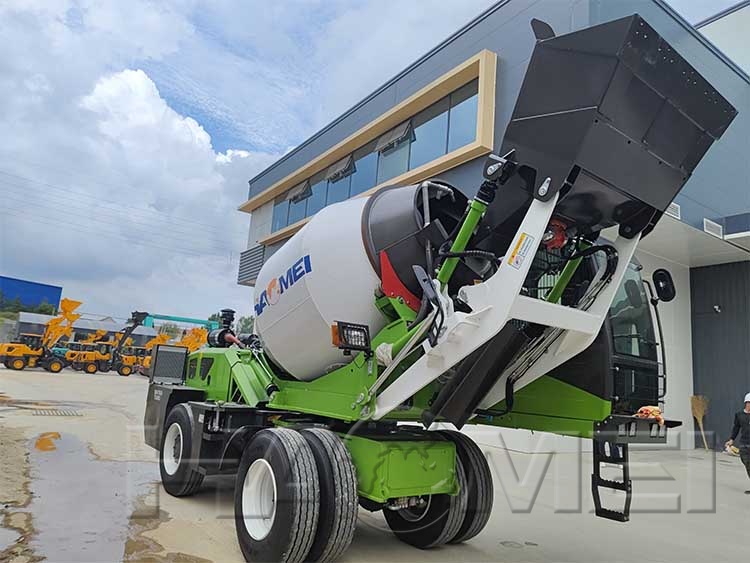
Routine cleaning is the most effective protection against many mixer problems. Concrete left inside the drum hardens, reduces usable capacity, increases rotating weight, and can damage blades. Clean the drum, chute, bucket, and discharge areas after each shift according to the manufacturer's approved procedure. Never enter a drum unless the machine is isolated, locked out, supported as required, and site safety procedures are followed.
| Problem | Likely Causes | Recommended Action |
|---|---|---|
| Drum rotates slowly or not at all | Low hydraulic oil, blocked filter, pump issue, motor fault | Check oil level and leaks, inspect filters, then have pressure tested by a qualified technician |
| Concrete is too wet or too dry | Incorrect water dose, wet aggregate, inaccurate meter | Check water meter operation, measure aggregate moisture, and verify the batch record |
| Bucket movement is weak | Hydraulic leak, low engine speed, worn cylinder seal | Inspect hoses and fittings, confirm operating speed, and repair leaking cylinders |
| Uneven concrete mix | Worn blades, short mixing time, overloaded drum | Inspect blade condition, follow specified mixing time, and keep within rated batch capacity |
| Machine overheats | Dirty radiator, low coolant, overloaded hydraulic system | Clean cooling fins, check coolant, inspect fan and hydraulic oil condition |
| Excessive vibration while traveling | Uneven tire pressure, loose fasteners, damaged axle parts | Stop operation, inspect tires and wheel fasteners, and arrange mechanical inspection |
If the drum has hardened concrete buildup, avoid striking it aggressively with tools that may damage the shell or blades. Use the cleaning method approved by the equipment manufacturer. For hydraulic faults, do not search for leaks with bare hands. Pressurized fluid can penetrate skin and requires immediate medical attention.
A daily inspection should include engine fluids, hydraulic oil, coolant, tires, brakes, steering response, lights, alarms, bucket pins, drum rotation, water supply, and visible hose damage. Record abnormal noise, slow functions, leaks, or warning indicators before they develop into a costly stoppage. Operator training, proper batching practice, and scheduled maintenance are essential for consistent concrete output and dependable machine life.
Original source: https://www.concretebatchplanthm.com/a/self-loading-concrete-mixer.html
Tags: Self Loading Concrete Mixer Mobile Concrete Mixing Equipment
Prev: HZS50 Hopper Concrete Plant vs Belt Conveyor Concrete Batching Plant
Next: How to Choose the Right Mini Hot Mix Plant for a Contractor