CONTACT
1
Want to get quotation of concrete batching plant at once? Contact Us. Quick reply is as efficient as our equipment.
+86-15978414719

Feb 05, 2026
Selecting among twin shaft concrete mixer manufacturers is less about brand names and more about matching the mixer design and support package to your concrete quality targets, aggregates, and production rhythm. A twin-shaft mixer is widely used in ready-mix and precast because it can achieve fast, intensive mixing and consistent dispersion of cement and admixtures when set up correctly.
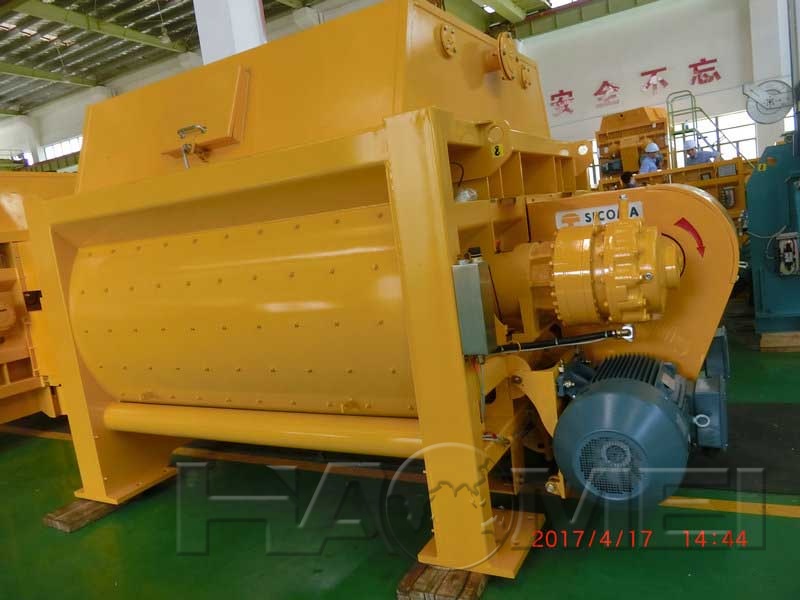
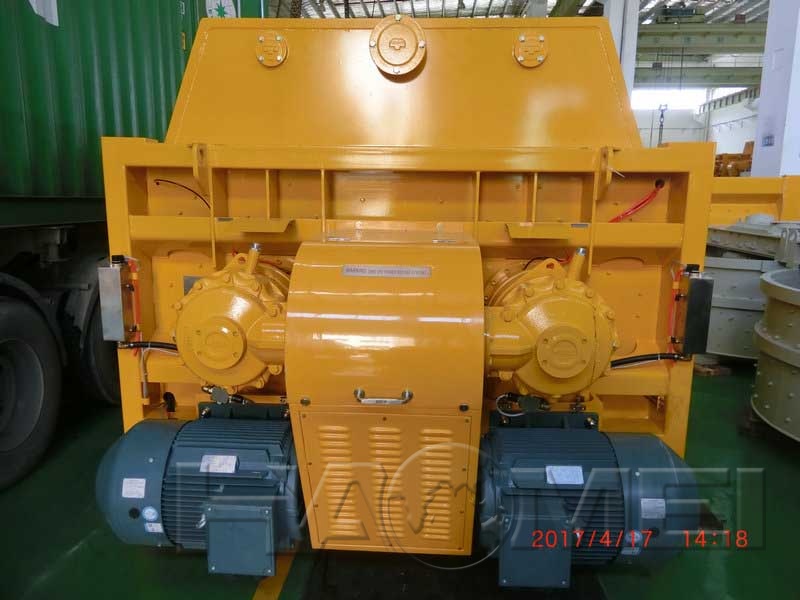
A twin-shaft unit uses two synchronized shafts with mixing arms that create overlapping mixing zones. This action promotes strong shearing and circulation, helping the mix reach uniformity quickly. When you compare suppliers, focus on measurable, job-relevant characteristics rather than only motor power.
Mixing performance and homogeneityProducers typically emphasize short cycle times. In practice, you should ask how the mixer behaves with your materials: crushed stone vs. rounded gravel, high sand ratio, low water-cement ratio, fibers, or high-range water reducers. A mixer that looks great on a standard slump mix may behave differently on dry precast mixes.
Batch size and effective outputNominal capacity does not always equal usable capacity. Practical output depends on cycle time, discharge efficiency, and how the mixer integrates with your weighing system. If your plant must hit peak output for pours, evaluate the entire cycle, including charging, mixing, discharge, and washdown.
Wear parts and liner designTwin-shaft mixers rely on wear liners, arms, scrapers, and tips that take heavy abrasion. Compare:
Liner material and thickness, and whether liners are modular for easier replacement.
Arm and tip geometry for maintaining clearance as parts wear.
How the supplier specifies service life under abrasive aggregates.
Discharge gate and sealingA reliable discharge gate matters for production continuity and clean batching. Poor sealing can cause leakage and cement paste buildup. Ask about gate actuation type, seal arrangement, and how the design prevents jamming from coarse aggregate.
Maintenance access and safetyLook for large access doors, safe lockout points, and clear inspection windows. Easy access lowers downtime and encourages proper inspection, which is essential for consistent quality.
The best supplier for a mobile site operation may not be the best for a fixed precast line. Use the comparison points below to align with your application.
Ready-mix plantsReady-mix prioritizes stable output, fast cycle time, and tolerance for varying moisture and gradation. Good options typically provide robust automation integration and straightforward wear part replacement so you can keep production running.
Precast and low-slump applicationsPrecast often needs excellent dispersion at low water content and strict consistency between batches. Some suppliers optimize arm angles, mixing tool layout, and liner profiles to improve mixing intensity for stiff mixes.
High-performance and specialty concreteIf you produce SCC, fiber-reinforced mixes, or mixes with silica fume, confirm that the mixer and the control logic can handle admixture sequencing and mixing time control. Ask whether the manufacturer recommends specific charging order and mixing times for these designs.
Global brands vs. regional producers
Global brands often offer standardized documentation, mature part numbering, and broader service networks.
Regional manufacturers can provide competitive lead times and customization, but you should verify parts availability, warranty terms, and commissioning support.
If you are evaluating a branded configuration, reviewing a dedicated product page such as Sicoma Twin Shaft Mixer can help you confirm typical specifications, options, and integration approach.
Use the tables below to structure RFQs and technical discussions. The goal is to reduce the risk of under-sizing, premature wear, or control integration delays.
Table 1. Technical comparison points to request from suppliers
| Category | What to ask for | Why it matters on site |
|---|---|---|
| Output rating | Nominal vs. effective batch size, typical cycle time | Determines real m3 or yd3 per hour |
| Mixing tools | Arm and blade layout, adjustable clearances | Affects homogeneity and wear compensation |
| Wear package | Liner type, arm tips, expected life assumptions | Controls downtime and lifecycle cost |
| Drive and synchronization | Motor configuration, gearbox rating, shaft timing method | Impacts reliability and mixing stability |
| Discharge system | Gate type, seal design, anti-leak details | Prevents paste loss and buildup |
| Cleaning | Wash system options, access doors | Reduces turnaround time between mixes |
| Controls integration | Signals, interlocks, batching software compatibility | Avoids commissioning delays |
| Documentation | Spare parts list, manuals, wiring diagrams | Speeds maintenance and training |
Table 2. Typical mixer sizing logic by application
| Application | Common priority | What you should verify first |
|---|---|---|
| Ready-mix | High throughput, stable cycles | Effective output per hour and discharge cleanliness |
| Precast | Consistency, low-slump performance | Mixing intensity, tool geometry, QC repeatability |
| Infrastructure pours | Reliability and serviceability | Wear package, local parts stock, service response |
| Specialty mixes | Uniform dispersion | Sequencing, mixing time control, inspection access |
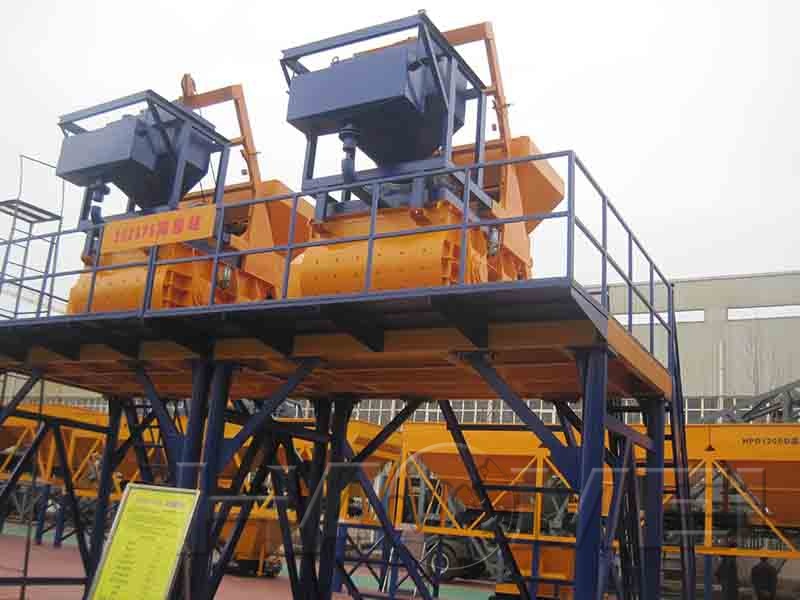
Where model selection becomes practicalOnce you have target output and batch size, you can shortlist models in the correct class. For example, when a compact plant requires a mid-range batch size, a model-specific reference like JS750 Twin Shaft Concrete Mixer can help you validate footprint, feeding arrangement, and expected batch rhythm.
Commercial and service questions that protect your scheduleTechnical specs are only half of the decision. Before selecting a supplier, request clear answers to:
Lead time for the mixer and for high-wear spares.
Commissioning scope, training hours, and remote support availability.
Warranty coverage details, including exclusions for wear parts.
Recommended spare parts list for your production plan and aggregate abrasiveness.
By comparing mixing performance, wear system design, discharge reliability, and service readiness, you can narrow down supplier options to the equipment solution that fits your concrete designs and your plant uptime goals without overspending on features you will not use.
Original source: https://www.concretebatchplanthm.com/a/twin-shaft-concrete-mixer-manufacturers.html
Tags: twin shaft concrete mixer manufacturers twin-shaft mixer
Prev: What Is a Qualified Stabilized Soil Mixing Plant
Next: Twin Shaft Mixer Design