CONTACT
1
Want to get quotation of concrete batching plant at once? Contact Us. Quick reply is as efficient as our equipment.
+86-15978414719

Jan 22, 2026
In building material production scenarios such as concrete mixing plants and cement plants, bolted cement silos, as core equipment for cement storage, directly impact the turnover speed and capacity output of the entire production line through their loading efficiency.
However, in actual operation, traditional loading methods often face problems such as material blockage, dust generation, and uneven material supply, severely restricting the feeding efficiency of cement silos. Unbeknownst to many, the scientific coordination between horizontal feeders and cement silos is the key to solving this problem and achieving a qualitative leap in loading efficiency.
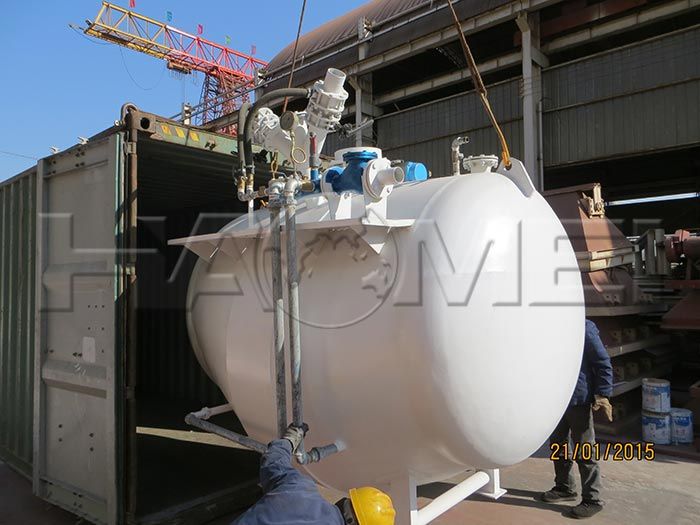
Traditional loading often relies on manual feeding or simple mechanical conveying. During the process of material entering the bolted type cement silo, problems such as material sticking to the walls, clumping, and slugging easily occur due to poor flowability and inadequate sealing of the inlet—especially during the rainy season or when the material has a high moisture content.
Cement easily adheres to the inner wall of the conveying channel, gradually forming blockages. This not only requires a large amount of manpower for clearing blockages but also leads to loading interruptions, seriously affecting production continuity. At the same time, open or semi-open loading methods generate a large amount of dust, resulting in cement waste and harming the health of workers, which does not meet the requirements of green production.
The emergence of the cement feeder perfectly addresses the shortcomings of traditional loading methods. Their precise integration with cement silos fundamentally optimizes the entire loading process.
As a device specifically designed for conveying bulk materials, the horizontal feeder, with its compact structure, strong sealing, and high-efficiency conveying, has become the "golden partner" in the cement silo loading process. The combination of these two is not simply a matter of adding equipment together, but rather a synergistic operation based on the material flow patterns. The core logic lies in providing continuous, uniform, and leak-free feeding to the cement silo through the precise control and stable conveying of the horizontal feeder.
The improvement in cement silo loading efficiency by cement feeders is mainly reflected in three core dimensions.
Firstly, continuous and uninterrupted feeding breaks through material blockage bottlenecks.
The bulk cement feeder adopts a planetary rotation mechanism and rotor chamber design. When the rotor rotates, each chamber sequentially completes the cycle of feeding, sealing, and discharging, effectively preventing material leakage and air intrusion. Simultaneously, combined with vibrating motors or fluidized bed technology, it prevents cement caking and blockage of the conveying channel.
When used in conjunction with a cement silo, the material, after pre-treatment by the cement feeder, enters the silo at a stable flow rate, completely solving the problem of intermittent loading in traditional methods. This allows for continuous and efficient loading, significantly shortening the loading time per silo.
Secondly, precise material control improves efficiency and reduces resource waste.
Traditional loading methods often result in uneven material accumulation within the cement silo due to uneven feeding, affecting silo capacity utilization and potentially causing safety hazards due to excessive local pressure.
The cement feeder can precisely adjust the conveying flow rate according to the cement silo's material level, achieving "on-demand feeding." Through interlocking with the silo top level gauge, when the cement silo level reaches the set value, the feeder can automatically adjust its speed or stop feeding, preventing material overflow and waste while ensuring uniform material accumulation within the silo.
This improves silo capacity utilization and reduces the hassle of subsequent unloading processes. This precise control capability transforms loading efficiency from "extensive" to "refined," significantly increasing the effective loading volume per unit time.
Thirdly, sealed conveying reduces losses while balancing efficiency and environmental protection.
Dust generation is a major problem in traditional cement silo loading, but the fully sealed design of the cement feeder solves this problem at its source. Its cylindrical casing is connected to the cement silo inlet via corrugated pipes and other sealing components, forming a closed conveying channel.
There are no exposed parts of the material during transport, preventing resource waste caused by cement dust and protecting the working environment and worker health. More importantly, sealed conveying reduces material contact with air, lowering the probability of cement becoming damp and clumping, indirectly ensuring the efficiency of subsequent production processes and creating a virtuous cycle of "efficient loading - environmentally friendly operation - smooth subsequent processes."
In practical applications, the combined advantages of these two technologies have been fully validated. For example, in small and medium-sized mixing plants, bagged or ton-bag cement can be quickly converted into a continuous flow into the cement silo via the automatic unpacking and screw conveyor functions of a cement feeder, eliminating the need for frequent manual feeding and increasing the single-silo loading efficiency by over 40%.
In large cement plants, multiple cement feeders linked with the cement silo can achieve alternating feeding of multiple batches and varieties of cement. Combined with reversible belt conveyors and material level interlocking control, this completely eliminates material blockage and mixing problems, significantly improving the overall flow efficiency of the production line. This collaborative operation mode not only reduces labor intensity and safety risks but also allows the cement silo loading efficiency to break through traditional bottlenecks, creating significant economic benefits for enterprises.
Today, with the advancement of automation, efficiency, and green transformation in the building materials industry, the integration of cement silos and horizontal feeders is receiving increasing attention.
Horizontal cement feeders are no longer simply "conveying tools" but rather "core enablers" for the efficient operation of cement silos—by solving pain points such as material blockage, dust generation, and uneven feeding, they enable the cement silo loading process to achieve "continuous, precise, and environmentally friendly" upgrades. For businesses, optimizing the way the two work together is not only a direct means of improving loading efficiency, but also a key measure to reduce production costs and enhance core competitiveness.
Original source: https://www.concretebatchplanthm.com/a/how-to-feed-bolted-type-cement-silo.html
Tags: bolted cement silo