CONTACT
1
Want to get quotation of concrete batching plant at once? Contact Us. Quick reply is as efficient as our equipment.
+86-15978414719

Feb 11, 2026
Twin shaft mixer design keeps coming up on Quora, Google auto-suggest, and industry forums because new equipment shoppers want predictable output, stable quality, and controlled wear cost. Below are 5 of the most asked English questions seen repeatedly in the last few months, answered with practical, design-level detail.
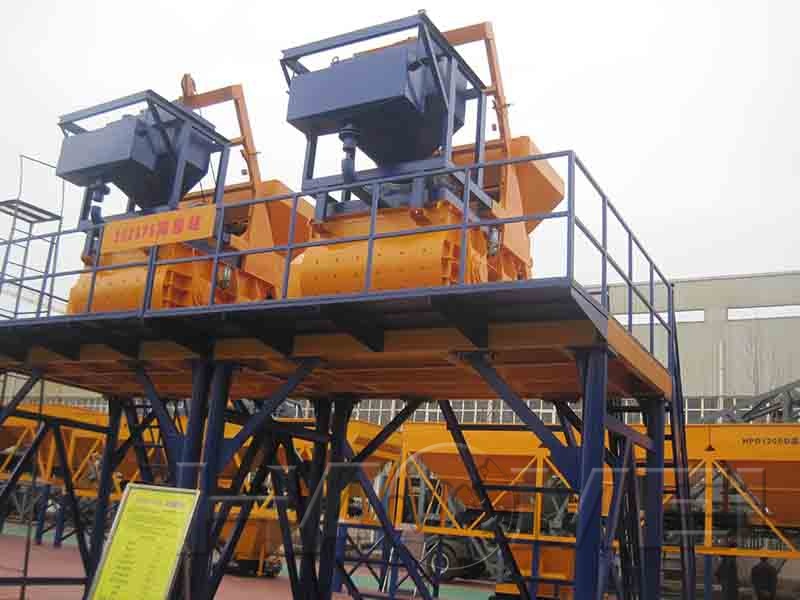
The fastest mixing is not simply about adding more paddles. In a twin shaft mixer design, speed comes from creating a stable three-dimensional circulation pattern: lifting, splitting, and cross-throwing the mix between shafts.
Design points that consistently improve mixing speed without raising segregation risk:
Helical pitch of paddles along the shaft: A slight "conveying" effect pushes material toward the center, then outward again. This reduces dead zones near end plates.
Blade angle selection: Steeper angles increase lift and turnover but also increase power draw and wear. For harsh mixes (low slump, RCC, high aggregate content), moderate angles usually deliver the best net performance.
Overlap and intermeshing clearance: Proper overlap between left and right shaft "sweeps" prevents a stagnant strip in the middle. Clearance that is too tight raises collision risk and wear. Too wide leaves a ribbon of poorly mixed material.
End-zone tools: Side scrapers and end paddles should be treated as first-class design parts, not accessories. Many "slow mixer" complaints trace back to end zones where paste builds up.
If you are comparing product lines, look at the mixer's mixing track diagram and wear part layout, not just rated capacity. A well-optimized paddle map can reduce required mixing time per batch, which is often more valuable than a small increase in nominal volume.
This is one of the hottest questions because many users experience either underpowered mixers that stall on low-slump mixes, or oversized systems that waste energy.
Power demand is driven by mix harshness, fill level, shaft speed, and paddle attack angle. Instead of relying only on "model name capacity," ask for the manufacturer's rated power at:
target batch volume (net yield, not gross)
minimum slump or RCC condition
maximum aggregate size
worst-case moisture variability
A practical way to compare designs is to request the specific power range, expressed as kW per cubic meter of net concrete per batch. It is not a universal constant, but it is very useful when comparing similar mixer sizes.
| Mix Condition | Typical Demand Trend | What to Verify in Design |
|---|---|---|
| High slump, standard concrete | Lower torque spikes | Stable speed control, short cycle time |
| Low slump, dry mix | High torque, high wear | Gearbox overload margin, robust arms |
| RCC, high aggregate | Highest torque spikes | Motor reserve, shaft strength, liner protection |
| Fiber-reinforced | Torque fluctuations | Paddle layout that avoids fiber balls |
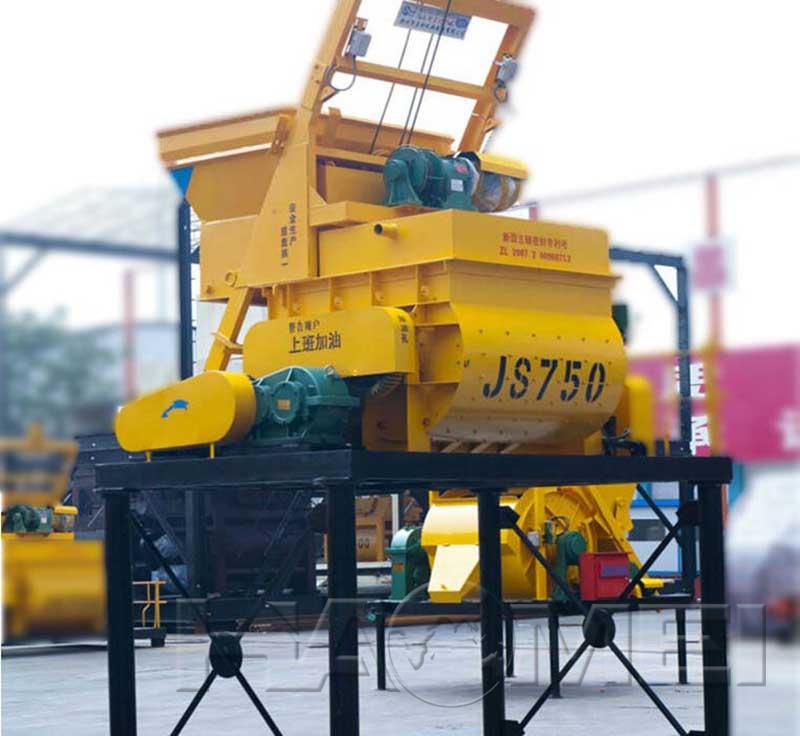
When evaluating models, it can help to compare a known reference such as a JS750 Twin Shaft Concrete Mixer to the next size up, then check whether the power increase is proportional to actual net yield and intended mix harshness.
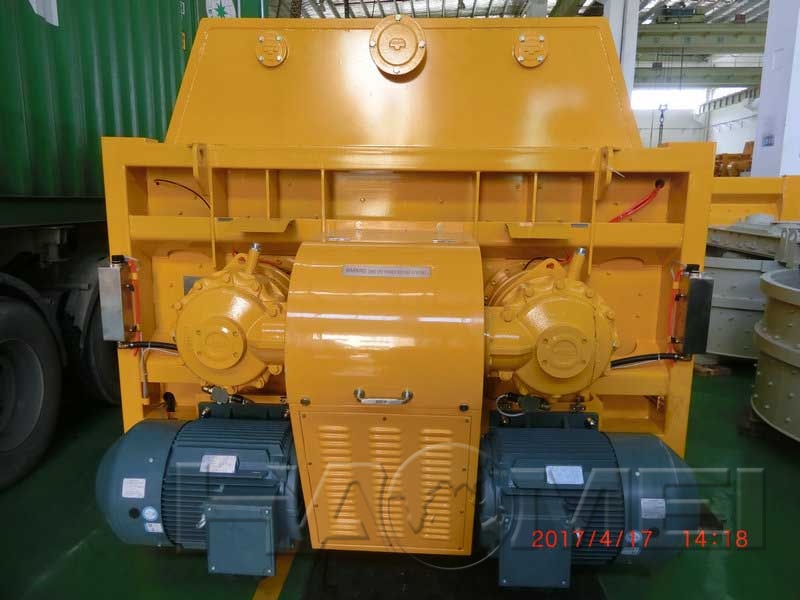
Wear cost is often the hidden "price tag" of a twin shaft mixer design. The parts that usually dominate cost and downtime are:
Paddles and arms (impact and abrasion)
Bottom liners (constant sliding abrasion)
Side liners and end liners (localized scouring)
Shaft seals (paste intrusion leads to bearing failure)
Service life is not only material hardness. It is strongly influenced by design choices:
Liner segmentation: Smaller liner segments can reduce replacement time and cost, especially if wear concentrates near discharge or center.
Paddle tip shape and replaceable tips: Replaceable tips can reduce cost, but only if the base paddle does not erode prematurely.
Seal system design: Multi-stage sealing with grease or air purge can prevent slurry migration. A "good" seal design will keep bearings clean even with frequent washdown.
Ask suppliers for typical wear intervals under your mix type, and for photos of worn components from real sites. If the supplier cannot describe the expected wear pattern, they may not have optimized the design.
Uneven discharge is a common complaint because it causes batch-to-batch inconsistency and slows truck loading. In twin shaft mixer design, the discharge system is a mixing component, not just a door.
What causes uneven discharge:
Gate opening too narrow or poorly positioned: Material bridges, then releases in slugs.
Poor synchronization between shafts and discharge zone: If the paddles continue pushing material away from the gate area, discharge becomes slow.
Sticky paste buildup at the gate edges: This narrows the effective opening and increases leakage.
Design features to look for:
Wide discharge opening with strong gate rigidity
Good sealing surfaces to prevent leakage, but not so tight that paste glues the gate shut
Access for cleaning around the gate frame
Gate actuator sizing with margin for hardened buildup
If your plant prioritizes short cycle time, ask for discharge time under low slump conditions, not just standard concrete. A mixer that discharges quickly under harsh mixes often has a better integrated discharge design.
Many people ask this because they want reliable strength and slump without extending cycle time. Uniformity is influenced by how fast the mixer can achieve:
cement paste distribution
aggregate dispersion
moisture equalization
Useful evaluation steps before purchase:
Request a mixing uniformity test method (their internal QC protocol). Even if standards differ by region, a serious supplier will have repeatable testing.
Look for evidence of dead-zone control, such as end scrapers and well-designed liner geometry.
Confirm the recommended mixing time range for multiple mix designs, including your harshest mix.
| What You Want to Avoid | Design Signal | Operational Result |
|---|---|---|
| Overmixing to "be safe" | Weak circulation pattern | Longer cycle time, higher wear |
| Segregation at high speed | Aggressive throw without control | Variable slump and gradation |
| Inconsistent batches | Dead zones near ends or center | Strength scatter, rework |
If you are benchmarking against established industrial designs, comparing with a Sicoma Twin Shaft Mixer style layout can help you understand what "good circulation" and robust sealing typically look like, even if you choose a different brand.
| Question to Ask | What a Strong Answer Includes |
|---|---|
| What is the specific power range for my harshest mix? | kW, torque margin, and mix assumptions |
| Which parts are highest wear, and what are typical intervals? | Wear map, parts list, and real site references |
| How is seal protection handled during washdown? | Seal stages, purge method, bearing protection |
| What discharge time can you guarantee at low slump? | Time range, gate size, actuator margin |
| How do you validate mixing uniformity? | Test method, sampling points, acceptance criteria |
Original source: https://www.concretebatchplanthm.com/a/twin-shaft-mixer-design.html
Tags: twin shaft mixer design twin shaft concrete mixer mixer paddle design mixer wear parts mixer power calculation