CONTACT
1
Want to get quotation of concrete batching plant at once? Contact Us. Quick reply is as efficient as our equipment.
+86-15978414719

Jun 09, 2026
Recent English Q&A discussions about concrete batching plant manufacturers show a practical pattern: people are not only asking who makes the plant, but also how to compare capacity, automation, installation, service, and true operating cost. The following questions reflect common search and social Q&A wording from the past 3 months, answered by Haomei Machinery.
| Recent Q&A Question | What the Question Usually Means | Short Answer |
|---|---|---|
| How do I choose reliable concrete batching plant manufacturers? | The purchaser wants to reduce technical and delivery risk. | Check production experience, component brands, plant testing, drawings, certificates, and service response. |
| Is a mobile or stationary batching plant better for a new project? | The user is comparing flexibility with long-term output. | Mobile suits changing sites; stationary suits higher, stable production. |
| What capacity concrete batching plant should I buy first? | The user is unsure about hourly output and future demand. | Match capacity to daily concrete demand, mixer size, truck cycle, and site logistics. |
| Why do quotations from manufacturers differ so much? | The user is confused by large price gaps. | Configuration, steel structure, mixer type, control system, silo supply, and installation scope vary widely. |
| What after-sales support should I request before signing? | The user wants fewer delays after delivery. | Request installation plan, spare parts list, training, remote support, and warranty terms in writing. |
A reliable manufacturer should be evaluated like an engineering partner, not only a seller. Start with production history: ask how many plants with similar capacity and layout have been delivered to your region or working conditions. A manufacturer that understands local voltage, aggregate moisture, cement supply, climate, and transport limits can reduce redesign work later.
Next, examine the technical documents. Serious concrete batching plant manufacturers should provide a plant layout, foundation drawing, electrical diagram, water and air system plan, and equipment configuration list. If the proposal only says "high quality" without itemized parts, it is difficult to compare.
Factory testing is also important. Ask whether the control cabinet, weighing system, sensors, and mixer can be tested before shipment. Video inspection is helpful, but a structured test checklist is better. For small and medium projects, models such as the HZS25 Small Concrete Batch Plant are often selected because they balance simpler installation with sufficient output for early-stage commercial concrete work.
This question appears often because both options can look attractive in online comparisons. The right choice depends on how long the equipment will stay in one place.
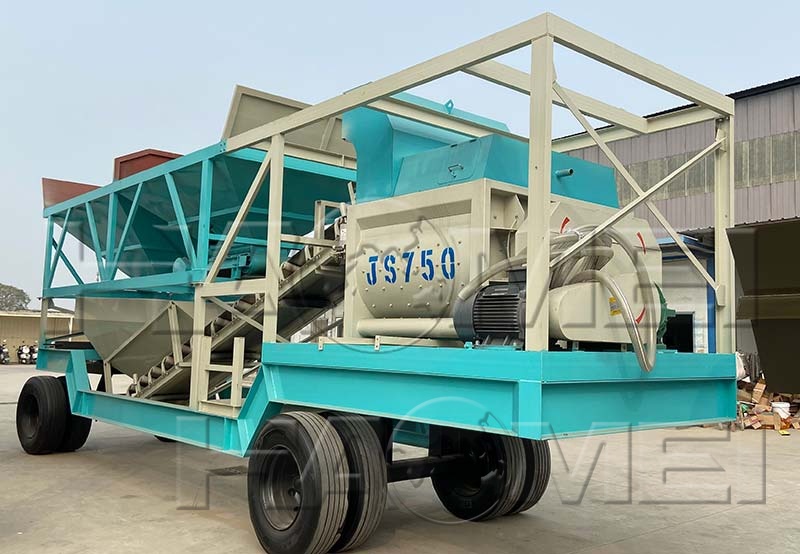
A mobile plant is suitable for road work, bridge work, rural construction, temporary precast yards, and projects that may move every few months. It usually has a compact layout, faster installation, and reduced foundation work. If your team values relocation speed, a Mobile Concrete Plant can reduce downtime between sites.
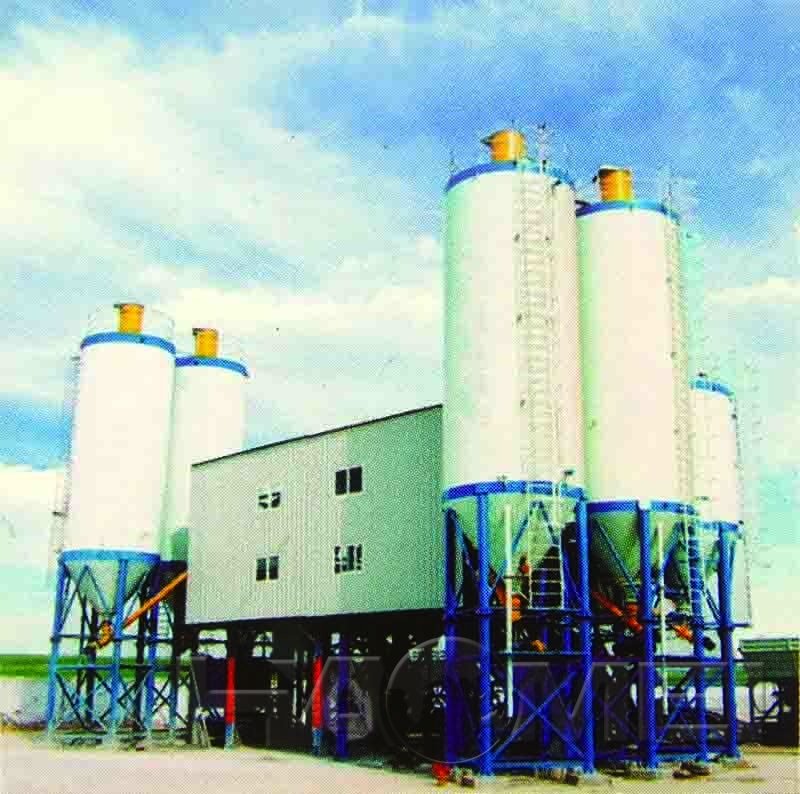
A stationary plant is usually better for long-term ready-mix supply, large building projects, industrial parks, and precast production bases. It can support larger aggregate bins, more cement silos, higher production stability, and stronger expansion options. If your concrete demand is predictable and continuous, the stationary option often provides better output efficiency over several years.
| Plant Type | Best Fit | Main Advantage | Possible Limitation |
|---|---|---|---|
| Mobile batching plant | Temporary or moving sites | Fast relocation and compact installation | Capacity range may be lower than large stationary plants |
| Stationary batching plant | Long-term production base | Stable output and easier expansion | Requires more foundation and site preparation |
| Containerized plant | Overseas shipment and modular projects | Easier transport and cleaner layout | Needs careful site planning before arrival |
Do not choose capacity only by the number printed in the model name. Rated output is measured under ideal conditions, while real output depends on loading speed, batching accuracy, mixer discharge time, truck availability, operator skill, and recipe complexity.
For a small contractor, 25 to 35 m3/h may be enough for housing, small commercial slabs, rural roads, or internal supply. For a ready-mix station serving multiple customers, 60 to 90 m3/h is often more practical. For continuous infrastructure or large commercial supply, 120 m3/h and above may be considered.
A simple way to estimate is to calculate your peak daily concrete demand, then divide it by the realistic working hours. Add a margin for maintenance, truck waiting time, aggregate loading, and weather interruption. For example, if a site needs 300 m3 per day and can produce for 8 hours, the mathematical demand is 37.5 m3/h. In reality, a 50 or 60 m3/h plant may be safer than a plant rated close to the exact number.
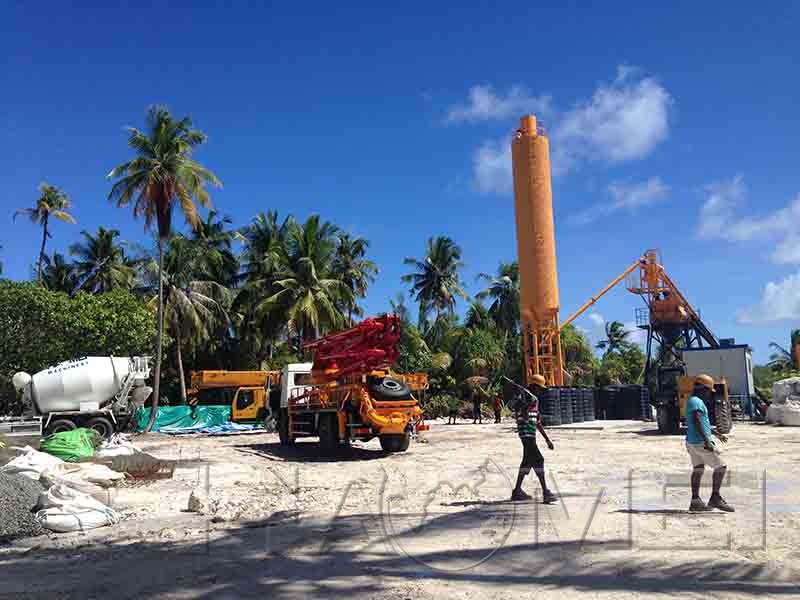
Price differences usually come from configuration, not only brand margin. Two plants with the same nominal output may have different mixers, weighing sensors, screw conveyors, air compressors, control software, cement silos, dust collectors, and aggregate feeding systems.
Check whether the quotation includes shipping packaging, spare parts, installation support, commissioning, operator training, and foundation drawings. Some offers look lower because the cement silo, control room, additive system, or installation service is excluded. Others include imported electrical parts or a heavy-duty mixer, which increases upfront cost but may reduce stoppages later.
Also compare the steel structure. A stronger aggregate bin, better anti-corrosion treatment, and thicker support frame can matter in humid, coastal, or high-duty environments. The lowest initial price may not be economical if the plant needs frequent repair or cannot maintain weighing accuracy.
After-sales support should be discussed before payment, not after a fault occurs. Ask the manufacturer to provide a written installation schedule, commissioning process, training scope, warranty period, and spare parts list. Clarify whether technicians can visit the site, whether remote diagnosis is available, and how quickly standard parts can be shipped.
For new equipment owners, operator training is especially valuable. A batching plant depends on correct calibration, moisture adjustment, cleaning, lubrication, and daily inspection. Poor operation can make even a well-built plant perform badly. Request training for the control system, emergency stop procedures, mixer maintenance, weighing calibration, and safe silo operation.
When comparing concrete batching plant manufacturers, treat the proposal as a complete operating package. A strong offer should make the plant capacity, configuration, delivery time, installation responsibility, and service terms easy to understand before the equipment leaves the factory.
Original source: https://www.concretebatchplanthm.com/a/concrete-batching-plant-manufacturers.html
Tags: Concrete Batching Plant Manufacturers Concrete Batching Plant Mobile Concrete Plant Stationary Batching Plant
Prev: How Many Yards Per Hour Can A Portable Concrete Plant Produce
Next: Countercurrent Concrete Mixer VS Planetary Concrete Mixer