CONTACT
1
Want to get quotation of concrete batching plant at once? Contact Us. Quick reply is as efficient as our equipment.
+86-15978414719

Sep 01, 2026
A concrete boom pump is a high-value production asset, not simply a larger version of a line pump. The correct unit must reach the pour area, deliver the specified concrete mix at the required rate, fit the site, and remain supportable throughout its service life.
For contractors evaluating a concrete boom pump for sale, the most expensive mistakes are usually under-sizing the boom, overlooking access and outrigger space, or accepting an incomplete service history on a used machine. Start with project data instead of selecting on boom length alone.
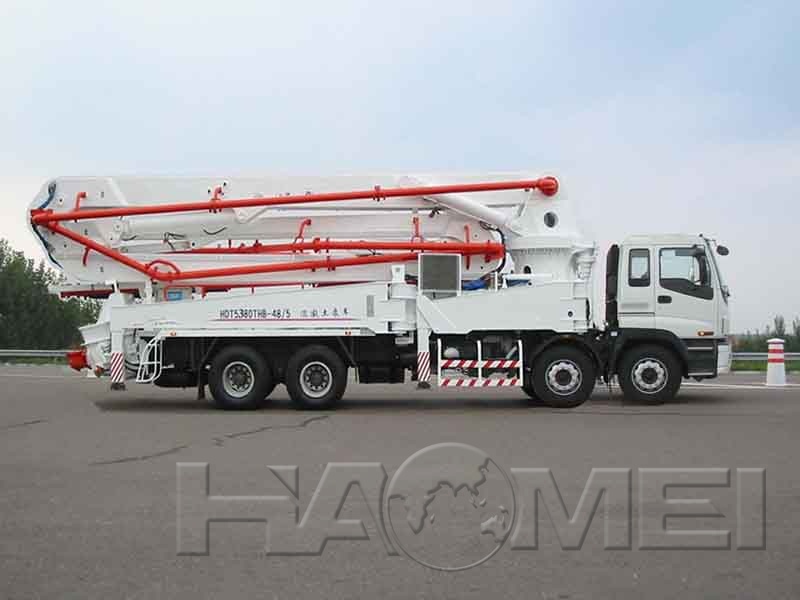
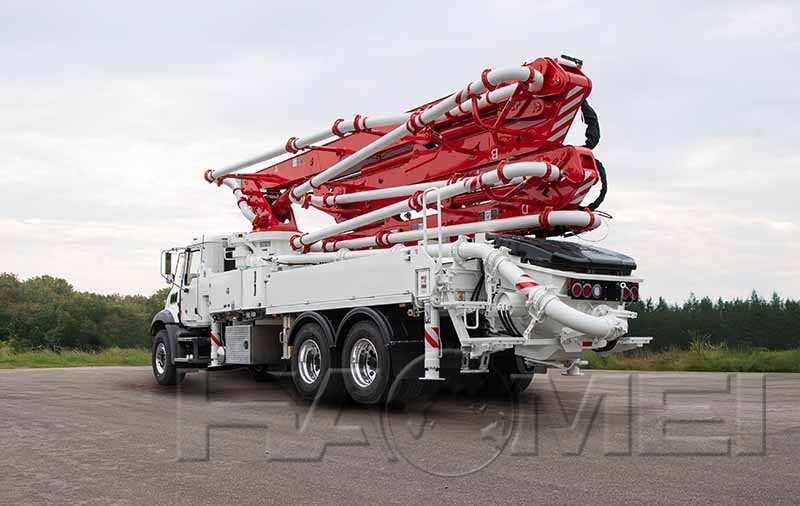
A truck-mounted boom pump combines a placing boom, concrete pump, hopper, pipeline, outriggers, and road-going chassis. The boom places concrete from above, reducing the manual handling and temporary pipeline work that can slow slab, wall, bridge, and high-rise pours.
Measure the jobsite before requesting a quotation. Ask for the manufacturer boom diagram, not only the nominal boom length. A 45 m class machine does not provide 45 m of horizontal reach in every boom position. Vertical reach, horizontal reach, depth reach, and unfolding height vary by design and must be checked against the actual pour geometry.
Use this pre-purchase checklist:
| Application condition | Typical equipment fit | Selection check |
|---|---|---|
| Tight urban residential sites | Compact boom pump, often 24 m to 37 m class | Check unfolding height, narrow outrigger setup, and truck access. |
| Mid-rise slabs and commercial structures | 37 m to 45 m class boom pump | Confirm horizontal reach past setbacks and sufficient delivery rate. |
| Large podiums, warehouses, bridges | 45 m to 58 m class boom pump | Assess long-reach stability, setup area, and concrete supply logistics. |
| Remote placement or restricted truck access | Separate pump with pipeline or specialized setup | Compare pipeline labor, setup duration, and cleaning requirements. |
For common commercial placement work, a 45 Meter Concrete Boom Truck can offer a practical balance between reach and transportability. It still requires a verified setup plan because the longest-reach location may create the highest stability demand.
New equipment typically provides factory warranty, current control systems, and known maintenance status. It may also have longer lead times and a higher capital commitment. Used equipment can improve entry cost, but only when its condition is proven through records, inspection, and operational testing.
Do not rely on engine hours alone. A pump with moderate hours may have high wear if it handled abrasive mixes, operated at high pressure, or received inconsistent cleaning. Inspect wear components that directly influence reliability: concrete cylinders, delivery pistons, spectacle plate, cutting ring, hopper agitator, S-valve or rock valve components, delivery pipe, elbow wear, boom pins, boom bushings, and hydraulic hoses.
| Evaluation area | New unit focus | Used unit focus |
|---|---|---|
| Pump performance | Rated output, maximum pressure, hopper capacity, warranty terms | Pump test results, pressure stability, leakage, cylinder and valve wear |
| Boom system | Reach chart, remote-control functions, safety interlocks | Boom weld inspection, pin and bushing play, boom movement, cylinder condition |
| Chassis | Local registration, axle configuration, dealer support | VIN history, emissions compliance, tire condition, brakes, suspension, driveline |
| Digital records | Telematics access, fault reporting, service intervals | Downloaded fault codes, hour records, maintenance invoices, parts history |
| Commercial risk | Financing, delivery date, warranty exclusions | Independent inspection, parts availability, repair allowance, transport cost |
Request a witnessed pumping test with the type of mix the machine will handle. During the test, check boom movement, remote response, hydraulic temperature, pressure behavior, hopper agitation, and any fault messages. An independent inspection by a qualified pump technician is prudent before finalizing a used-equipment purchase.
Purchase price is only one line in the investment model. Build an hourly ownership rate using the following inputs:
Annual ownership cost + annual insurance + annual compliance cost + annual maintenance reserve + annual operator cost, divided by productive annual pumping hours.
Then add variable costs per hour, including fuel, wear parts, concrete washout handling, mobilization, and transport permits where applicable. Obtain current pricing directly from manufacturers, authorized dealers, and finance providers because configuration, chassis, region, exchange rates, freight, and support coverage materially affect quotations.
A fleet requiring frequent long-reach work may benefit from a 52m Truck-Mounted Concrete Pump, but the revenue plan should show enough utilization to recover higher acquisition, maintenance, and transport costs.
Concrete pumping involves pressurized pipeline, moving boom sections, suspended hose-end hazards, vehicle movement, and unstable ground risks. The manufacturer operating manual and local legal requirements take priority over production targets.
In the United States, OSHA 29 CFR 1926.701 addresses concrete and masonry construction, while OSHA 29 CFR 1926.416 requires protection where employees may contact electric circuits. Establish a documented power-line assessment before setup. The American Concrete Pumping Association also publishes pump-safety resources and emphasizes trained operators, clear communication, exclusion zones, and proper outrigger support.
Use a daily operating control list:
Digital records are increasingly valuable at resale and during warranty or dispute reviews. Telematics data can support preventive maintenance scheduling, identify recurring hydraulic or engine alerts, and document utilization by project. Pair that data with manual inspection records because wear-item condition cannot be determined from hours alone.
Before placing an order, ask the supplier for the exact boom diagram, full technical specification, chassis dimensions, outrigger reactions, maintenance schedule, parts lead-time commitment, operator training scope, warranty exclusions, and local service contact details. These documents determine whether the machine can perform safely and profitably on the work you actually pursue.
Original source: https://www.concretebatchplanthm.com/a/concrete-boom-pump-for-sale.html
Tags: Concrete Boom Pump for Sale Concrete Pump Truck