CONTACT
1
Want to get quotation of concrete batching plant at once? Contact Us. Quick reply is as efficient as our equipment.
+86-15978414719

Aug 27, 2026
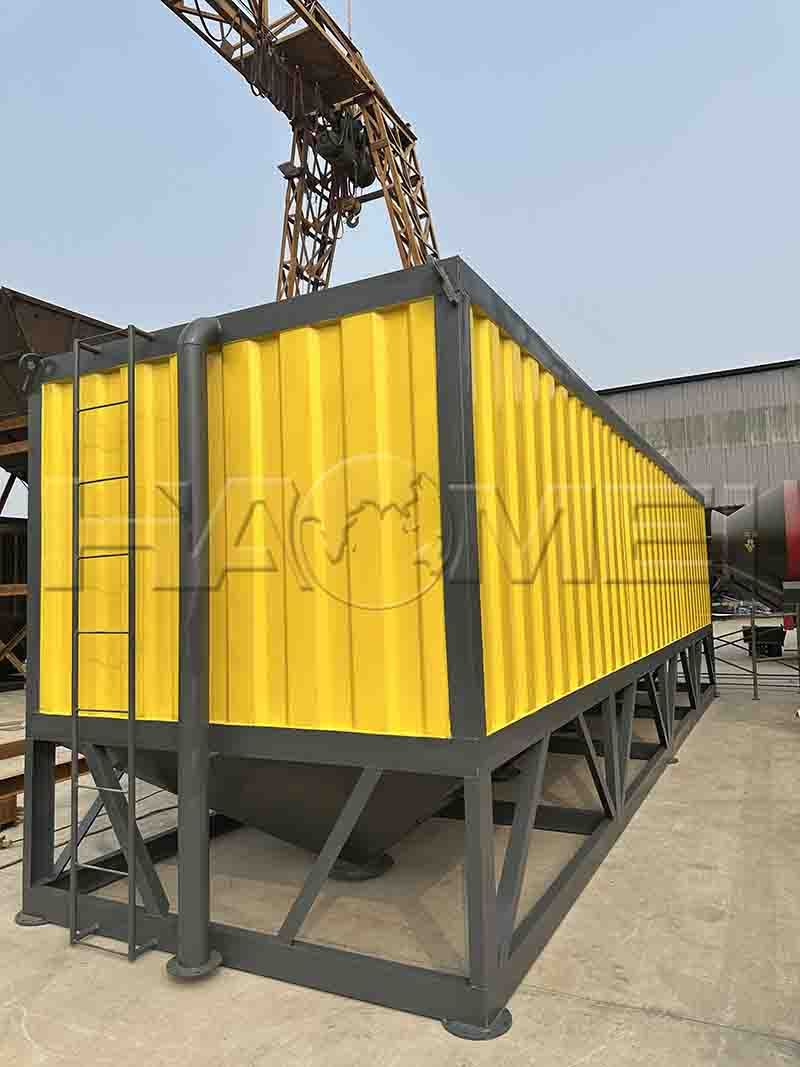
In engineering scenarios such as concrete mixing, infrastructure construction, and dry-mix mortar production, horizontal cement silos are increasingly replacing traditional vertical silos as the primary equipment for storing powdered materials at small- and medium-sized construction sites, thanks to their compact footprint, ease of installation, low center of gravity, and high adaptability. However, materials like cement and fly ash consist of ultra-fine, dry particles; consequently, dust leakage is highly likely to occur throughout the entire process—from pneumatic feeding and internal pressure stabilization to material discharge.
Excessive dust not only leads to raw material loss, equipment jamming due to dust accumulation, and obstructed visibility for operators, but also triggers environmental issues such as air pollution and PM2.5 limit violations. Furthermore, it poses a significant risk of dust explosions, making effective dust control measures crucial.
Compared to traditional vertical silos, horizontal silos feature unique structural designs and operational methods. Dust issues are concentrated in three key stages, which also serve as the critical entry points for precise dust control.
Firstly, dust generation during pneumatic feeding and pressure relief. When a tanker pneumatically feeds material into the silo, a high-speed airflow carries a large volume of ultra-fine dust into the vessel, causing a sudden spike in internal air pressure. If the exhaust system is inefficient or the pressure-relief design is flawed, dust-laden air escapes through gaps—such as the silo lid or pipe connections—creating persistent airborne dust.
Secondly, dust generation caused by discharge turbulence. Horizontal silos utilize a flat material-layer structure and feature larger discharge openings. During discharge, the significant drop of material creates turbulence and disrupts internal airflow, easily generating dust at the discharge outlet. Simultaneously, residual powder inside the silo can easily drift away with the airflow, exacerbating on-site dust pollution.
Dust control strategies prioritize the core principle of "suppression at the source to minimize dust generation." By optimizing the inherent structural design of portable cement silos to prevent dust dispersion at the root, the results achieved are far superior to those of traditional "end-of-pipe" dust removal methods.
Firstly, optimize the silo's internal flow structure to stabilize airflow. In traditional horizontal silos, the inner walls are flat; incoming airflow strikes the walls directly, creating turbulence that intensifies dust suspension. The improved equipment features an arched flow-guiding chamber combined with a zoned buffering structure and internal baffles; this effectively dampens the high-speed intake airflow, preventing direct turbulence against the powder and reducing the suspension and dispersion of ultrafine dust. Additionally, the flat chamber design significantly minimizes powder accumulation and the vertical drop during discharge, thereby reducing dust generation at the source during both loading and unloading.
Secondly, the system integrates a comprehensive, multi-dimensional sealing mechanism. To address the common issues of multiple connection points and dust leakage in horizontal silos, the standardized dust-proof silo utilizes aging-resistant rubber gaskets at sectional joints, with flange connections secured by evenly tightened bolts. Embedded sealing structures are employed for top access hatches and pressure relief ports. Inlet and outlet piping feature integrated welding combined with flexible sealed joints to absorb vibrations that might otherwise loosen connections, ensuring a fully sealed chamber and completely blocking pathways for dust escape.
Finally, the system is equipped with a precise, pressure-stabilizing exhaust structure. Air pressure imbalance within the silo is a primary cause of dust generation during loading; the optimized horizontal silo incorporates directional, pressure-stabilizing exhaust channels. Exhaust ports are positioned within the airflow buffer zone to avoid direct impingement on the powder bed. This allows high-pressure, dust-laden air to be vented in a controlled manner, eliminating dust "blowouts" caused by internal pressure buildup and effectively reducing the operational load on downstream dust collection equipment.
By combining structural dust suppression at the source with specialized dust collection equipment, safety protection devices, and routine management protocols, a closed-loop control system is established to thoroughly resolve dust pollution issues.
Firstly, a compatible roof-mounted pulse dust collection system. Dust collection equipment is matched to the silo's tonnage, with small, medium, and large horizontal silos paired with appropriately sized pulse-jet bag filters to ensure sufficient filtration area. The equipment utilizes high-precision PTFE-membrane-coated fiberglass filter media, offering extremely high capture efficiency for ultrafine dust while preventing powder adhesion and clogging. An intelligent pulse-jet cleaning system automatically removes accumulated dust, ensuring stable operation and easy maintenance, while the compact design fits the limited installation space on the silo roof.
Secondly, safety configurations for explosion and static electricity prevention. To address the combustible and explosive nature of cement dust, the equipment features reliable, continuous grounding and utilizes anti-static filter media to eliminate static electricity accumulation. Pressure relief devices—such as explosion-proof valves and rupture discs—are standard on the silo roof, enabling rapid pressure release during anomalies. Explosion-proof models are used for dust control units and fan motors, ensuring suitability for high-risk site operations while balancing dust removal efficiency with operational safety.
Thirdly, targeted control measures are implemented to manage dust emissions during discharge. A negative-pressure dust collection hood and a small dust extraction fan are installed at the discharge outlet; this creates a localized negative-pressure zone during unloading to capture dust generated by the material's fall. Simultaneously, an enclosed barrier isolates the work area, and on-site water spraying is used to suppress dust, effectively preventing the spread of secondary dust.
Fourthly, intelligent, routine operation and maintenance management is employed. The system is equipped with intelligent monitoring modules that track internal silo pressure and equipment status in real-time, triggering automatic alarms for any anomalies. A routine inspection mechanism is established to regularly check sealing components, dust cleaning systems, and grounding devices, ensuring the timely replacement of worn parts. Additionally, operational workflows are optimized—such as regulating intake airflow velocity—to minimize turbulent airflow disturbance to the powdered material, thereby ensuring consistent, long-term dust removal performance.
Original source: https://www.concretebatchplanthm.com/a/dust-control-solutions-for-horizontal-cement-silos.html
Tags: portable cement silo