CONTACT
1
Want to get quotation of concrete batching plant at once? Contact Us. Quick reply is as efficient as our equipment.
+86-15978414719

Sep 03, 2026
In applications such as concrete mixing, infrastructure construction, and the production of dry-mix building materials, cement silos serve as the core equipment for storing powdered materials like cement and fly ash. The cement silo loading system is an integrated suite of equipment designed to ensure the precise and stable transfer of materials from transport vehicles to the silo, while enabling automated storage, flow control, and conveyance.
This system moves beyond traditional, crude operational methods—such as manual handling or simple conveyor setups—to become the essential support system for powder material storage and handling. It directly determines material supply efficiency, material loss rates, and the environmental quality of the construction site.
A complete cement silo loading system is not merely a single silo unit; it comprises several core components: a horizontal feeder, the cement silo tank, pneumatic conveying pipelines, a dust collection unit, material level monitoring equipment, and an automated control system. Among these, the horizontal cement feeder,acts as the "powerhouse" driving the entire loading process.
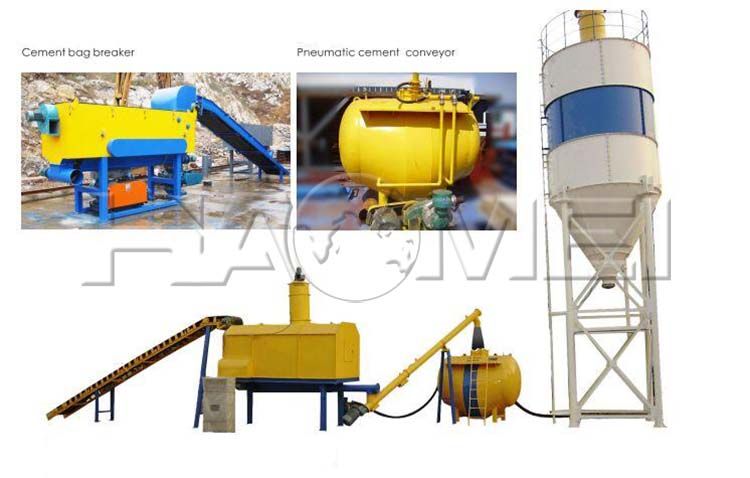
Unlike traditional vertical feeding equipment, the horizontal feeder features a horizontal tank structure and a full-length, bottom-mounted fluidized air cushion design that eliminates conveying "dead zones." It is a specialized feeding unit tailored for cement silo operations; the two components work in seamless coordination throughout the loading process, offering exceptional compatibility and operational synergy.
Firstly, the system ensures interface compatibility and rapid connection. The horizontal feeder's discharge outlet utilizes standard couplings found on bulk cement trucks, allowing for quick connection between transport vehicles and the silo's inlet piping without complex modifications, making it compatible with various standard cement silo models. Upon startup, pressurized air is injected into the tank, fully fluidizing and suspending the powdered materials (such as cement or fly ash). This prevents clumping or adhesion, laying the groundwork for uniform, steady conveyance.
Secondly, the system enables intelligent linkage and precise material control. The horizontal feeder integrates closely with the material level sensors atop the silo and the automated control system. When the material level in the silo reaches a preset high-level threshold, the feeder automatically slows down and halts the supply to prevent overflow and waste; conversely, when the level drops to a preset low point, the equipment automatically restarts to replenish the supply, ensuring on-demand material delivery. Furthermore, the horizontal feeder’s dense-phase, low-speed conveying method allows material to accumulate evenly inside the cement silo, preventing localized piling or uneven distribution and significantly increasing the silo's volumetric utilization rate.
Finally, the system features closed-loop dust removal for integrated environmental protection. The horizontal feeder operates as a fully enclosed conveying system with no open material exposure; combined with the cement silo’s built-in bag-type dust collector, it simultaneously captures and filters the trace amounts of dust generated during transport. This creates a synergistic "enclosed conveying + centralized dust removal" workflow that eliminates dust leakage at the source.
Traditional cement silo loading methods often suffer from issues such as clogging, flow interruptions, and uneven conveying. These require frequent manual clearing and monitoring; not only is the loading speed slow, but it also delays subsequent processes like mixing and pouring, severely impacting the overall project schedule.
With the horizontal feeder installed, the full-area fluidization structure at the base eliminates material "dead zones." Uniform fluidization and smooth discharge ensure there are no clogs or jams, while a steady, continuous flow rate drastically boosts loading efficiency.
Meanwhile, the automated interlocking control mode eliminates the need for constant manual monitoring or manual equipment start/stop operations, substantially cutting labor costs. Precise, on-demand feeding prevents spillage and waste from residual material, effectively reducing powder loss and offering significant long-term economic benefits.
A stable supply rhythm also ensures continuous operation of downstream mixing equipment, preventing schedule delays caused by supply interruptions. Besides, the cement feeder price is not expensive, but it greatly improve the whole plant's efficiency.
Dust pollution is a major challenge when handling powder materials. Traditional open or semi-open loading operations often cause dust to billow across the site, polluting the surrounding environment and endangering the health of construction personnel. Furthermore, such methods fail to meet modern standards for green and civilized construction site acceptance.
The integrated system comprising the horizontal feeder and cement silo ensures that the entire process—from material conveying to silo intake—is fully enclosed. Compared to traditional conveying methods, this system completely eliminates dust leakage during material transfer and storage; the construction site remains free of accumulated dust and material spillage, resulting in significantly improved cleanliness.
At the same time, the enclosed operation mode reduces the risk of cement moisture absorption and clumping, ensuring consistent material quality while minimizing the subsequent workload for equipment and site cleanup-making it perfectly suited to the green construction requirements of municipal projects, commercial concrete plants, and infrastructure developments.
Original source: https://www.concretebatchplanthm.com/a/what-is-cement-silo-feeding-system-china.html
Tags: cement silo