CONTACT
1
Want to get quotation of concrete batching plant at once? Contact Us. Quick reply is as efficient as our equipment.
+86-15978414719

Nov 24, 2026
A planetary mixer industrial unit is specified when mix uniformity, short batch cycles, and reliable handling of dry or stiff materials matter more than the lowest purchase price. It is common in precast concrete, pavers, blocks, pipes, UHPC, refractory castables, terrazzo, and dry mortar applications.
Unlike a drum mixer, a planetary design uses one or more rotating stars that travel around the pan. The resulting counter-current movement creates multiple mixing paths across the whole batch. This helps eliminate unmixed zones, particularly with low-slump concrete, pigment, fibers, and fine powders.
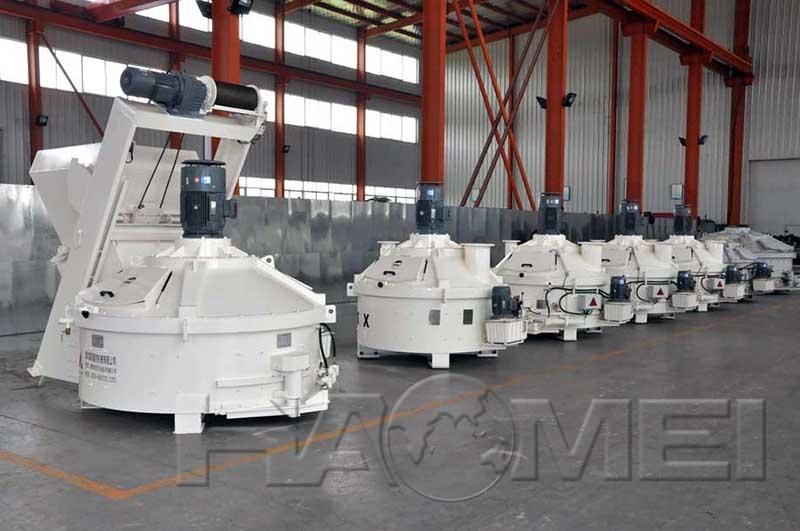
Do not select a pan mixer from nominal volume alone. Start with the required discharged concrete volume per batch, daily operating hours, mix design, aggregate size, and target cycle time.
Manufacturers may publish both gross vessel volume and compacted concrete output. These are not interchangeable. Require the supplier to state the tested batch output, material bulk density assumptions, recommended fill ratio, and cycle time for your actual recipe.
| Requirement | What to confirm | Why it matters |
|---|---|---|
| Product type | Precast, blocks, pavers, refractory, mortar, UHPC | Stiffness and abrasion determine drive torque and liner selection. |
| Batch output | Net discharged volume, not pan volume | Prevents an undersized mixer or chronic overfilling. |
| Aggregate | Maximum particle size, grading, moisture | Affects blade clearance, wear, and segregation risk. |
| Concrete consistency | Slump, zero-slump, fiber content, admixtures | Stiff and fiber-reinforced mixes need higher torque reserves. |
| Plant output | Batches per hour and loading sequence | Determines whether mixing time or material handling is the bottleneck. |
| Site utilities | Voltage, frequency, compressed air, water | Avoids costly electrical or pneumatic modifications. |
| Cleaning method | Washout water, dry cleaning, access points | Directly affects downtime and wastewater management. |
For standard wet concrete with high throughput, compare a planetary model against a twin-shaft machine. A planetary system is often preferred for colored products, architectural precast, and dry-cast production because the entire pan receives mixing action. Twin-shaft equipment can be attractive for larger structural-concrete batches and rapid discharge cycles. Evaluate a Sicoma Twin Shaft Mixer only against the same mix design, batch size, and operating cycle.
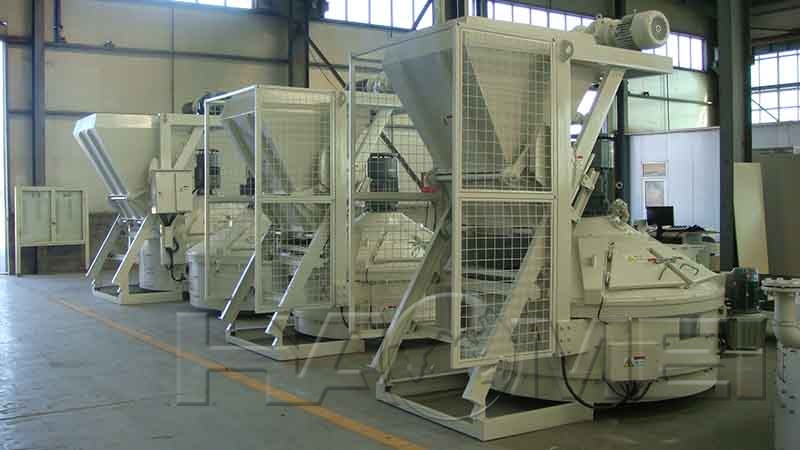
Ask for a witnessed test using representative materials. Cement, sand moisture, pigment, admixtures, aggregate shape, and fiber dosage can all change mixing behavior. A water-only or sand-only demonstration does not validate production performance.
Use the following acceptance items in the technical specification.
| Test item | Practical acceptance method |
|---|---|
| Uniformity | Take samples from early, middle, and late discharge. Test according to the project or plant quality plan. |
| Batch repeatability | Record batch mass, mixer amperage, mixing time, moisture correction, and discharge time over repeated cycles. |
| Residual material | Inspect the pan, discharge gate, and blades after discharge for buildup or dead zones. |
| Wear performance | Obtain liner, scraper, and blade material specifications plus replacement intervals from comparable installations. |
| Noise and vibration | Measure during loaded operation at the operating location, using locally applicable limits. |
| Automation integration | Confirm communication protocol, moisture probe compatibility, recipe storage, alarms, and batch reports. |
For concrete supplied to projects, production controls should align with the governing project specification and relevant standards. ASTM C94/C94M addresses ready-mixed concrete requirements in the United States, while EN 206 establishes requirements for concrete in European markets. Neither standard selects a mixer type. They instead make consistent batching, material control, and traceability essential.
A modern control system should retain batch records for cement, aggregate, water, admixtures, mixing duration, discharge time, and alarms. These records help investigate strength variation, color inconsistency, and delivery disputes. They also support preventive maintenance by tracking motor load, cycle counts, and gate-operation faults.
The purchase price is only one cost line. For abrasive concrete, liners, side scrapers, mixing blades, gearbox oil, seals, and discharge-gate components create the maintenance budget. Request a priced spare-parts list before comparing quotations.
Calculate annual ownership cost with this structure:
Annual ownership cost = financing or depreciation + energy + labor + wear parts + planned service + unplanned downtime + washout and waste handling
Energy cost should use the installed motor rating, expected loaded power draw, batches per hour, and local electricity tariff. Do not assume that a larger motor automatically means higher energy use per cubic meter. A correctly loaded machine with a short, repeatable cycle may use less energy per finished unit than an overloaded smaller machine.
Ask suppliers to itemize these commercial terms:
For applications needing smaller batches or highly uniform dry-cast output, a Planetary Concrete Mixer for Sale should be assessed by its documented output per hour, service access, and spare-parts support rather than by pan capacity alone.
Mixer hazards include entanglement, crushing at the discharge gate, unexpected startup, cement dust exposure, and high-pressure washdown. In the United States, OSHA 29 CFR 1910.147 covers control of hazardous energy, and OSHA 29 CFR 1910.212 covers general machine guarding. Construction sites may also need to address respirable crystalline silica requirements under OSHA 29 CFR 1926.1153. Local rules and project requirements can impose additional obligations.
Specify these controls before installation:
Industry development is moving toward recipe-level traceability, moisture-based water correction, condition monitoring, and remote service diagnostics. Select open communication options where possible, such as protocols supported by the existing batching plant. This reduces dependence on manual records and makes future plant upgrades less disruptive.
Original source: https://www.concretebatchplanthm.com/a/planetary-mixer-industrial.html
Tags: Planetary Mixer Industrial Counter-Current Concrete Mixer
Prev: Tractor Mounted Concrete Pump Market Trends: What Contractors Need in 2026