CONTACT
1
Want to get quotation of concrete batching plant at once? Contact Us. Quick reply is as efficient as our equipment.
+86-15978414719

Nov 19, 2026
A self loading concrete mixer machine combines aggregate loading, weighing, mixing, transport, and discharge in one mobile unit. It is designed for projects where ready-mix supply is distant, access roads are narrow, or daily concrete demand changes frequently. Instead of coordinating separate loaders, batching equipment, and mixer trucks, a small crew can produce fresh concrete close to the placement point.
This equipment is widely used for rural roads, foundations, drainage channels, utility work, precast yards, and small to medium building projects. Selecting the right model requires more than comparing drum capacity. Drum construction, hydraulic layout, axle strength, cab visibility, service access, and parts availability all influence long-term productivity.
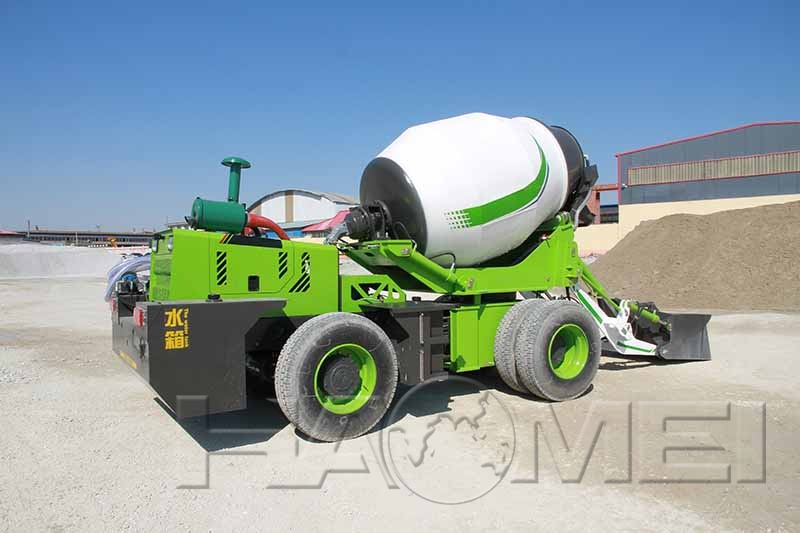
A typical mobile mixing unit uses a front-mounted hydraulic loading shovel to collect sand, stone, and cement. The shovel transfers materials into a reversible mixing drum. Water is supplied through an onboard tank, while a metering system helps the operator add water consistently. Depending on the manufacturer and configuration, the machine may use a weighing system or volume-based batching arrangement. For structural concrete, operators should verify actual batch weights and conduct slump testing in accordance with the project mix design.
The mixing drum is normally mounted on a rotating frame, allowing it to swing toward the discharge side. This arrangement improves placement flexibility because the operator can discharge concrete without repeatedly repositioning the entire machine. A reversible drum uses internal blades to mix while rotating in one direction and discharge when rotating in the opposite direction.
| Component | Important Design Feature | Practical Value |
|---|---|---|
| Loading shovel | Reinforced cutting edge and wear plates | Handles abrasive aggregate and reduces replacement frequency |
| Mixing drum | Wear-resistant steel and properly welded blade mounts | Supports uniform mixing and extends drum service life |
| Hydraulic system | Protected hoses, quality seals, filtration, and accessible valves | Provides smoother control and simplifies maintenance |
| Chassis and axles | Heavy-duty frame, adequate ground clearance, robust tires | Improves stability on uneven construction sites |
| Water system | Tank, pump, flow control, and clear level indication | Helps maintain repeatable water addition |
| Operator station | Wide-view cab, clear controls, and safety interlocks | Reduces fatigue and supports safer operation |
Material selection is especially important because wet concrete and aggregate are highly abrasive. The drum shell, mixing blades, shovel lip, and chute surfaces should be made from suitable wear-resistant steel or protected by replaceable liners. High-quality hydraulic hoses with abrasion-resistant outer covers are also valuable on rough sites. For electrical components, sealed connectors and protected wiring routes reduce failures caused by water, dust, vibration, and accidental impact.
For confined jobs, a compact HM6-D Mini Concrete Truck can be a practical option when access space and maneuverability are more important than high batch volume. For projects needing independent material loading and on-site production, a Self Loading Mixer Truck provides a more integrated workflow.
The main advantage of this equipment is process consolidation. One machine can load raw materials, mix concrete, travel around the site, and discharge where needed. This reduces equipment transfers and can shorten waiting time between batches. It is particularly useful where a fixed batching plant is not economical or where ready-mix trucks cannot reach the work area.
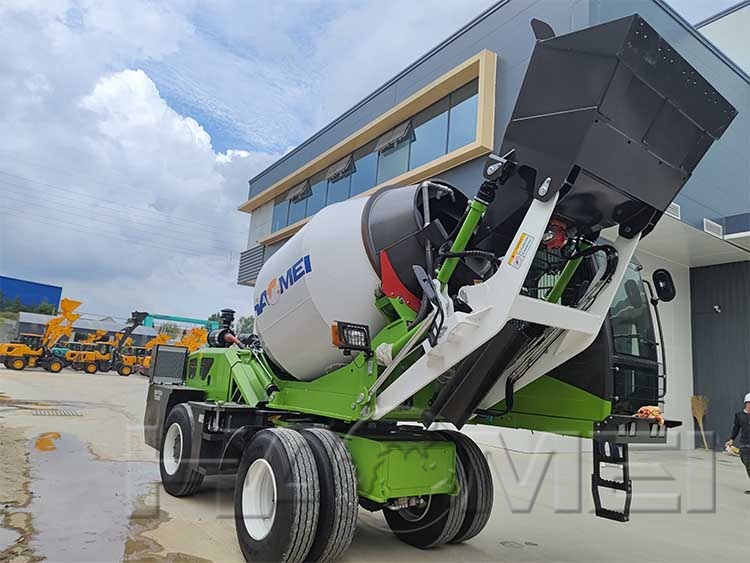
Operators can produce batches according to immediate placement needs, helping avoid concrete that has remained in transit too long. The machine can also support different approved mix proportions during one project, such as lean concrete for blinding layers and higher-strength mixes for footings. However, changing a mix design requires thorough drum cleaning and controlled batching to prevent contamination between mixes.
Key operating benefits include:
Productivity depends on real operating conditions, not rated drum capacity alone. Material stockpile distance, road condition, loading time, water availability, mix consistency, discharge location, and cleaning discipline all affect output. When comparing equipment, assess usable batch volume, cycle time, gradeability, turning radius, service support, and available replacement parts.
Daily inspections prevent many costly stoppages. Before starting work, check engine oil, coolant, hydraulic oil, tire condition, brakes, steering response, water supply, drum rotation, lights, alarms, and visible hose leaks. Remove hardened concrete from the shovel, drum mouth, chute, and discharge area before it becomes difficult to break away.
| Symptom | Likely Cause | Corrective Action |
|---|---|---|
| Drum rotates slowly or stops under load | Low hydraulic oil, blocked filter, pump wear, relief valve issue | Check oil level and temperature, inspect filter condition, and have hydraulic pressure tested by qualified personnel |
| Concrete is inconsistent between batches | Incorrect water addition, poor aggregate measurement, worn drum blades | Calibrate water flow, verify batching method, inspect blades and follow the approved mix design |
| Shovel lifts weakly | Hydraulic leak, low pressure, damaged cylinder seal, overloaded bucket | Inspect hoses and fittings, avoid overload, and repair leaks before operation continues |
| Engine overheats | Low coolant, blocked radiator, loose belt, excessive load | Clean radiator fins, check coolant and belt tension, and stop work if temperature remains high |
| Drum does not discharge fully | Hardened material, incorrect rotation direction, damaged internal blades | Confirm control direction, clean promptly after every shift, and inspect drum internals during scheduled service |
| Machine pulls to one side | Uneven tire pressure, brake drag, steering or axle issue | Check tire pressures first, then inspect brakes and steering components |
Hydraulic troubleshooting should never begin by loosening a pressurized hose or fitting. Shut down the engine, lower attachments safely, release pressure according to the manufacturer procedure, and use appropriate personal protective equipment. Hydraulic fluid injection injuries require immediate emergency medical attention, even when the wound appears minor.
Cleaning is one of the most important maintenance tasks. Wash the drum and discharge path immediately after the final batch while residue is still soft. Do not direct high-pressure water at exposed electrical connectors, breather openings, or sensitive seals. Follow the manufacturer maintenance schedule for lubrication, filter replacement, bolt torque checks, and blade inspection. Keeping records of operating hours, repairs, hydraulic oil changes, and wear-part replacement helps maintenance teams identify recurring faults before they interrupt a concrete pour.
Original source: https://www.concretebatchplanthm.com/a/self-loading-concrete-mixer-machine.html
Tags: Self Loading Concrete Mixer Machine Self Loading Mixer Truck
Prev: 25 m3h vs. 35 m3h Batching Plant: Which Capacity Should You Choose