CONTACT
1
Want to get quotation of concrete batching plant at once? Contact Us. Quick reply is as efficient as our equipment.
+86-15978414719

May 20, 2026
Over the past quarter, many English questions on Google search suggestions, Quora-style discussions, equipment forums, and contractor groups have focused on one practical issue: how much should a self loading transit mixer cost, and what makes one offer better than another? The answers below are written for contractors, rental fleet owners, and project managers who are comparing their first machine for roadwork, rural housing, foundations, canals, small batching jobs, and remote concrete supply.
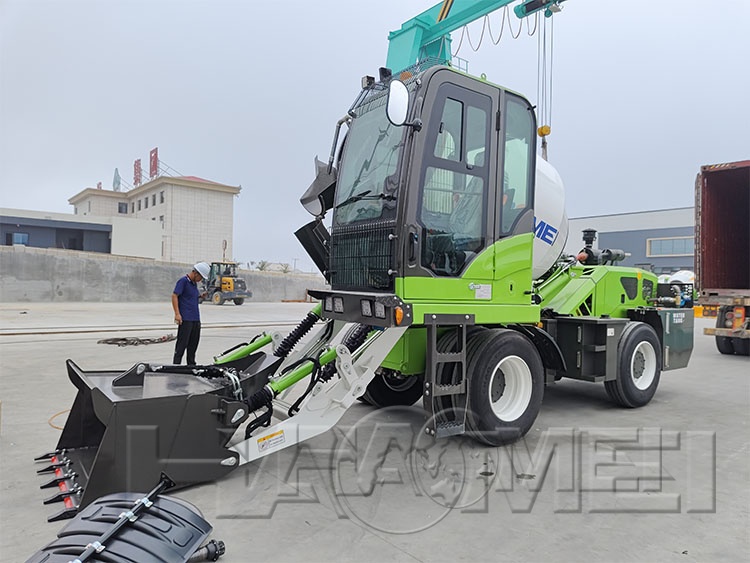
A realistic self loading transit mixer price usually depends on drum capacity, engine brand, drive system, hydraulic parts, weighing system, and export configuration. In many markets, small machines start near the price of a compact loader, while larger units can approach the cost of a full concrete production vehicle.
| Capacity class | Common use | Typical new machine price range, USD | Notes |
|---|---|---|---|
| 1.2 to 1.8 m3 | Village roads, narrow sites, repair work | 12,000 to 25,000 | Lower output, easier to transport |
| 2.0 to 3.5 m3 | Housing, farm projects, small contractors | 22,000 to 45,000 | Popular balance of cost and output |
| 4.0 to 5.5 m3 | Commercial slabs, bridges, rental service | 38,000 to 68,000 | Higher productivity and stronger axles |
| 6.0 m3 and above | Larger continuous pouring work | 60,000 to 90,000+ | Needs careful site planning and operator skill |
These figures are not fixed quotations. Freight, customs duty, local tax, spare parts package, warranty term, and optional systems can move the final landed cost by 10% to 35%. If you are also comparing a standard Concrete Mixer Truck, remember that a self loading unit includes loading, weighing, mixing, transport, and discharge functions in one machine.
This is one of the most common questions because two machines may both be described as 4 m3, yet their real value can be very different. A lower quote may use a smaller engine, lighter frame, basic hydraulic pump, manual water measurement, or a less accurate weighing device. A higher quote may include a stronger chassis, 4x4 steering, air-conditioned cab, imported hydraulic components, automatic water control, camera system, and thicker mixing drum steel.
Ask for the specification sheet, not only photos. Compare engine power, hydraulic pump brand, gearbox type, drum thickness, tire model, discharge height, climbing ability, turning radius, and after-sales parts support. A 4 m3 machine working on flat urban ground does not need the same specification as one climbing muddy slopes in a remote quarry area.
A cheap machine can be suitable if the job is light, the daily output is modest, and the site is close to repair support. It becomes risky when the project needs continuous pours, long travel, steep roads, or many operating hours per day. The purchase price is only one part of ownership.
| Cost item | Why it matters | How to check before purchase |
|---|---|---|
| Fuel consumption | Affects every cubic meter produced | Ask for hourly and per-batch figures |
| Wear parts | Blades, seals, tires, filters, hoses | Request a spare parts list with prices |
| Downtime | Delays concrete work and labor teams | Confirm local technician or video support |
| Drum quality | Impacts mixing efficiency and service life | Ask steel thickness and blade design |
| Weighing accuracy | Controls mix quality and cement waste | Check calibration method and display type |
A low entry price may save 5,000 USD at purchase but lose that amount quickly through cement waste, fuel use, broken hoses, or slow discharge. For medium-intensity work, many contractors prefer a balanced 3.5 to 4.0 m3 machine rather than the cheapest small model.
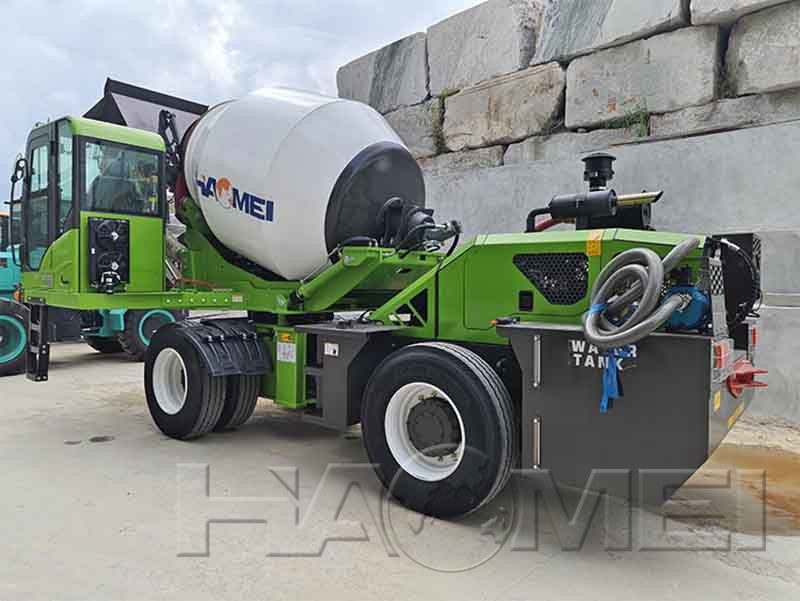
Monthly cost depends on site distance, operator habits, aggregate moisture, batch size, and working hours. For a small to medium unit running 6 to 8 hours per day, the largest expenses are fuel, operator salary, maintenance, tires, and financing if the machine is purchased through installments.
A practical monthly estimate may look like this:
| Monthly expense | Light use | Heavy use |
|---|---|---|
| Diesel | 600 to 1,200 USD | 1,500 to 3,000 USD |
| Operator and assistant | 700 to 1,800 USD | 1,200 to 2,500 USD |
| Maintenance and filters | 150 to 400 USD | 400 to 900 USD |
| Tire and wear allowance | 100 to 300 USD | 300 to 700 USD |
| Loan or lease payment | Varies by term | Varies by term |
When calculating return, estimate cubic meters produced per day, not only hours worked. If a 4 m3 machine completes 6 batches per day, it may produce about 24 m3 daily. If the project saves batching plant delivery fees, loader rental, and waiting time, the machine may recover its cost faster than expected.
Choose a self loading transit mixer when the site lacks a batching plant, aggregate and cement are stored nearby, or concrete demand changes throughout the day. It is especially useful for rural roads, mountain work, small bridges, irrigation channels, and scattered foundation jobs. The machine can load sand, stone, cement, and water, then mix and discharge without relying on a separate loader.
Choose a conventional transit mixer when you already have a batching plant, need long-distance delivery, or pour large volumes from central ready-mix production. A traditional truck generally carries more concrete per trip, but it does not batch materials by itself.
For contractors who need flexible batching at the site, a Self Loading Mixer Truck is often easier to justify than buying a loader, small batching plant, and mixer truck separately. For urban ready-mix delivery, a larger transit mixer still may be the better fit.
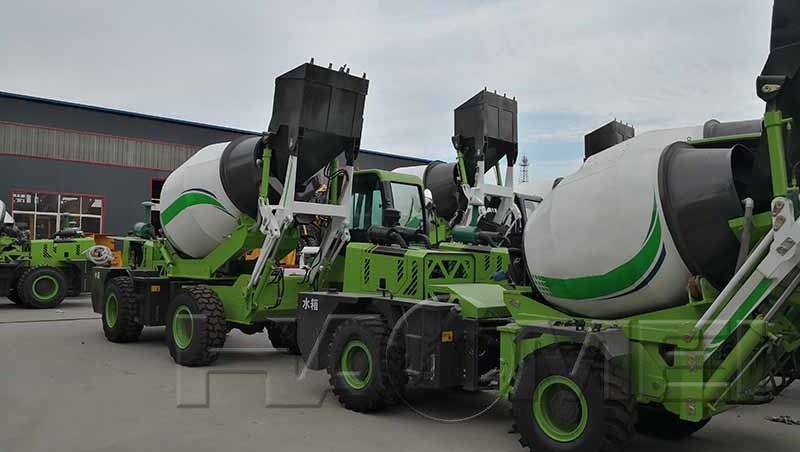
Before paying a deposit, ask the supplier these direct questions: What is included in the quoted price? Is the machine FOB, CIF, or delivered to my yard? Which spare parts come free with the machine? How long is the warranty for engine, hydraulic pump, axle, and drum? Can the supplier provide video inspection before shipment? What documents are included for customs clearance and registration?
Also ask for real working videos of the same model, not only showroom photos. If possible, request a test report showing mixing capacity, water tank volume, discharge angle, gradeability, weighing accuracy, and drum rotation speed. These details make the self loading transit mixer price easier to compare because they reveal what the machine can actually do on a job site.
Original source: https://www.concretebatchplanthm.com/a/self-loading-transit-mixer-price.html
Tags: self loading transit mixer price self loading concrete mixer cost transit mixer truck price mobile concrete mixer
Prev: How to Choose a Reliable Asphalt Batch Mix Plant Manufacturer