CONTACT
1
Want to get quotation of concrete batching plant at once? Contact Us. Quick reply is as efficient as our equipment.
+86-15978414719

May 27, 2026
Sicoma twin shaft mixer spare parts are not simple consumables. In a concrete batching plant, they directly affect mixing speed, discharge quality, energy use, and unplanned downtime. For construction equipment purchasers, understanding the structure of the mixer and the function of each replacement component makes procurement more accurate and maintenance planning much easier.
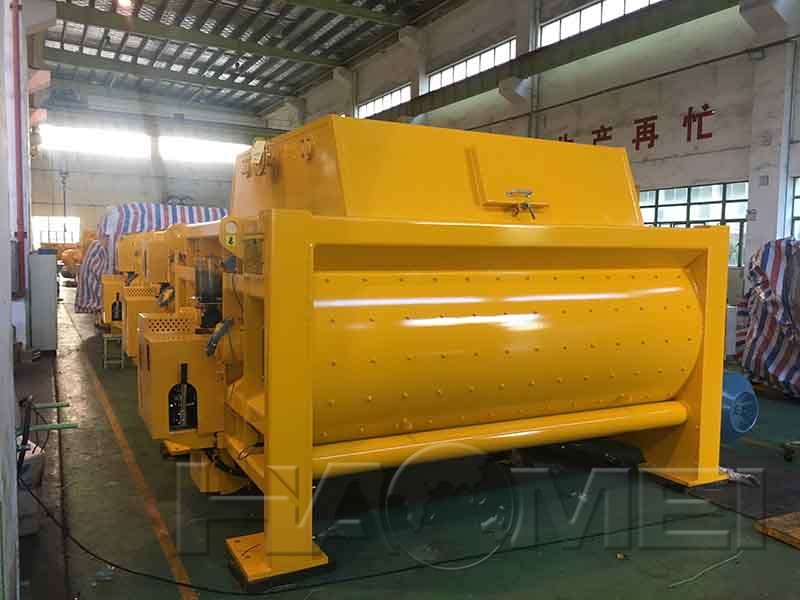
A twin shaft concrete mixer uses two horizontal shafts rotating in opposite directions. Mixing arms, paddles, and scrapers push aggregates, cement, water, and admixtures through overlapping material paths. This forced mixing action is why the machine is widely used for commercial concrete, precast production, road base material, and high-volume batching plants. When wear parts are well matched to the mixer model, the machine can keep stable mixing performance over many production cycles.
The advanced design of a Sicoma-type twin shaft mixer is centered on replaceable wear zones. Instead of allowing the tank body or shaft assembly to absorb abrasion, the machine uses liners, blades, arms, seals, and scrapers as serviceable components. This design helps protect the main structure and reduces the need for major repair work.
| Component | Design function | What to check before purchase |
|---|---|---|
| Mixing blades | Move material through the mixing trough and create high-shear action | Blade shape, bolt hole spacing, rotation direction |
| Mixing arms | Connect blades to the shaft and maintain mixing angle | Shaft diameter, arm length, mounting style |
| Side and bottom liners | Protect the trough from aggregate abrasion | Liner thickness, material grade, drawing number |
| Shaft end seals | Prevent slurry leakage into bearings and gearbox area | Seal type, lubrication method, model compatibility |
| Discharge door parts | Control concrete release and reduce leakage | Door arc, rubber seal size, cylinder connection |
| Bearings and couplings | Support shaft rotation and transmit torque | Load rating, alignment tolerance, original dimensions |
The shaft end sealing system deserves special attention. In concrete mixing, cement slurry is highly abrasive. If it reaches the bearing area, bearing life can drop quickly. Many twin shaft mixers use a multi-stage sealing arrangement with grease lubrication, seal rings, and protective housings. During replacement, the seal face must be clean, the grease path must be open, and the shaft surface must not be deeply scored.
For plants comparing equipment layouts, a complete Sicoma Twin Shaft Mixer can be evaluated together with a planned wear parts package, so production and maintenance costs are considered at the same time.
Concrete is a severe wear environment because sand, stone, cement powder, and recycled aggregates all attack the mixer surface. The correct material choice is therefore a major factor in service life. Actual material specifications should be verified against the mixer model, factory drawing, and supplier certificate, but the following selections are common in professional batching equipment.
| Part area | Common material choice | Advantage in operation |
|---|---|---|
| Blades and scrapers | High-chromium cast iron or wear-resistant cast steel | Strong abrasion resistance and stable mixing edge |
| Bottom liners | Ni-hard cast iron, high-chrome alloy, or hardened steel | Longer protection for the trough floor |
| Side liners | Wear-resistant alloy plate | Protects tank wall from coarse aggregate impact |
| Shaft seals | Hardened steel, rubber, polyurethane, and grease-sealed elements | Reduces slurry leakage and bearing contamination |
| Discharge seals | Abrasion-resistant rubber or polyurethane | Helps reduce dripping and material loss |
| Bolts and fasteners | High-strength alloy steel | Maintains clamping force under vibration |
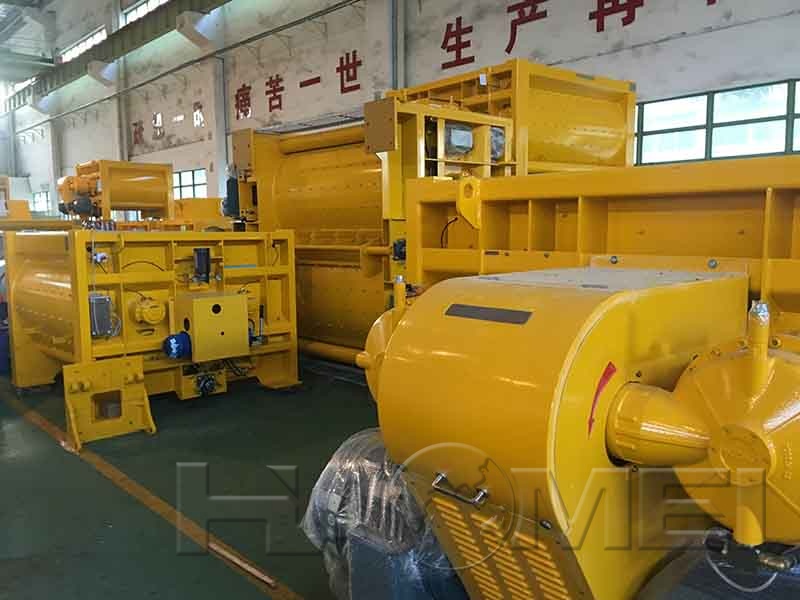
Using suitable replacement parts gives several practical advantages. First, the mixer maintains batch uniformity because blade angles and clearances remain close to the original design. Second, the motor and gearbox work under a more stable load. Worn blades often increase mixing time because material circulation becomes weaker. Third, planned replacement reduces emergency stoppages, which is especially important for ready-mix plants supplying multiple job sites in one day.
Good parts also help protect the investment in the machine body. Replacing liners at the right time prevents aggregate from cutting into the trough shell. Replacing shaft seals before leakage becomes serious protects bearings, shaft ends, and drive components. For smaller plants using twin shaft mixing technology, the JS750 Twin Shaft Concrete Mixer is a useful reference when matching mixer capacity with wear part planning.
Most mixer faults give early signs. Operators and maintenance teams should record noise, discharge time, motor current, concrete residue, leakage, and grease use. A simple inspection routine can prevent a small wear issue from becoming a shutdown.
| Symptom | Likely cause | Inspection point | Recommended action |
|---|---|---|---|
| Mixing time becomes longer | Blades worn or incorrect clearance | Blade edge thickness and distance to liner | Replace blades or adjust mounting position |
| Concrete residue remains in corners | Scraper wear or missing scraper plate | Side scraper angle and bolt tightness | Replace scraper and clean hardened buildup |
| Slurry leaks near shaft end | Seal wear, blocked grease line, shaft damage | Grease outlet, seal ring, shaft sleeve surface | Clean lubrication path and replace seal set |
| Abnormal vibration | Loose arms, uneven blade wear, bearing issue | Arm bolts, shaft runout, bearing temperature | Tighten fasteners and inspect bearing assembly |
| Discharge door drips | Door seal wear or cylinder misalignment | Seal compression and door closing position | Replace rubber seal and adjust actuator stroke |
| Motor current rises | Overloading, hardened concrete buildup, worn mixing geometry | Batch size, trough cleanliness, blade condition | Remove buildup and restore correct blade profile |
A reliable maintenance plan should include daily, weekly, and scheduled shutdown tasks. Daily checks include listening for unusual noise, confirming discharge door movement, checking for visible leakage, and cleaning remaining concrete before it hardens. Weekly checks should cover bolt tightness, liner wear, blade wear, grease pump operation, and seal condition. During scheduled shutdowns, measure liner thickness, inspect shaft end housings, check arm alignment, and compare worn parts with new parts before installation.
Installation quality is as important as part quality. Before fitting new liners or blades, remove hardened concrete from the mounting surface. Do not install a new wear plate over trapped material, because uneven contact can crack cast parts or loosen bolts. Fasteners should be tightened in a balanced sequence according to the equipment manual. After replacement, run the mixer empty, listen for contact noise, then perform a low-load trial batch before returning to full production.
Spare stock should be based on actual wear speed, aggregate hardness, daily production volume, and delivery time from the supplier. A practical stock list usually includes mixing blades, side scrapers, bottom liners, shaft seal kits, discharge door seals, lubrication fittings, limit switches, and high-strength bolts. For high-output plants, keeping one full seal set and one blade set on site reduces risk during peak construction periods.
When ordering, provide the mixer model, serial number, part drawing, quantity, material requirement, and photos of the existing component. If the plant has changed aggregate size or concrete mix design, mention it to the supplier, because abrasive conditions may require a different liner or blade material. Careful selection and disciplined inspection help the mixer deliver stable concrete quality while keeping maintenance predictable.
Original source: https://www.concretebatchplanthm.com/a/sicoma-twin-shaft-mixer-spare-parts.html
Tags: Sicoma twin shaft mixer spare parts twin shaft mixer wear parts concrete mixer replacement parts