CONTACT
1
Want to get quotation of concrete batching plant at once? Contact Us. Quick reply is as efficient as our equipment.
+86-15978414719

Sep 08, 2026
Small concrete pump trucks are attracting attention from contractors handling residential foundations, low-rise buildings, repair work, and restricted urban sites. Recent English-language Q&A discussions commonly focus on whether a compact boom pump can reach the pour point, handle the specified mix, and remain productive without creating access problems.
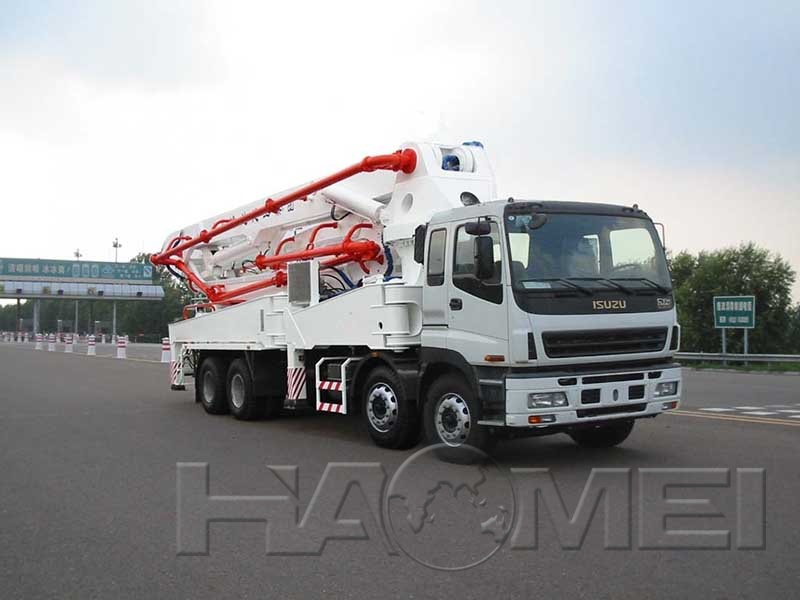
The term "small" can be misleading. A compact truck-mounted pump is not simply a lower-output machine. It is a combination of chassis size, boom configuration, hopper capacity, pumping pressure, and practical setup footprint. The right unit should suit the longest hose route and the hardest pour, rather than only the average project.
| Common question | What should be checked first | Practical decision factor |
|---|---|---|
| What boom length is enough? | Horizontal reach, vertical reach, and setup space | Obstacles often matter more than building height |
| Can it pump my mix? | Aggregate size, slump, and mix consistency | Pumpability depends on the full mix design |
| Will it fit a tight site? | Truck width, outriggers, turning radius, and overhead clearance | A compact chassis does not eliminate setup requirements |
| What does it cost to run? | Fuel, labor, wear parts, cleaning, and idle time | Output per hour matters more than pump price alone |
| Can it replace a line pump? | Access path and pour frequency | Boom convenience is valuable when repositioning is frequent |
For a typical two-story residential structure, reach should be calculated from the truck's realistic parking position, not from the building edge. Measure from the likely truck location to the furthest pour point, then include vertical rise, hose routing around corners, and a working allowance. A boom that appears sufficient on a brochure can become too short when the truck must remain outside a gate, behind parked vehicles, or away from weak ground.
For many house foundations, ground slabs, and second-floor pours, a boom in the compact-to-mid-range category can work well if the truck can park close to the structure. However, a narrow lot with rear access restrictions may need greater horizontal reach than a taller open site. Comparing a compact machine with a 37 Meters Concrete Pump Truck For Sale can help establish whether additional reach would reduce hose handling and crew movement.
Ask the supplier for the boom's actual deployment diagram. It should show reach at different boom angles, not just the maximum number printed in the model name. Also verify outrigger extension options. Some machines offer narrow-side deployment, but this may affect permitted operating conditions and must be reviewed before the pour.
It may be possible, but the answer is not determined by aggregate size alone. The pump's delivery-cylinder diameter, pipe diameter, mix grading, cementitious content, slump, and aggregate shape all influence the risk of blockage. A well-designed 3/4-inch aggregate mix may pump reliably through an appropriate system, while a harsh mix with poor fines content can cause trouble even with smaller aggregate.
Before scheduling a pour, provide the ready-mix producer's complete mix data to the pump operator or equipment supplier. Check the maximum permitted aggregate size for the selected pump and pipeline. The safest practice is to avoid treating slump as the only pumpability measure. Adding water at the site can weaken the concrete and may not solve an unstable mix design.
For repeated pumping work, establish a written mix approval routine. It should identify acceptable aggregate, target slump range, admixtures, and the priming material used before pumping. That process reduces surprises when a new batch plant or seasonal material source changes the concrete behavior.
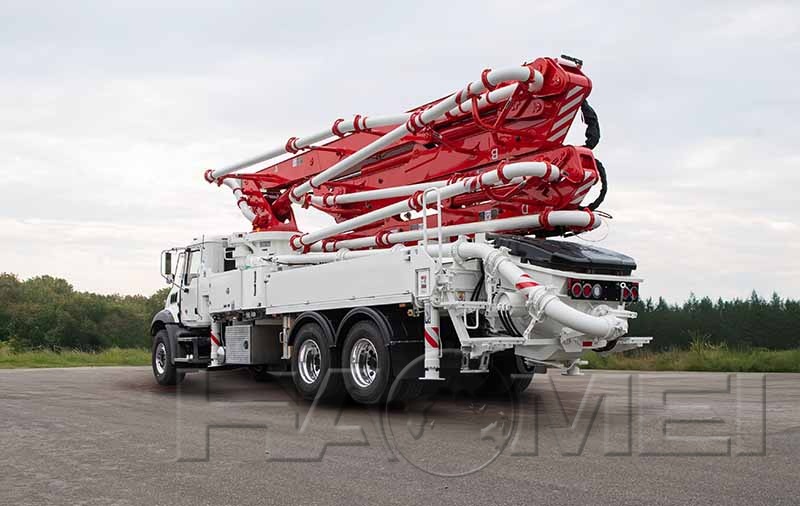
Yes, when the access plan is made before delivery. Compact pumps are useful where wheelbarrows, skid steers, or long hose runs would slow down placement. Still, the truck requires enough room to enter, turn, stabilize, unfold the boom, and leave after the work is complete. A narrow street does not automatically rule out a pump truck, but it raises the importance of traffic management and positioning.
Check four dimensions during a site visit: gate width, internal turning area, overhead obstructions, and ground bearing conditions. Power lines, tree limbs, balconies, and temporary scaffolding can restrict boom movement. Soft soil, recently backfilled trenches, and unsupported pavement edges can make outrigger placement unsafe.
A compact Concrete Pump Truck often improves placement control because the boom can move concrete directly to footings, walls, and slab sections. However, if the truck cannot park within useful boom range, a trailer pump with pipeline may be the more practical setup. The choice should follow the access route, not simply the project size.
Daily operating cost includes much more than diesel. Labor, travel time, concrete pump cleaning, hydraulic oil checks, wear-ring replacement, pipeline wear, insurance, and downtime all contribute. For a short pour, travel and setup can represent a large share of the job cost. For a full-day foundation or slab pour, output, reliability, and reduced manual handling become more important.
A useful planning method is to estimate cost per placed cubic yard or cubic meter rather than focusing only on the pump's hourly rate. Divide total daily costs by realistic placed volume, not the manufacturer's maximum theoretical output. Real output is affected by truck mixer arrivals, crew readiness, finishing speed, hose movements, and pauses between load deliveries.
| Cost area | Why it changes between jobs |
|---|---|
| Fuel and travel | Distance, road conditions, and idle time |
| Labor | Operator skill, hose handling, and site coordination |
| Wear parts | Mix abrasiveness, pumping pressure, and annual volume |
| Cleaning | Water availability, washout location, and pipe length |
| Lost production | Late concrete, poor access, or unsuitable mix design |
It can, provided the pour sequence is planned around concrete volume, form readiness, and cleaning requirements. Footings and slabs create different placement conditions. Footings usually need controlled discharge into narrow forms, while slabs demand a steady supply that matches screeding and finishing capacity. If the finishing crew cannot keep pace, pumping faster may create quality issues rather than productivity.
Plan the truck mixer schedule around the slowest activity, which is often finishing rather than pumping. Confirm that the boom can reach both work areas without unsafe repositioning. Where the truck must move, allow time to fold the boom, relocate, reset outriggers, and re-prime if required. Keep washout and cleanup arrangements ready before the first load arrives.
For contractors evaluating a new small concrete pump truck, a site-specific test pour is often more informative than comparing peak output figures. It reveals how the boom moves around obstacles, how the selected mix behaves, and whether the crew can maintain the placement pace required for the work.
Original source: https://www.concretebatchplanthm.com/a/small-concrete-pump-truck.html
Tags: small concrete pump truck compact concrete boom pump concrete pump truck
Prev: What Is Cement Silo Feeding System China
Next: HZS50 Hopper Concrete Plant vs Belt Conveyor Concrete Batching Plant