CONTACT
1
Want to get quotation of concrete batching plant at once? Contact Us. Quick reply is as efficient as our equipment.
+86-15978414719

Apr 08, 2026
Potential owners searching for a 36 meter concrete pump usually ask the same few questions before they compare brands, chassis options, and boom designs. Over the past 3 months, the hottest English-language discussions across Google search results, Quora-style threads, and equipment forums have focused on reach, jobsite suitability, cost, and whether a 36 meter class machine is the smartest first purchase. These questions matter because this size sits in a practical middle range. It is large enough for many urban and commercial pours, but still easier to move and position than larger boom units.
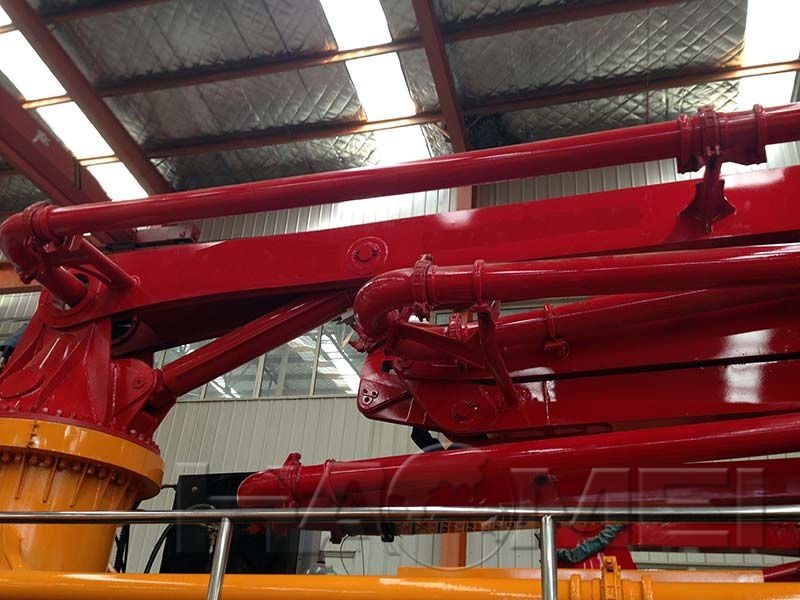
| Topic | Why people ask it | Short answer |
|---|---|---|
| Reach | They want to know real working height and horizontal placement | A 36 meter boom fits many mid-rise and foundation jobs, but actual placement depends on unfolding space and pipeline routing |
| Price | They need budget clarity before contacting suppliers | Price varies by chassis brand, pump output, boom structure, emissions standard, and country of delivery |
| Job fit | They want one machine that covers the widest range of projects | It suits residential, commercial, municipal, and medium industrial concrete placement well |
| Setup | They worry about outriggers, road limits, and tight sites | Setup space is often more important than boom length alone |
| Ownership cost | They compare a new machine with renting or buying larger models | Fuel, wear parts, labor, and utilization rate determine whether the investment makes sense |
This is one of the most common questions because many first-time equipment shoppers do not want to overbuy. In practical terms, a 36 meter concrete pump is often enough for a wide share of projects such as house slabs, low- to mid-rise buildings, parking structures, small commercial developments, factory floors, and municipal pours.
What makes this question tricky is that boom length is only one part of actual performance. A machine may have a 36 meter vertical reach, but your real placement result depends on outrigger spread, how the boom unfolds above obstacles, hose length at the tip, and whether the truck can park in the right position. On a congested urban site, a slightly shorter machine with easier setup may outperform a larger one.
If your work regularly includes medium-height structures and general contracting pours, this class is often a strong balance between flexibility and ownership cost. If your projects frequently involve taller structures or long horizontal reaches over obstacles, you may eventually compare it with a 45 Meter Concrete Boom Truck instead.
This question has remained hot because price listings online are often incomplete. The honest answer is that there is no single market price. A new 36 meter concrete pump can vary widely depending on the truck chassis, hydraulic system, pumping capacity, boom design, axle configuration, local regulations, and whether shipping, training, and spare parts are included.
In buyer discussions, many people focus only on the initial quote. That can be misleading. Two machines with similar boom lengths may differ significantly in total value. One unit may cost more upfront but deliver lower downtime, better parts availability, and easier service access. For a new owner, these factors can matter more than chasing the cheapest number.
| Price factor | What changes the cost |
|---|---|
| Chassis brand | Domestic and imported truck brands can create a large price gap |
| Pumping output | Higher cubic meter output usually raises price |
| Boom design | More stable boom structures and advanced controls add cost |
| Emissions and compliance | Export destination rules may require different engine specs |
| Included package | Spare parts, remote control, training, and warranty affect overall value |
If you are comparing nearby sizes, a 37 Meters Concrete Pump Truck For Sale may appear in the same shortlist because some suppliers position 36 meter and 37 meter models very closely in price.
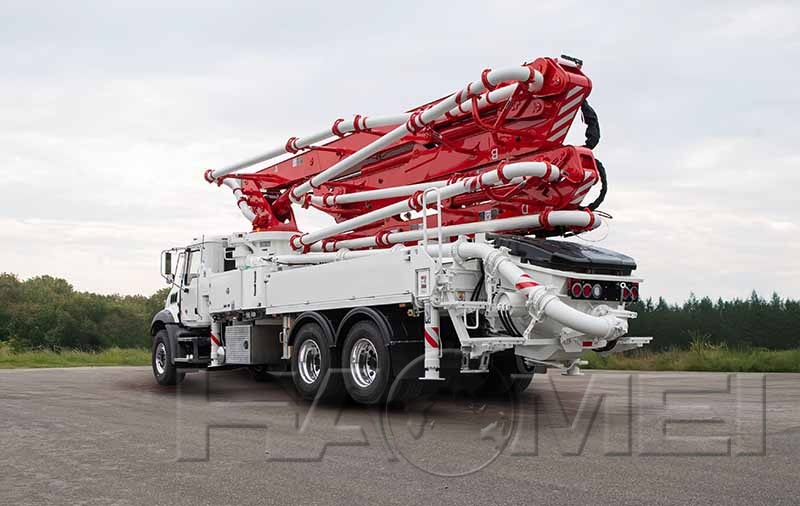
This is a practical question from contractors who want high utilization. A 36 meter concrete pump is best suited for mixed project portfolios where one machine needs to cover many common site conditions. That includes residential compounds, warehouse floors, bridge approaches, school buildings, retail developments, and medium-scale infrastructure pours.
Its biggest strength is versatility. It is easier to dispatch than larger boom pumps, yet it offers much more reach than compact units. That makes it attractive for companies entering the Concrete Pump Truck market with one flagship machine.
Still, the best fit depends on your local business pattern. If your contracts mostly involve wide open slab pours, output and pipe wear may matter more than boom length. If your projects are inside towns with narrow access roads, overall vehicle dimensions and turning radius become just as important as pumping performance.
Yes, but only when setup planning is realistic. This is a major concern in recent Q&A discussions because many contractors work in dense urban areas where road width, overhead lines, neighboring buildings, and outrigger placement are major constraints.
A 36 meter concrete pump can be a very efficient choice on tighter sites compared with larger classes, but it is not automatically a compact machine. Before purchase, ask for transport dimensions, total weight, minimum setup width, outrigger type, and boom unfolding diagram. These details often decide whether the machine will actually work on your projects.
Many new owners make the mistake of comparing only reach and output. In reality, setup speed, operator visibility, remote control response, and stability system design can improve daily productivity more than a small increase in boom length.
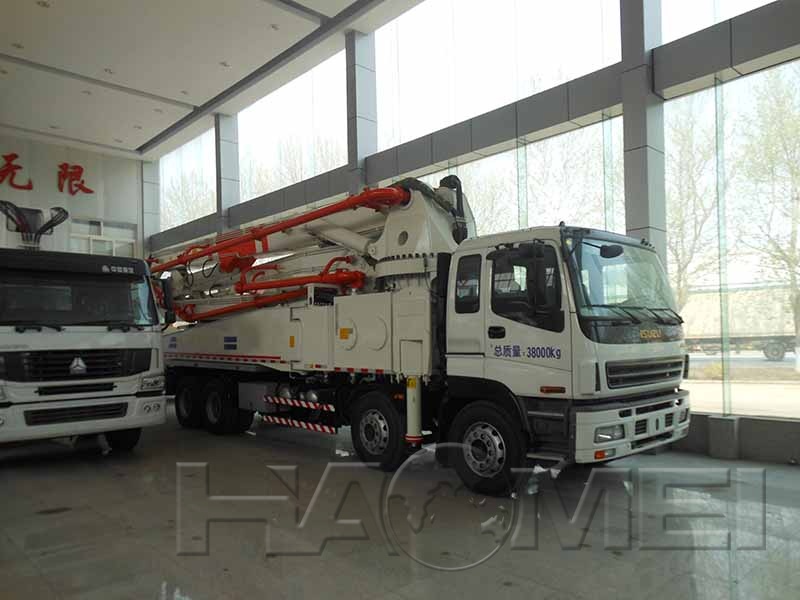
For many companies, yes. This has become a hot question because firms moving from equipment rental or subcontracted pumping want a model that is broad enough for daily use without stepping into the higher purchase and operating cost of a large boom truck.
A 36 meter unit is often a sensible first step if your order book includes regular concrete placement across several project types. It can help build utilization faster than a specialized larger machine. It also tends to be easier to schedule across multiple crews.
That said, the right first machine depends on three numbers: your average pour volume, your most common site access condition, and how many days per month the pump will work. If utilization is low, renting may still be more efficient. If utilization is steady and your team has service support in place, a 36 meter model can be a strong foundation for fleet growth.
When comparing options, ask suppliers not only about boom length and price, but also about wear parts life, hydraulic cooling performance, local service response, training, and parts stock. Those details shape ownership experience far more than a brochure headline.
Original source: https://www.concretebatchplanthm.com/a/36-meter-concrete-pump.html
Tags: 36 meter concrete pump concrete pump truck boom pump truck mounted concrete pump
Prev: 7 Questions You Must Answer Before Buying Concrete Batching Plant
Next: Concrete Mixing Pump