CONTACT
1
Want to get quotation of concrete batching plant at once? Contact Us. Quick reply is as efficient as our equipment.
+86-15978414719

Jul 31, 2026
In 2026, the global concrete mixing plant market moved decisively beyond the previous two years of cutthroat low-price competition and a race to the bottom, entering a new cycle characterized by across-the-board price increases for equipment of similar specifications, divergent regional market trends, and pricing driven by quality. Unlike the uniform market fluctuations seen in previous years, this year’s market displayed distinct variations in price trends and demand intensity across different overseas regions and equipment specifications.
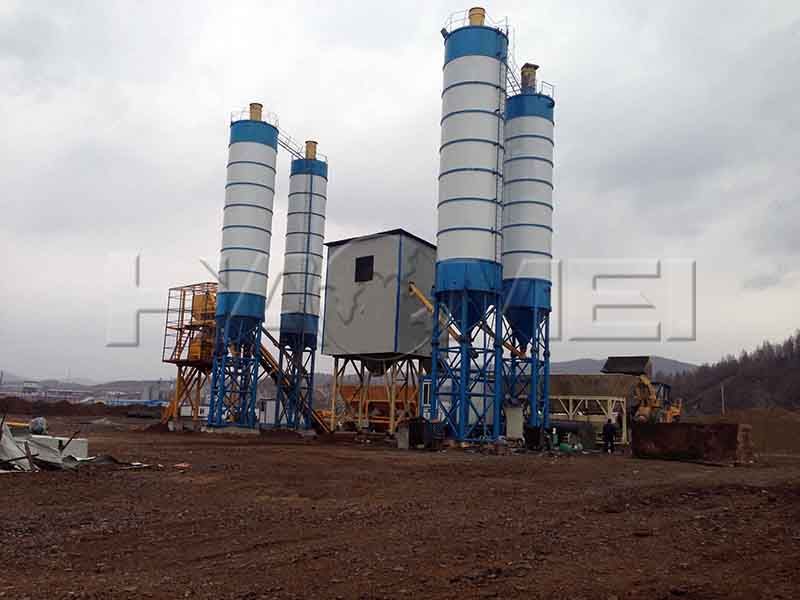
1. Small-to-Medium Mainstream Models (HZS90, HZS120): As the models with the highest sales volume in overseas markets, their price increases aligned with the global market average. The average overseas price range for a standard HZS120 stationary concrete plant was $132,000–$136,000 per unit in 2025; in 2026, quotes for equipment with the same specifications and configuration rose to $141,000–$147,000 per unit—an increase of approximately $9,000–$11,000 per unit, or over 6.5% overall. The HZS90 model saw a more moderate rise; the average overseas price was $105,000–$108,000 per unit in 2025 and $109,000–$113,000 per unit in 2026, representing an increase of 3%–4%.
2. Large-Scale Project Models (HZS180, HZS240): High-end, large-scale equipment led the price growth across all categories, showing the most significant increases. The average overseas price for an HZS180 concrete batching plant was $236,000–$243,000 per unit in 2025; in 2026, quotes for compliant equipment of the same specification surpassed $251,000–$258,000 per unit, an increase of nearly 8%.
Driven by upgrades in intelligence and environmental protection features, the HZS240 ultra-large model saw a year-on-year price increase approaching 9%, making it the model with the highest value appreciation this year.
3. Small-Scale Civil Construction Models (HZS60): Primarily suited for small, scattered projects in Africa and Southeast Asia, this concrete batching plant for sale experienced the least price fluctuation. Price increases are projected to remain stable at 2%–3% during 2025–2026, with the average overseas price holding steady at $78,000–$82,000 per unit in 2026; prices exhibit strong rigidity and minimal volatility.
Regarding regional price differentials, equipment of the same specifications will form distinct price tiers in 2026: European and American brands command the highest quotes, carrying a 15%–20% premium over Chinese export equipment; transaction prices in the Middle East and Latin America fall in the mid-range; and prices in Southeast Asia and Africa are the lowest.
These price variations are driven by a combination of brand quality, regional compliance standards, and after-sales service systems. Price hikes this year apply uniformly to standard-configuration equipment, free from the chaotic practices of hidden price cuts or cost-cutting through reduced specifications; price transparency and standardization are significantly higher than in previous years.
In 2026, the international concrete mixing plant market will move away from the synchronized global growth seen in previous years, instead exhibiting a structurally differentiated landscape: explosive growth in emerging markets, upgrades to existing assets in mature markets, and sluggish demand in low-end markets. Global demand is no longer defined by aggregate volume but by region, equipment specifications, and compliance attributes, with high-end, intelligent, and eco-friendly equipment becoming the mainstream necessity.
Southeast Asia represents the region with the strongest demand for concrete mixing plants in 2026 and serves as a core market for Chinese equipment exports. With mature infrastructure systems in Europe and the US largely complete and lacking large-scale new projects, demand in these regions stems entirely from the replacement of aging equipment and retrofitting for low-carbon compliance.
Leveraging the dividends of their energy-based economies, Middle Eastern countries are continuously advancing new city construction, infrastructure for new energy, and water conservation projects. Market demand has shifted away from low-end, low-price models toward large-scale HZS180 and HZS240 plants—characterized by intelligence, low energy consumption, and high environmental standards—creating significant room for price premiums on high-end equipment.
Constrained by budget limitations and construction standards, most African countries retain demand only for small, simple mixing equipment—primarily HZS60 plants. These markets are highly price-sensitive and show little interest in high-end, intelligent equipment.
With the implementation of new overseas green compliance regulations in 2026, standards for environmental protection, intelligence, and energy consumption in concrete mixing plants have tightened significantly. Low-spec equipment has been phased out, and hardware upgrades have driven up production costs, leading to a global rise in equipment prices—though the magnitude of these increases varies by region.
After bottoming out, the costs of raw materials and components have rebounded, causing a sharp rise in overall costs for overseas manufacturers. Thanks to a mature domestic supply chain and effective cost control, price increases for Chinese-made equipment have been more moderate, allowing them to maintain a steady 15%–20% price advantage over European and American brands.
The industry has eliminated low-spec, non-standard products and weaker brands, moving away from vicious price-based competition. Competition has shifted toward comprehensive capabilities—covering compliance, quality, intelligence, and service—and industry prices have rebounded from their lows.
Original source: https://www.concretebatchplanthm.com/a/what-is-the-price-of-a-concrete-batching-plant-in-2026.html
Tags: stationary concrete plant
Prev: Cement Storage Silo
Next: 38m Pump Truck