CONTACT
1
Want to get quotation of concrete batching plant at once? Contact Us. Quick reply is as efficient as our equipment.
+86-15978414719

Aug 05, 2026
A 38m pump truck is commonly considered for mid-rise structures, commercial slabs, bridges, retaining walls, and constrained urban sites. Its stated boom length can be a useful starting point, but it is not a complete purchasing specification. Actual job performance depends on the boom geometry, chassis dimensions, outrigger spread, pump-cell output, pipeline diameter, concrete mix, and site access.
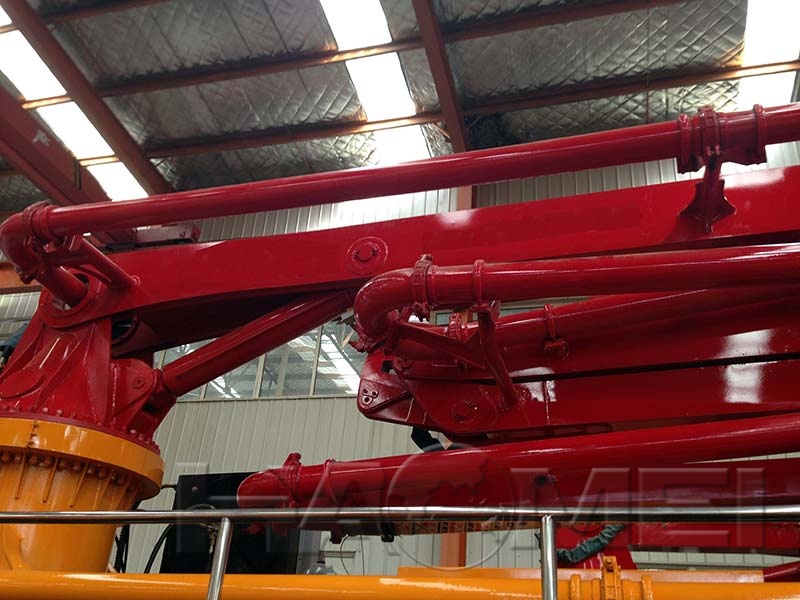
Before comparing machines, define the placement task in measurable terms. Ask the ready-mix supplier for the proposed mix design, aggregate size, slump or slump-flow target, admixtures, delivery rate, and expected peak hourly volume. Then compare these figures with the manufacturer data sheet for the exact model and configuration, not only the nominal boom class.
The "38m" label normally refers to nominal vertical boom reach. It does not mean the machine can place concrete 38m away in every direction. Horizontal reach, depth reach, end-hose length, turret location, boom articulation, and permitted operating angles all affect the usable work envelope.
Use a site drawing to confirm coverage before requesting quotations.
| Item to verify | What to measure | Why it affects selection |
|---|---|---|
| Vertical reach | Highest pour point plus clearance | The boom must reach above the work without operating near a limit. |
| Horizontal reach | Distance from legal setup position to farthest placement point | Buildings, fences, and traffic lanes may prevent ideal truck positioning. |
| Outrigger footprint | Full deployed width and each support location | Determines whether the machine can stabilize without blocking access or loading weak ground. |
| Pump output | Required m3/h versus actual placing rate | Prevents a boom from waiting on concrete supply or starving a large pour. |
| Line pressure | Required pressure for the mix, hose, elevation, and pipeline route | High pressure is often the limiting factor on difficult mixes or long lines. |
| Chassis dimensions | Overall length, turning radius, axle loads, and road legality | Governs access through gates, streets, ramps, and permits. |
A practical method is to mark the planned truck position, outrigger pads, concrete mixer route, exclusion zone, and boom envelope on the logistics drawing. Do this for every major pour type, not only the largest slab. A machine that reaches the upper floor may still be inefficient if it must be repositioned repeatedly for foundations or podium work.
If most projects need materially longer reach, compare a 45 Meter Concrete Boom Truck against the added transport, setup-area, and ownership costs. A longer boom is not automatically more productive when urban access is the limiting condition.
Pump output advertised in m3/h is generally a theoretical or maximum value under stated conditions. Field output is lower when the mix is harsh, the pipeline is long, delivery is irregular, or operators must move the boom frequently. Use the machine maker's performance curves for the selected pump cell and cylinder configuration.
Check these operating factors with the batch plant and pump supplier:
Aggregate size must be compatible with the pump, pipeline, reducers, and end hose specified by the manufacturer.
Concrete consistency must be maintained from batching through discharge. Water added without mix-design control can affect strength and pumpability.
Pump primer, lubrication, and pipeline cleaning requirements must be planned before the first truck arrives.
Delivery capacity from the plant must support the required placing rate. A high-output pump cannot compensate for inconsistent mixer arrivals.
Wear parts, including spectacle plates, cutting rings, delivery cylinders, S-valves, elbows, and hoses, should be inspected against documented service limits.
For most fleets, a Concrete Pump Truck should be selected as a complete production system, including operators, pipeline inventory, service support, and concrete supply coordination. The boom truck alone is not the production rate.
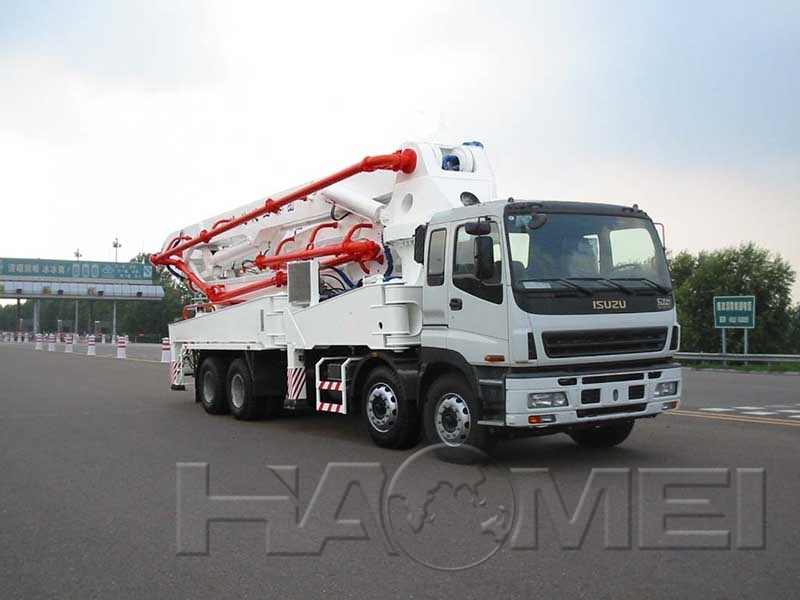
The most serious setup risks are overturning, contact with overhead utilities, hose whip, line blockages, and unauthorized access beneath the boom. Follow the equipment manufacturer's operating manual and applicable local rules before each placement.
ASME B30.27 covers material placement systems and addresses inspection, operation, maintenance, and personnel responsibilities. In the United States, commercial vehicles subject to Federal Motor Carrier Safety Regulations require systematic inspection, repair, and maintenance under 49 CFR Part 396. Road weight, registration, emissions, and operator licensing requirements also vary by state or country.
Use this pre-pour checklist:
Confirm the ground can support outrigger reactions. Do not assume compacted-looking soil is adequate. Obtain engineering review where ground conditions, basements, trenches, voids, or buried services create uncertainty.
Use correctly sized outrigger pads or mats as specified by the manufacturer and site engineer. Pads distribute load but do not make unsuitable ground safe.
Identify overhead lines and establish the required clearance and control measures under local electrical-safety rules.
Barricade the boom swing area and prohibit personnel from standing near pressurized hose connections, couplings, or discharge hose pinch points.
Inspect clamps, pins, hoses, pipe supports, emergency stops, remote control functions, and communication methods before pumping.
Stop work immediately for leakage, unusual pressure changes, boom instability, blocked-line indicators, or loss of communication.
For investment decisions, separate acquisition price from life-cycle cost. New-unit pricing varies substantially by country, chassis brand, emissions tier, pump-cell specification, boom configuration, options, taxes, freight, and dealer support. A reliable comparison requires written quotations for the same scope rather than an online price range.
| Cost category | Questions to include in the quotation comparison |
|---|---|
| Capital cost | Chassis, boom, pump cell, radio remote, accessories, freight, commissioning, and taxes |
| Finance | Deposit, interest rate, term, residual assumption, insurance, and cash-flow timing |
| Operating cost | Fuel or energy use, operator wages, wear parts, lubricants, cleaning, and tires |
| Maintenance | Preventive-maintenance intervals, hydraulic service, boom inspection, parts availability, and labor rates |
| Utilization | Billable pumping hours, standby time, travel time, seasonal demand, and expected resale channel |
| Downtime risk | Dealer response time, mobile service coverage, loaner availability, and critical-parts stock |
Calculate annual ownership cost as annual finance or depreciation expense, insurance, licensing, planned maintenance, and overhead. Divide it by realistic billable pumping hours, then add fuel, labor, concrete-pump consumables, and travel cost per job. This produces a defensible minimum recovery rate for tendering.
Current market direction favors telematics, remote diagnostics, automated lubrication, pump pressure monitoring, and digital maintenance records. These tools can reduce unplanned downtime only when service teams act on the alerts and retain accurate inspection histories. Require data ownership terms, cellular subscription costs, supported fault codes, and export capability in the purchase agreement.
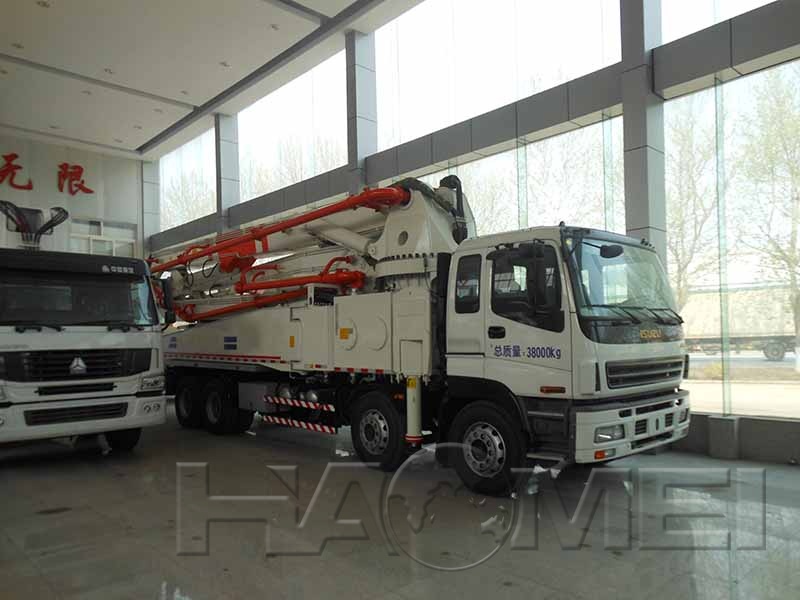
During factory or dealer evaluation, inspect weld documentation where supplied, boom and outrigger operation, hydraulic hose routing, pump-cell access, chassis service access, safety decals, parts inventory, training scope, warranty exclusions, and local technician capacity. Request the exact machine specification sheet, operating manual, maintenance schedule, and applicable conformity documentation before signing.
Original source: https://www.concretebatchplanthm.com/a/38m-pump-truck.html
Tags: 38m pump truck concrete boom pump
Prev: What Is the Price of a Concrete Batching Plant in 2026
Next: What Are Popular Models of Small Concrete Batch Plants