CONTACT
1
Want to get quotation of concrete batching plant at once? Contact Us. Quick reply is as efficient as our equipment.
+86-15978414719

Mar 20, 2026
In recent years, Southeast Asia has witnessed a sustained infrastructure boom, with countries like Indonesia, Vietnam, the Philippines, and Malaysia vigorously promoting projects such as highways, ports, photovoltaic power stations, steel mills, and rural roads. Regional infrastructure investment has been climbing year after year.
The modular concrete mixing plant, with its core advantages of flexible adaptability, efficient deployment, and low-cost operation and maintenance, have rapidly become the mainstream choice for concrete supply in Southeast Asian infrastructure projects. They perfectly solve local construction challenges and have become a top-selling, high-performance equipment for overseas infrastructure projects.
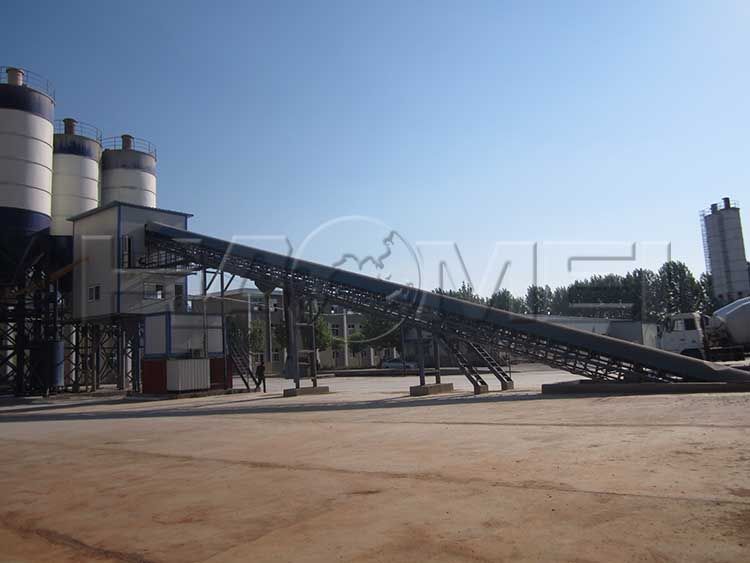
The unique construction environment in Southeast Asia places far greater demands on concrete mixing equipment than conventional methods, which is a core reason for the rapid popularization of modular mixing plants:
- Harsh Climate: High temperatures and heavy rainfall throughout the year, with a long rainy season, result in extremely short construction windows. Traditional plant construction is lengthy and prone to delays; humid air corrodes equipment components, affecting their lifespan.
- Limited Site Conditions: Most projects are located in remote areas with narrow and rugged terrain. Poor rural road conditions make it difficult to bring in large, fixed mixing plants and establish suitable locations.
- Weak Infrastructure Support: Unstable power supply and poor foundation construction conditions in some areas necessitate the pouring of heavy foundations for traditional mixing plants, resulting in large upfront investments and long construction periods.
- Dispersed Projects and Frequent Relocation: Southeast Asian infrastructure projects are mostly small to medium-sized and scattered, leading to high equipment idle rates and low asset utilization after project completion.
- Strict Cost Control: High costs for sea freight, on-site installation, and subsequent operation and maintenance make it difficult for traditional equipment to achieve cost reduction and efficiency improvement.
The modular concrete batch plant adopts a "building block" disassembly design, with the entire machine disassembling into standard container modules. It can flexibly adapt to various infrastructure projects in Southeast Asia, covering all concrete supply needs:
- Transportation Infrastructure Projects: For linear projects such as highways, bridges, and tunnels, the modular equipment can be deployed in sections and quickly relocated, keeping pace with construction progress and solving the problem of long-distance concrete transportation.
- Industrial and Energy Projects: For large-scale industrial projects such as steel mills, alumina plants, and photovoltaic power stations, the flexible site layout allows for rapid production to ensure a supply of high-strength, high-capacity concrete, meeting the stringent schedule and quality requirements of these projects.
- Rural and Livelihood Projects: For small and medium-sized projects such as rural road hardening, small civil buildings, and water conservancy facilities, the equipment has a small footprint and low foundation requirements, allowing for deployment without complex infrastructure, making it suitable for construction conditions in remote areas.
- Emergency and Temporary Projects: For post-disaster reconstruction and temporary infrastructure projects, the equipment is easy to assemble and disassemble, and can be put into production extremely quickly, rapidly responding to emergency construction needs. After completion, it can be quickly transferred and reused.
Compared to traditional batching plants, the modular model features end-to-end optimization, precisely tailored to the characteristics of the Southeast Asian market, offering six core advantages:
Utilizing a standard container modular design, the dimensions are adapted to maritime regulations, minimizing disassembly and assembly and facilitating faster loading and unloading. This reduces cross-border freight costs and transportation losses, while avoiding Southeast Asian land transport restrictions on width and height, allowing easy delivery to remote construction sites and zero obstacles to cross-border deployment.
Abandoning cumbersome foundation pouring and on-site welding, the model employs bolted splicing and overall hoisting. Conventional models can be built in 5-7 days and put into operation in 7-10 days, shortening the installation cycle by more than 60% compared to traditional equipment. This allows for seizing the pre-rainy season construction window and preventing project delays.
The compact layout and small footprint of the machine allow for flexible adjustment and arrangement of core components, eliminating the need for extensive site leveling. Foundation requirements are minimal; simple hardened surfaces are sufficient for operation, significantly reducing initial site infrastructure investment.
Customized tropical anti-corrosion and moisture-proof configuration adapts to high-temperature and high-humidity environments: A humidity-adaptive system precisely regulates the mixing ratio; the entire machine undergoes rust and corrosion prevention treatment plus a sealed design, reducing the failure rate during the rainy season and ensuring continuous and stable material output under high temperatures.
Disassembly and assembly result in no structural damage; the machine can be quickly relocated and reused after completion, completely solving the idle problem of traditional equipment being "fixed location for one project." It is suitable for distributed projects in Southeast Asia, significantly improving asset utilization and reducing the cost of repeated procurement.
Equipped with a fully automatic multilingual control system, operation is simple and easy to learn; the equipment has a low failure rate, convenient maintenance, and highly interchangeable vulnerable parts. Combined with localized technical support, it lowers the barriers to operation and maintenance and reduces costs.
Original source: https://www.concretebatchplanthm.com/a/modular-concrete-batching-plant-for-quick-construction.html
Tags: stationary concrete plant
Prev: Concrete Mixer Machine With Pump
Next: JS500 Concrete Mixer