CONTACT
1
Want to get quotation of concrete batching plant at once? Contact Us. Quick reply is as efficient as our equipment.
+86-15978414719

Mar 24, 2026
A JS500 concrete mixer is typically a twin shaft compulsory mixer used in small to medium batching applications. In most supplier catalogs, the model name refers to a nominal discharged batch size of 0.5 m3. That matters because many procurement mistakes come from confusing batch capacity with hourly output.
For construction equipment procurement teams, the practical questions are simple. Will it meet the required concrete volume, fit the site power supply, control material consistency, and deliver an acceptable cost per cubic meter.
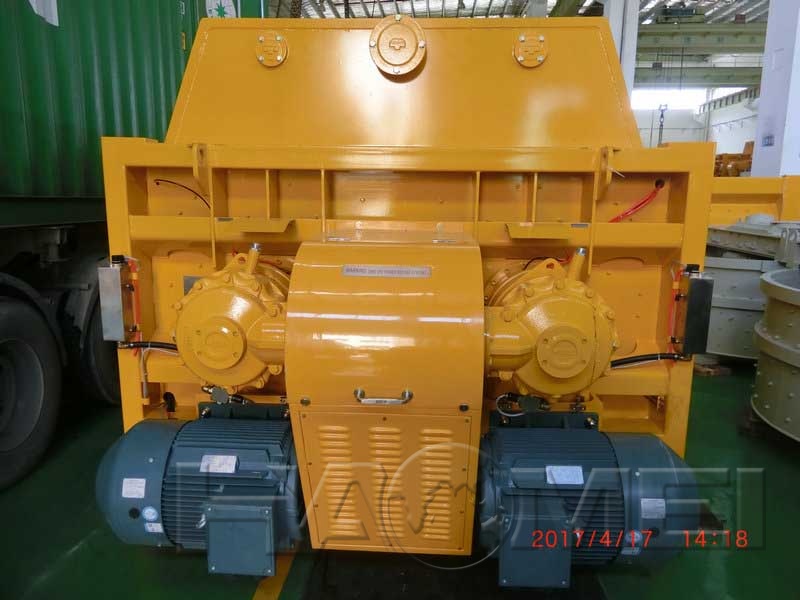
Before comparing brands, verify these four points.
Required hourly concrete demand.
Aggregate size and slump range.
Power supply, usually three-phase on fixed sites.
Feeding method, discharge height, and plant layout.
A common planning error is to assume nameplate capacity equals real production. Real output depends on mixing time, charging time, discharge time, moisture correction, and operator discipline. On many small batching setups, actual hourly output is lower than brochure values because loaders, cement delivery, and weighing cycles become the bottleneck.
| Item | What to verify | Why it matters |
|---|---|---|
| Batch size | 0.5 m3 nominal discharge | Confirms match with production target |
| Mixer type | Twin shaft compulsory | Better uniformity than simple drum mixing for many mixes |
| Cycle time | Supplier stated cycle and your site cycle | Determines realistic hourly output |
| Aggregate limit | Maximum particle size from manual | Prevents blade wear and blockage |
| Motor power | Mixer motor and hoist or skip motor rating | Must match site electrical capacity |
| Weighing system | Cement, water, and aggregate batching accuracy | Direct effect on strength consistency |
| Wear parts | Blade, liner, shaft seal availability | Reduces downtime and maintenance risk |
| Compliance | Local electrical and machine safety requirements | Needed for legal and safe operation |
If your work includes pavers, curbs, blocks, or precast products, a compulsory mixer is often preferred for consistency. If you mainly do low-spec non-structural concrete with flexible schedules, a rotary drum machine may still be considered, such as a JZC/JZM Concrete Rotary Mixer.
| Project need | Suitable choice | Reason |
|---|---|---|
| Small commercial or rural building work | JS500 class | Balanced cost and output |
| Stable daily demand with room to scale | JS500 Twin Shaft Concrete Mixer with batching unit | Better dosing and repeatability |
| Precast or higher uniformity requirement | Planetary or premium twin shaft mixer | Better specialty mixing performance |
| Large continuous pour | Step up to JS750 or above | Fewer cycles, higher throughput |
In this size class, published discharge capacity is usually 500 L per batch. Hourly output in supplier literature often varies because cycle assumptions differ. That is why you should ask every vendor for the same basis.
Use this comparison request sheet.
Rated discharged volume per batch.
Full mixing cycle in seconds.
Standard test mix and slump.
Mixer motor power in kW.
Skip hoist or feed conveyor power.
Water dosing method.
Weighing accuracy statement.
Wear part material and expected life.
Noise data if available.
| Cost item | Typical impact on ownership | What to ask |
|---|---|---|
| Purchase price | Initial cash outlay | Base machine or complete batching plant |
| Freight | Can materially change landed cost | Shipping mode, packing size, destination port |
| Installation | Electrical and steel structure work | Scope split between vendor and contractor |
| Power use | Ongoing operating cost | kWh per m3 under your cycle time |
| Wear parts | High on abrasive aggregates | Blade and liner replacement interval |
| Shaft seals | Important for downtime control | Seal design and service procedure |
| Operator training | Low cost, high return | Commissioning support included or not |
Pricing varies widely by configuration, steel market conditions, motor brand, control system, and export packaging. Because of that, any fixed global price claim without a dated quotation is unreliable. Ask for a quotation that separates mixer body, feeding system, weighing system, electric cabinet, air system, and optional dust collection.
To assess investment, calculate cost per cubic meter rather than machine price alone.
Simple method
Estimate realistic hourly output, not brochure maximum.
Multiply by planned annual operating hours.
Add power, labor, wear parts, maintenance, and finance cost.
Divide total annual cost by annual concrete volume.
This approach makes it easier to compare a JS500 class mixer against larger models. Sometimes a bigger mixer lowers unit cost if demand is steady enough.
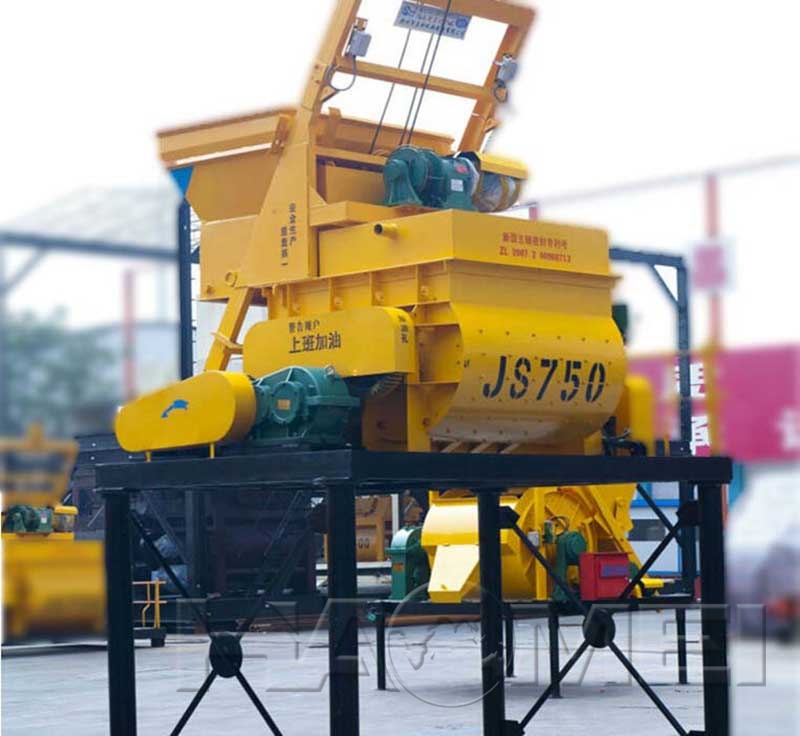
Safe operation starts with the manual and local legal requirements. In many markets, electrical installation, guarding, lockout procedures, and lifting components must meet local occupational safety rules. If the machine is sold into the European market, CE-related obligations may apply to the machinery assembly and electrical system. In the United States, workplace use is generally governed by OSHA requirements, while electrical work commonly follows NEC and local codes. Always confirm the exact legal framework for the country of installation.
| Stage | Action | Risk reduced |
|---|---|---|
| Before start | Check guards, emergency stop, lubrication, and bolt tightness | Entanglement and mechanical failure |
| Charging | Control aggregate size and loading sequence | Overload and poor mix uniformity |
| Mixing | Keep to specified cycle time | Segregation and under-mixing |
| Discharge | Confirm discharge area is clear | Crush and struck-by hazards |
| Cleaning | Isolate power and apply lockout | Unexpected start-up injury |
| Maintenance | Inspect blades, liners, seals, and cables | Unplanned downtime |
| Problem | Likely cause | Practical fix |
|---|---|---|
| Uneven concrete | Short mixing time or poor dosing | Verify batching accuracy and extend cycle |
| Low output | Loader delay or discharge obstruction | Balance upstream feeding and clean discharge path |
| Fast blade wear | Abrasive aggregate or overloading | Check stone grading and stick to rated batch size |
| Seal leakage | Worn seal or poor lubrication | Replace seal kit and inspect shaft condition |
| Motor overload trip | Excess feed or voltage issue | Reduce batch overload and check supply stability |
Digitalization is also changing procurement decisions. More plants now request moisture measurement, batching record export, fault alarms, and remote diagnostics. These features improve traceability and reduce operator-dependent variation. For higher specification concrete, some contractors also compare twin shaft units with a Sicoma Twin Shaft Mixer because service life, mixing uniformity, and spare-part support affect long-term cost as much as purchase price.
For firms planning growth, it is worth asking whether the control cabinet, aggregate batching section, and cement system can later be integrated into a larger plant. Scalability often decides whether this mixer remains a productive asset or becomes an early replacement.
Original source: https://www.concretebatchplanthm.com/a/js500-concrete-mixer.html
Tags: JS500 concrete mixer twin shaft concrete mixer
Prev: Modular Concrete Batching Plant for Quick Construction