CONTACT
1
Want to get quotation of concrete batching plant at once? Contact Us. Quick reply is as efficient as our equipment.
+86-15978414719

Mar 25, 2026
People searching for a planetary concrete mixer for sale are usually comparing performance, price, and application fit, not just machine size. Over the past three months, the most repeated English questions across Google search suggestions, Quora-style discussions, and equipment forums have centered on whether a planetary mixer is worth the extra cost, what jobs it handles best, and how it compares with twin shaft models.
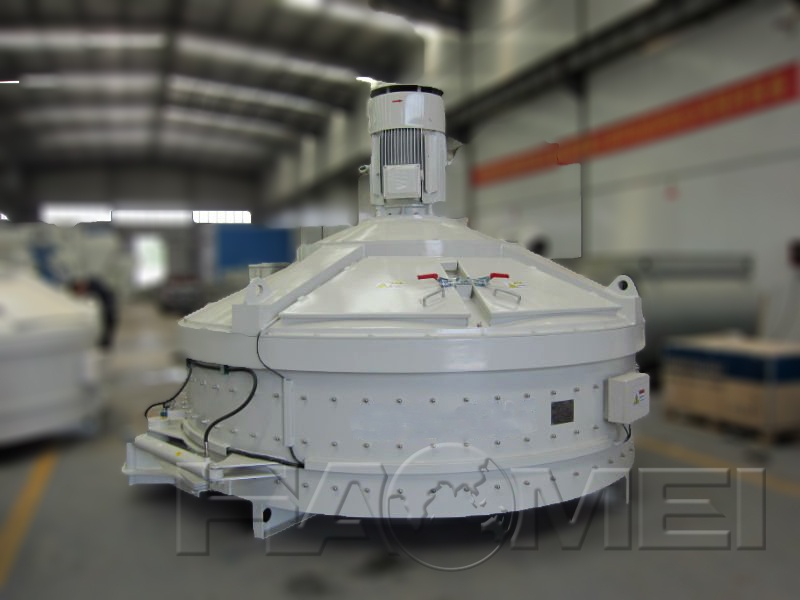
Below are five hot questions potential new equipment users are asking now, with original, practical answers focused on real purchasing decisions.
It depends on the material and the finish quality you need. A planetary mixer uses a counter-current mixing action, where the mixing stars rotate while moving around the pan. This creates very uniform blending and helps reduce dead zones. That is why it is often preferred for precast concrete, colored concrete, UHPC, dry-cast products, refractory materials, and specialty mortar.
A twin shaft mixer is often stronger for very high-output ready-mix production and large infrastructure jobs. If your main target is bulk volume every hour, a twin shaft machine may offer a better cost-to-output ratio. If your main target is consistency, pigment distribution, fiber dispersion, and a cleaner final mix, a planetary model often has the advantage.
For users comparing equipment categories, a general Concrete Mixer page can help separate batch type, output, and application before narrowing the shortlist.
| Feature | Planetary Mixer | Twin Shaft Mixer |
|---|---|---|
| Mixing quality | Very high | High |
| Specialty materials | Excellent | Good |
| Colored concrete | Excellent | Good |
| Large hourly output | Moderate to high | High |
| Precast production | Excellent | Very good |
| Wear part load | Moderate | Moderate to high |
This is one of the fastest-rising questions because many first-time equipment users assume all concrete mixers do the same work. In reality, planetary mixers are strongest in applications where uniformity matters as much as output.
They are especially suitable for:
The reason is not just mixing speed. It is the quality of particle movement inside the drum or pan. A planetary machine can process material in a more controlled way, which helps when cement, additives, pigments, and fine aggregates must be distributed evenly.
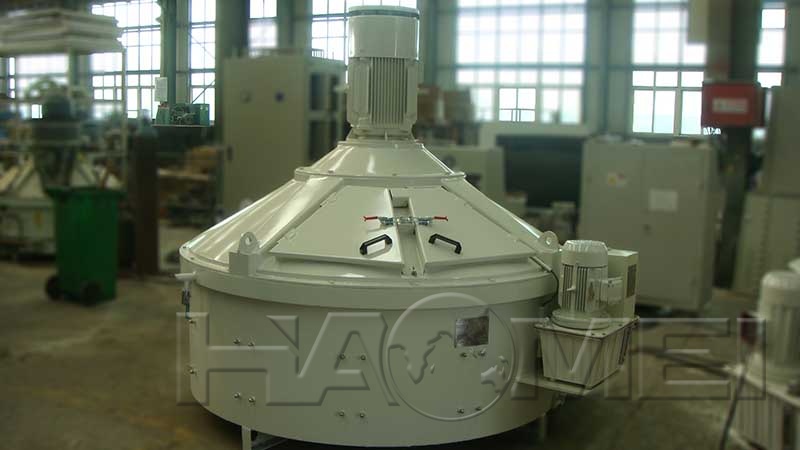
If your production line includes blocks, pavers, or architectural concrete products, a dedicated Planetary Concrete Mixer for Sale model is often a more suitable starting point than a standard drum unit.
This is one of the most common search questions, but there is rarely a single public price because the final quote depends on several technical variables. In the recent market, sellers are typically pricing based on configuration rather than bare machine size alone.
The main factors affecting price are:
A smaller planetary mixer for a precast workshop will cost much less than a fully automated unit integrated into a full production line. Freight, voltage customization, dust collection, and spare parts packages can also noticeably change the total investment.
Instead of asking only, "What is the cheapest planetary concrete mixer for sale?" a better question is, "What is the lowest-cost model that still meets my batch quality and output target?" A lower initial price can become more expensive later if mixing time is too long, wear parts fail early, or the discharge system slows production.
This question appears often because new equipment users tend to focus on drum volume instead of actual production rhythm. The right capacity is based on your required finished output per hour, your cycle time, and how the mixer fits the rest of the plant.
A practical way to estimate is to check:
For example, if your downstream machine consumes material quickly, a small mixer may create bottlenecks even if the mix quality is excellent. On the other hand, choosing a much larger machine than your line needs can raise energy use, increase cleaning time, and reduce efficiency on small batch products.
| Selection Point | Why It Matters |
|---|---|
| Batch output | Determines plant rhythm |
| Mix cycle time | Affects hourly productivity |
| Product type | Changes required mixing intensity |
| Plant layout | Impacts feeding and discharge |
| Future expansion | Prevents early replacement |
Not usually, but maintenance discipline matters. Another hot search trend is whether these mixers are "high maintenance" because they have more complex mixing movement than simple drum machines. The real answer is that they are manageable if the machine is correctly selected and serviced on schedule.
The main routine items include:
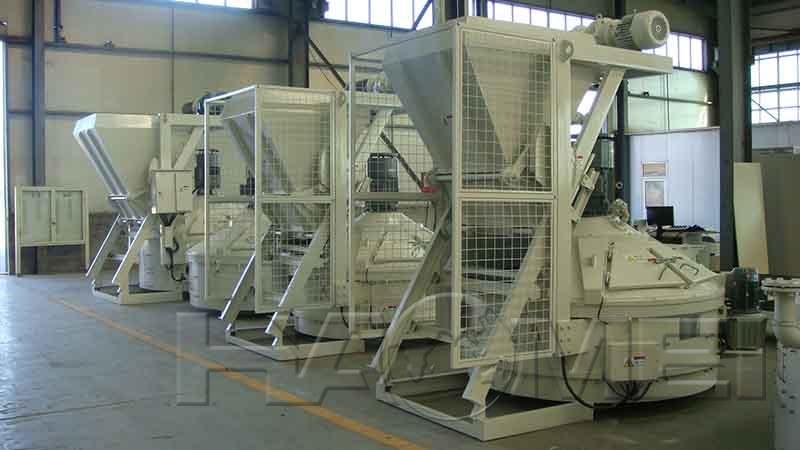
What surprises many new users is that maintenance cost is often more influenced by material type than by mixer category alone. Abrasive aggregates, refractory formulas, and long daily operating hours will wear any mixer faster. A quality planetary mixer with durable liners and accessible service points can actually be easier to manage than a cheaper unit with poor internal design.
Another practical point is spare parts availability. Before ordering, ask not only about the machine itself, but also about blade material, liner life, typical replacement interval, and delivery time for wear parts. That question can be more important than a small difference in purchase price.
Recent search behavior shows that people looking for a planetary concrete mixer are rarely browsing casually. They are usually trying to confirm one of three things: whether the mixer matches their product type, whether the quality gain justifies the price, and whether the machine will stay reliable under daily production.
That is why the strongest purchasing discussions now are not just about capacity numbers. They are about application fit. If the work involves pavers, precast elements, colored concrete, or specialty mixes, a planetary mixer often delivers visible value in consistency and surface finish. If the work is mainly large-volume standard concrete, another mixer type may offer better production economics.
Original source: https://www.concretebatchplanthm.com/a/planetary-concrete-mixer-for-sale.html
Tags: planetary concrete mixer for sale counter-current concrete mixer concrete mixer precast mixer refractory mixer
Prev: JS500 Concrete Mixer
Next: Cement Silo