CONTACT
1
Want to get quotation of concrete batching plant at once? Contact Us. Quick reply is as efficient as our equipment.
+86-15978414719

Dec 17, 2025
In the "rear battlefield" of highway construction, asphalt batch mix plants play a crucial role. Different types of asphalt plants have vastly different workflows, with intermittent and drum as the two most widely used types, each emphasizing different aspects of efficiency and quality control.
Regardless of the type, the core objective of an new asphalt plant is to produce asphalt mixtures that meet engineering requirements. Common basic steps include raw material storage, metering, mixing, and finished product output.
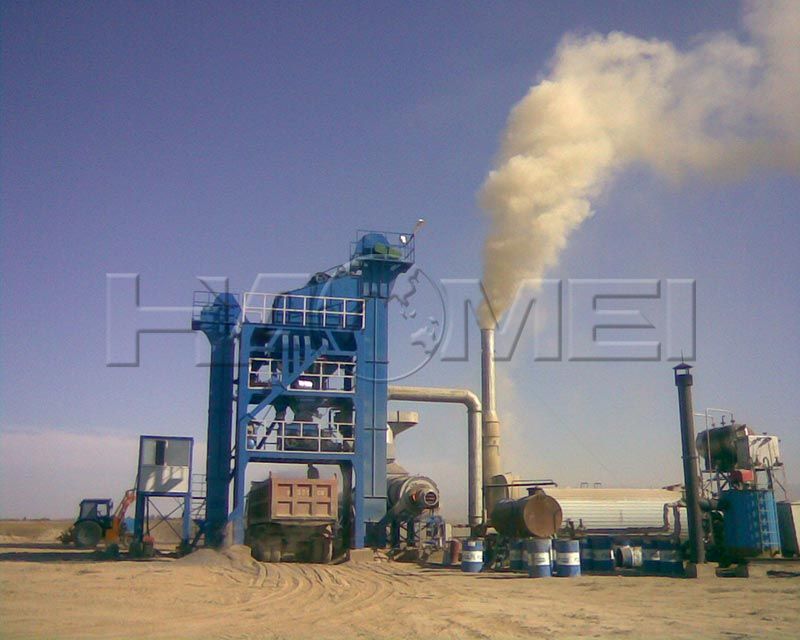
Raw materials mainly involve aggregates (crushed stone, sand, etc.), fillers (mineral powder), and asphalt. The quality of these materials directly determines the performance of the mixture. However, from raw material processing to final mixing and molding, the "operating logic" of intermittent and drum asphalt plants differs significantly, leading to their different applicable scenarios.
The complete workflow of an asphalt batch mix plant mainly consists of the following six steps:
Aggregates (large-diameter crushed stone, medium-diameter crushed stone, and sand) are stored separately in different aggregate bins. Each bin is equipped with a vibrating feeder at the bottom, which can control the feed rate according to the formula requirements.
Before entering the main process, aggregates undergo screening to ensure their particle size meets requirements. Unqualified aggregates are discarded to prevent impact on the mix quality.
Mineral powder is stored separately in sealed silos to prevent moisture absorption and clumping. Asphalt is stored in insulated asphalt tanks, maintained at an optimal temperature of 130-160℃ by heating equipment to ensure its fluidity.
Qualified aggregates are fed into a drying drum, where they are dried and heated by a high-temperature hot air stream generated by a burner. This removes moisture (which severely affects the adhesion between asphalt and aggregates) and raises the aggregate temperature to 160-190℃.
This step is crucial for ensuring the mix strength. The drying drum speed and hot air stream temperature in intermittent asphalt plants can be precisely adjusted to accommodate different moisture levels and types of aggregates.
The heated aggregate is fed into a hot aggregate elevator, then lifted to a screening machine for secondary screening (this second screening ensures uniform particle size). It then enters different hot aggregate bins. Next comes the "soul" of the intermittent asphalt plant – metering. Based on the preset mixture formula, electronic weighing scales precisely weigh the hot aggregate, mineral powder, and asphalt separately, with an error controlled within ±1%.
After metering, the hot aggregate and mineral powder are first dry-mixed in a mixing tank for approximately 5-10 seconds, allowing the mineral powder to evenly adhere to the aggregate surface. Then, heated liquid asphalt is sprayed into the mixing tank for wet mixing for approximately 20-30 seconds, ensuring the asphalt completely coats each aggregate particle, forming a homogeneous mixture. The mixing blades in the mixing tank are made of a special material that ensures effective mixing while minimizing wear.
After each batch of asphalt mixture is mixed, the discharge gate at the bottom of the mixing tank opens, and the mixture is discharged into the finished product silo for temporary storage. The finished product silo is also equipped with an insulation device to maintain the mixture temperature above 130℃ to prevent premature cooling and clumping.
When the transport vehicle arrives, the discharge port at the bottom of the finished product silo opens, loading the mixture into the transport vehicle and sending it to the construction site.
Every period of operation or when changing the type of mixture, the mixing tank, weighing scale, and other equipment need to be cleaned to prevent residual mixture from clumping and clogging the equipment, affecting the production quality of the next batch. The cleaning process for intermittent asphalt plants is relatively fixed and can be completed using high-pressure diesel or a special cleaning agent.
Its workflow mainly consists of 5 steps, with the core difference being the feature of "simultaneous drying and mixing":
The raw material storage process is similar to that of batch type asphalt plant, with aggregates, mineral powder, and asphalt stored in corresponding silos and tanks respectively. However, in the conveying stage, the asphalt plant drum adopts a "continuous feeding" mode. The vibrating feeder continuously feeds material to the drying drum according to the production speed, without waiting for the previous batch to complete as in intermittent systems.
This is the most fundamental difference between drum-type and intermittent asphalt plants. In a drum-type asphalt plant, the drying drum simultaneously performs two major functions: "drying and heating" and "mixing."
After the aggregate enters the drum, it moves forward continuously as the drum rotates. A burner delivers high-temperature hot airflow from the drum's outlet end to dry and heat the aggregate. Once the aggregate is heated to the preset temperature, an asphalt pump sprays liquid asphalt from the middle or rear of the drum.
Simultaneously, mineral powder is also fed into the drum via a screw conveyor. The aggregate, asphalt, and mineral powder are thoroughly mixed during the drum's rotation, forming an asphalt mixture. The entire process is continuous and requires no separate mixing tank.
The metering accuracy of drum-type asphalt plants is lower than that of intermittent plants. The ratio of aggregate to asphalt is mainly adjusted by controlling the speed of the feeder and the flow rate of the asphalt pump. The conveying volume of mineral powder is controlled by the speed of the screw conveyor. While it can meet the requirements of basic engineering projects, the error is relatively large, generally around ±3%, and it cannot achieve the highly precise proportioning of intermittent plants.
The mixed asphalt mixture is continuously discharged from the discharge end of the drum, falling directly into the finished product conveyor belt below, and is transported to the finished product silo or directly loaded into transport vehicles. Because production is continuous, there is no waiting time for finished product output, and the production efficiency can reach 1.5-2 times that of intermittent plants, making it particularly suitable for engineering scenarios requiring large quantities of mixture.
The structure of drum-type asphalt plants is relatively simple, without complex mixing cylinders and multiple sets of hot aggregate silos. The wear parts of the equipment are mainly concentrated on the blades inside the drum.
Maintenance only requires replacing the blades, making maintenance costs and difficulties lower than those of intermittent asphalt plants. However, because the asphalt and aggregate are in direct contact with the high-temperature hot airflow inside the drum, the mixture is prone to sticking to the inner wall of the drum, requiring regular cleaning.
Original source: https://www.concretebatchplanthm.com/a/what-is-the-asphalt-hot-mix-plant-working-process.html
Tags: asphalt batch mix plant
Prev: Is It Valuable to Choose Twin Shaft Mixer and Portable Cement Silo