CONTACT
1
Want to get quotation of concrete batching plant at once? Contact Us. Quick reply is as efficient as our equipment.
+86-15978414719

Mar 10, 2026
New project teams have been asking very similar questions lately on Google, Quora, and contractor forums, especially around schedule pressure, site access, and total cost. Below are 5 of the hottest questions about a mobile concrete batching plant for sale, with practical answers aimed at first time owners.
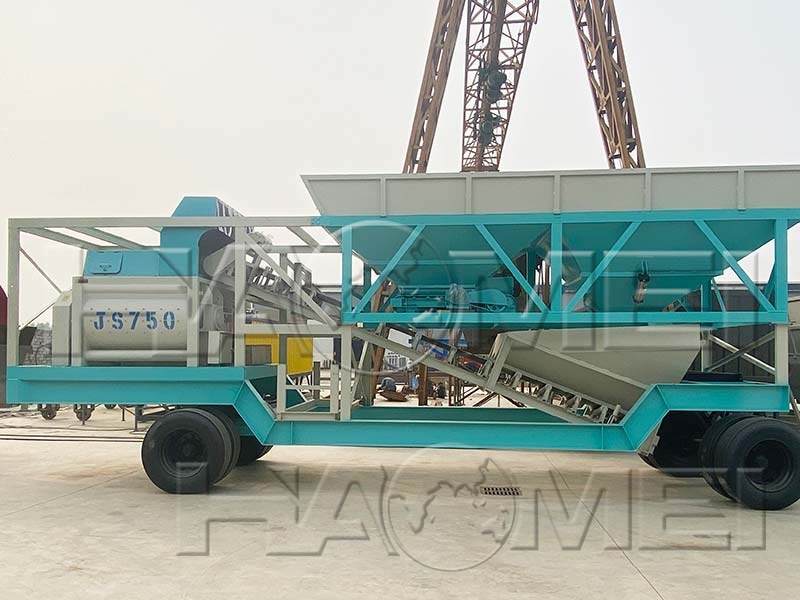
Prices move a lot because sellers may quote either a bare plant or a full working package. A realistic way to compare offers is to ask for an itemized scope.
Typical price drivers include:
Rated capacity (for example, 25, 35, 60, 75 m3/h classes) and whether that is theoretical or achievable on your mix designs.
Mixer type and size (twin shaft, planetary, drum) and wear parts quality.
Aggregate batching method (2 to 4 bins, belt vs hopper), which affects accuracy and cycle time.
Cement storage and conveying (silo included or not, screw length, dust filter).
Control system (PLC brand, recipe management, data logging, remote support).
Commissioning (on site installation support, calibration, operator training).
When comparing quotes, request the same inclusions: foundations or steel base, control room, air compressor, water system, admixture dosing, spare parts kit, and a list of tools. Many disagreements come from assuming silos, ramps, or generators are included when they are not.
Pick capacity by daily volume and pour rhythm, not by a single peak number. Mobile plants can produce fast on paper, but site realities like truck turnaround, aggregate moisture, and washout time reduce output.
A practical sizing method:
Estimate your peak hourly demand during pours (m3/h).
Multiply by a real world efficiency factor of 0.6 to 0.8 depending on site organization.
Choose a plant whose rated capacity covers the adjusted demand.
For example, if you need 30 m3/h during a slab pour and expect 70 percent efficiency, you would look at a rated 45 m3/h class, often making a 60 m3/h unit feel comfortable.
If you are working in tight sites or short term projects, smaller units can be easier to mobilize and keep fed. A compact option like YHZS 25 Mobile Concrete Plant is commonly chosen for rural roads, small commercial builds, and intermittent pours where logistics matter as much as speed.
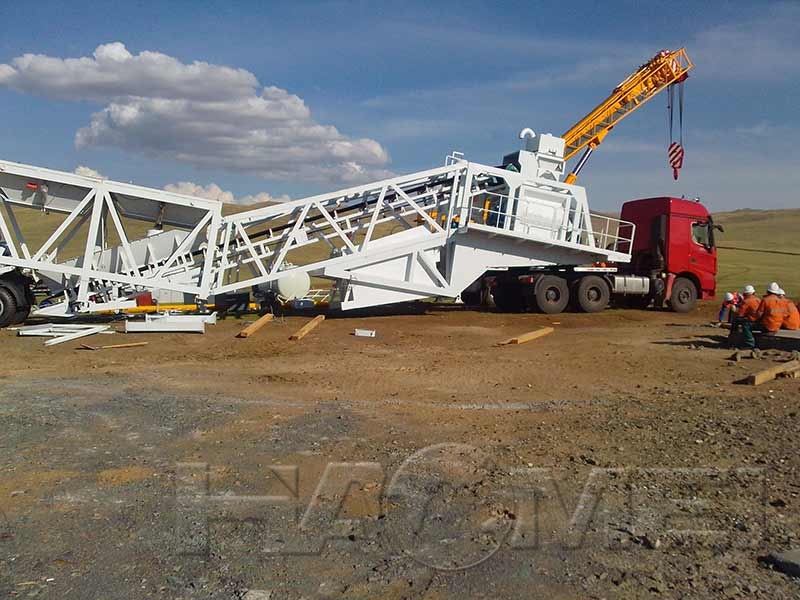
Setup time depends on whether the plant is truly trailerized with quick connections, and how prepared the site is. The biggest delays usually come from utilities and site grading, not the plant itself.
Typical preparation checklist:
Level pad with verified compaction and drainage plan.
Access and turning radius for aggregate deliveries and concrete trucks.
Power plan (grid power details or generator sizing, cable routing, grounding).
Water supply (flow rate and pressure, plus storage tank if supply is unstable).
Aggregate stock layout to avoid contamination and loader conflicts.
Washout area and environmental containment.
With a prepared pad and utilities, some mobile plants can be mechanically positioned and connected within a day. Calibration, trial batching, and moisture adjustment often add another half day to a full day before stable production.
Even if a plant is mobile, most regions still treat it as an industrial activity that can require approvals. The quickest path is to ask the seller for a documentation pack and match it to local requirements.
Common compliance topics you will be asked about:
Dust control: cement silo filter performance, transfer point covers, and housekeeping.
Noise: generator placement, mixer acoustic enclosure, operating hours.
Water and slurry: wash water recycling, settlement pits, no discharge policy.
Traffic management: truck routes, queue area, safety signage.
To reduce complaints, focus on visible controls: keep aggregate stockpiles damp during dry wind, cover conveyors where practical, maintain silo filters, and designate a washout zone away from drains. If your jobs move frequently, maintain a repeatable site setup drawing showing where the plant, bins, and washout go, so you can implement the same controls every time.
Downtime during a pour is usually caused by simple items: worn mixer parts, clogged filters, air leaks, or calibration drift. Mobile plants see extra vibration from transport, so inspection discipline matters.
High impact maintenance points:
Mixer wear parts: paddles, liners, arms, and end seals. Keep a measured wear log rather than waiting for failure.
Weighing system: load cells, junction boxes, and cable protection. Moisture and crushed cables cause unstable readings.
Pneumatics: air compressor, FRL units, solenoid valves, and actuator seals. Air leaks reduce gate response.
Cement screws: check alignment, hanger bearings, gearbox oil, and backup shear pins.
Moisture management: aggregate moisture swings are a hidden quality risk. Even without fancy probes, regular manual checks and recipe adjustments protect slump and strength.
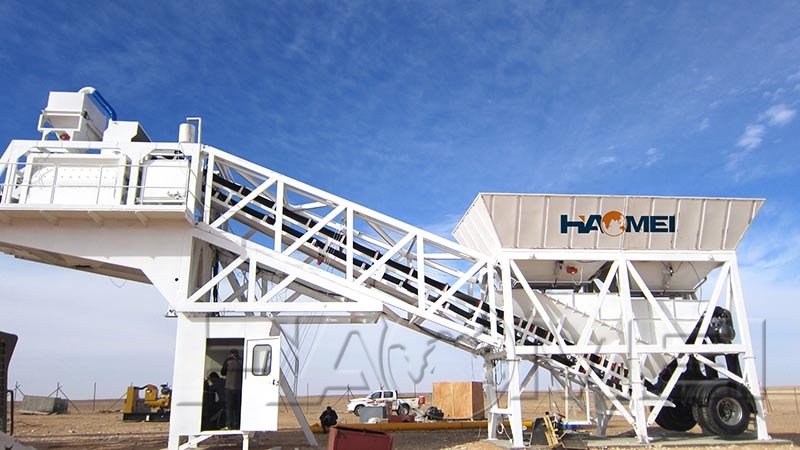
If you are planning mid sized continuous work, choosing a proven configuration with solid after sales support often beats chasing the lowest price. For higher throughput mobile applications, options like YHZS60 Mobile Mixing Plant are frequently shortlisted because they balance output with transport convenience.
| Topic to verify | What to ask | Why it matters on site |
|---|---|---|
| Rated capacity | Rated vs real output on your mix | Prevents underproduction during peak pours |
| Mobilization | Transport dimensions and axle loads | Avoids road restrictions and escort costs |
| Setup needs | Foundation type, ramps, crane requirement | Controls time to first concrete |
| Metering accuracy | Aggregate, cement, water, admixture tolerance | Affects strength consistency and cement consumption |
| Dust and noise | Filter spec, covers, enclosure options | Reduces permit friction and neighbor complaints |
| Spares and wear parts | What is included, lead times, part interchange | Minimizes downtime during critical pours |
| Training and commissioning | Calibration process and operator training time | Prevents early quality issues |
Truck feeding reality: If your site uses a small loader, check aggregate bin wall height, ramp slope, and bucket reach. A plant can be perfectly sized on paper but impossible to feed efficiently.
Concrete quality control: Ask whether the control system supports mix reports, moisture compensation entries, and batch printouts. Documentation is often needed for project QA, not only for internal tracking.
If you are evaluating a mobile concrete batching plant for sale right now, use the questions above as your comparison script. It keeps conversations focused on production readiness, compliance, and serviceability rather than just headline capacity and price.
Original source: https://www.concretebatchplanthm.com/a/mobile-concrete-batching-plant-for-sale.html
Tags: mobile concrete batching plant for sale mobile concrete batching plant price portable concrete batch plant mobile concrete plant
Prev: Planetary Cement Mixer