CONTACT
1
Want to get quotation of concrete batching plant at once? Contact Us. Quick reply is as efficient as our equipment.
+86-15978414719

Aug 25, 2026
A self loading transit mixer combines aggregate loading, water dosing, concrete mixing, transport, and discharge in one mobile machine. It is designed for projects where ready-mix supply is distant, access roads are limited, or concrete demand changes frequently throughout the day. Instead of coordinating separate loaders, batching equipment, and mixer trucks, one operator can produce fresh concrete close to the placement area.
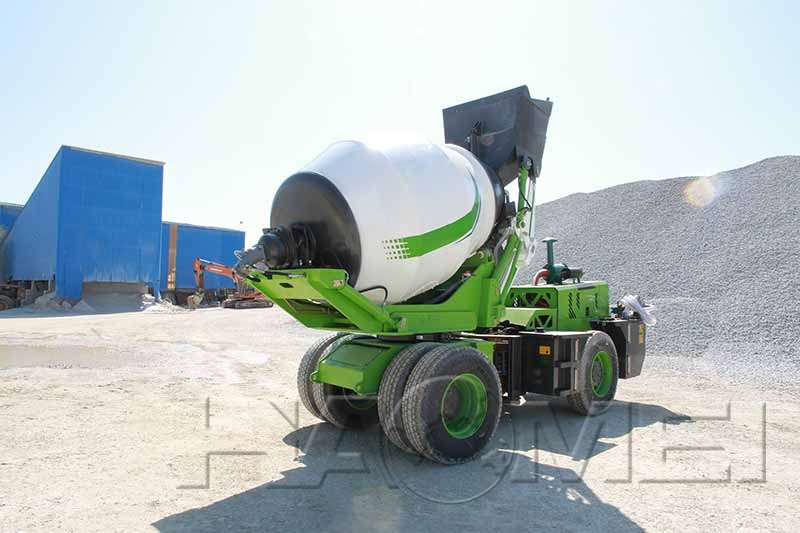
For rural construction, small infrastructure works, foundations, drainage channels, precast yards, and remote industrial sites, this equipment can reduce waiting time between batching and pouring. It also supports better control of batch timing because materials are mixed when the job is ready for concrete.
The main structure normally consists of an articulated or rigid chassis, a front loading bucket, a hydraulic mixing drum, a water tank, a cab, and a discharge chute. The bucket gathers sand, stone, and cement from stockpiles, then transfers them into the rotating drum. Depending on the model, the drum can rotate through a hydraulic drive system and may use a slewing arrangement to improve discharge positioning.
A well-designed drum uses internal mixing blades to lift and fold materials during rotation. Blade geometry matters because it affects mixing uniformity, discharge speed, and the risk of material buildup. The drum should provide adequate volume for the intended batch size without overloading the machine. In practice, rated output capacity, rather than total drum volume, is the more useful figure for production planning.
The chassis requires strong load distribution because it carries the drum, wet concrete, water, and loading forces. Four-wheel drive and four-wheel steering are useful on muddy ground, narrow work areas, and uneven terrain. A compact machine may be appropriate for confined sites, while larger drum capacity is better suited to projects with steady daily concrete demand. For comparison with conventional road-based equipment, a Concrete Mixer Truck is generally intended to transport ready-mixed concrete, while a self-loading unit produces batches directly on site.
| Component | Preferred Design Feature | Practical Benefit |
|---|---|---|
| Mixing drum | Wear-resistant internal blades and smooth discharge path | More consistent mixing and easier cleaning |
| Loading bucket | Reinforced cutting edge and protected hydraulic cylinders | Better resistance to abrasion and impact |
| Chassis | Heavy-duty frame with suitable axle capacity | Stable travel with a full concrete load |
| Water system | Metered tank, pump, and clear level indication | Improved control of water addition |
| Cab and controls | Clear visibility, gauges, and emergency stop functions | Safer operation and easier monitoring |
| Hydraulic system | Filtration, protected hoses, and accessible service points | Reduced contamination risk and faster maintenance |
Material quality directly affects machine life in abrasive concrete service. The bucket cutting edge, drum blades, chute liners, and contact surfaces should use abrasion-resistant steel or replaceable wear parts where practical. These areas are exposed to sand, gravel, cement paste, and repeated scraping. Replaceable liners can lower long-term maintenance cost because heavily worn sections can be renewed without replacing a larger assembly.
Hydraulic hoses should have suitable pressure ratings and abrasion protection. Cylinder rods benefit from corrosion-resistant surface treatment, especially where equipment operates in wet conditions or is washed frequently. Electrical connectors should be sealed against dust and water ingress, while the radiator and hydraulic oil cooler need adequate protection from debris.
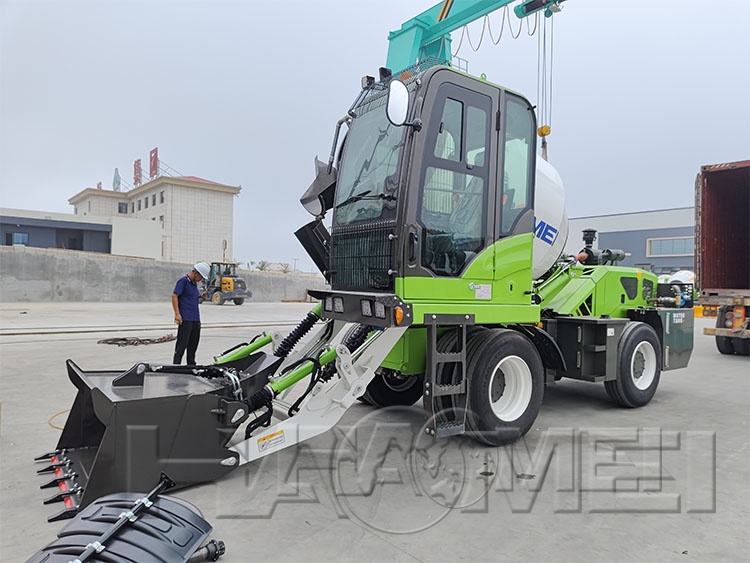
The most important operational advantage is independence. The machine loads its own materials, mixes concrete, and moves it to the pour location. This can reduce dependence on a separate wheel loader and can limit delays caused by external concrete deliveries. It is especially useful when the required concrete grade changes between tasks, such as moving from lean blinding concrete to structural mixes.
Accurate water control remains essential. A water tank and meter help the operator repeat a tested mix design, but they do not replace proper batching practice. Aggregate moisture, cement type, admixture use, and target slump must be considered. Operators should follow the approved mix proportions for the project and avoid adding water merely to make discharge easier. Excess water may reduce strength and increase segregation risk.
When selecting capacity, assess daily concrete volume, travel distance inside the site, aggregate stockpile layout, slope conditions, and available maintenance support. A compact self loading concretem mixer truck may suit narrow-access applications, while larger models can better support continuous foundation or roadwork batches.
Most operating problems can be controlled through inspection, cleaning, and correct loading procedures. The table below identifies common symptoms and appropriate first checks. All repairs involving pressurized hydraulics, electrical circuits, braking systems, or structural components should be carried out by trained service personnel.
| Symptom | Likely Cause | Recommended Action |
|---|---|---|
| Drum rotates slowly or stops under load | Low hydraulic oil, clogged filter, pump wear, or overloaded batch | Check oil level and temperature, inspect filters, reduce batch load, and have hydraulic pressure tested if needed |
| Concrete discharges poorly | Hardened buildup, incorrect drum direction, damaged blades, or overly dry mix | Clean the drum promptly, verify rotation direction, inspect blade condition, and confirm approved mix proportions |
| Bucket lifts weakly | Hydraulic leak, low oil level, damaged cylinder seal, or relief-valve issue | Inspect hoses and fittings for leaks, check oil level, and arrange professional hydraulic inspection |
| Engine overheats | Blocked radiator, low coolant, loose belt, or heavy operation in high ambient temperature | Clean cooling fins, check coolant and belt condition, reduce idle time, and inspect the cooling system |
| Uneven concrete consistency | Inconsistent aggregate moisture, inaccurate water addition, or insufficient mixing time | Measure water carefully, adjust for aggregate moisture, and maintain the specified mixing cycle |
| Excessive machine vibration | Loose fasteners, worn drum support parts, tire damage, or uneven load | Stop operation safely, inspect visible fasteners and tires, then have worn components replaced |
Daily cleaning is one of the most effective maintenance practices. Fresh concrete should be washed from the bucket, drum mouth, chute, and discharge components before it hardens. At the start of each shift, inspect engine fluids, hydraulic oil, tire condition, brakes, lights, hose connections, and drum operation. Grease points should be serviced according to the manufacturer maintenance schedule, with additional attention in dusty or wet environments.
A disciplined operator also records operating hours, fuel use, hydraulic oil changes, filter replacements, and wear-part inspections. These records help identify recurring faults early and support planned replacement of drum blades, bucket edges, seals, and hydraulic components before a site stoppage occurs.
Original source: https://www.concretebatchplanthm.com/a/self-loading-transit-mixer.html
Tags: Self Loading Transit Mixer Self Loading Mixer Truck