CONTACT
1
Want to get quotation of concrete batching plant at once? Contact Us. Quick reply is as efficient as our equipment.
+86-15978414719

Nov 12, 2025
The core requirement for mobile concrete plants is "construction and use as needed, relocation and deployment as required," but traditional cement silos are large and complex to install, making them unsuitable for the mobility of sites. The container silo, however, breaks these limitations with their "modular design": using standard container dimensions, they can be used directly as independent storage units, requiring no complex foundation construction. Upon arrival, they only need simple fixing before deployment, significantly shortening the site construction cycle.
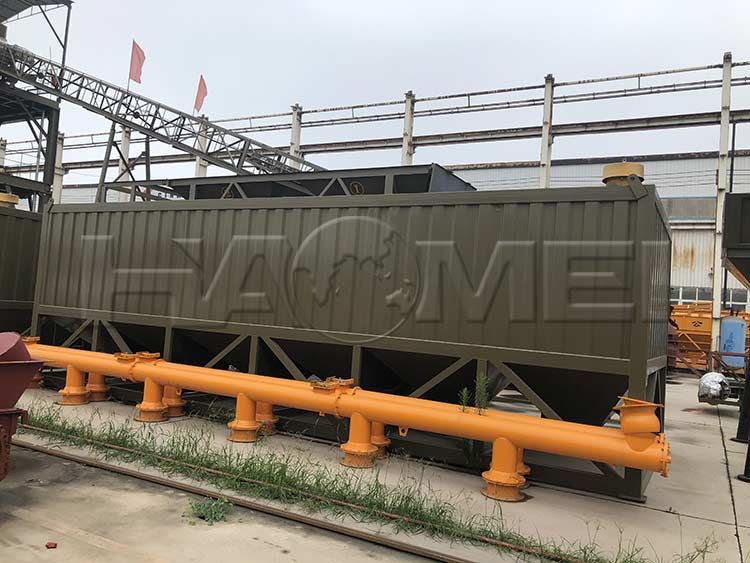
More importantly, they precisely solve two core problems in cement storage: firstly, the cement storage silo's sealed structure, combined with moisture-proof and dust-proof designs, effectively isolates moisture and impurities in the air, preventing cement from becoming damp and clumping, ensuring stable raw material quality—crucial for concrete strength.
Secondly, the mobile cement silo is equipped with intelligent components such as level gauges and unloading valves, allowing staff to monitor the remaining cement level in real time and control the unloading speed as needed, avoiding both "work stoppages due to material shortages" and "waste from excessive unloading," shifting cement management from "passive response" to "proactive control."
The "mobility" of mobile concrete plants is often limited by the ease of equipment transportation. Traditional cement silos require disassembly and transport by large trucks, which is not only time-consuming and labor-intensive but also potentially causes equipment damage during loading and unloading.
Containerized cement silos, on the other hand, are standard container sizes and can be directly adapted to container trucks, rail transport, and even sea freight. Whether transporting from a factory to a construction site or moving from one site to another, the transfer can be completed through conventional logistics, eliminating the need for additional disassembly and assembly.
This not only reduces the manpower and material resources required for transportation but also lowers the risk of equipment damage, allowing mobile concrete plants to "respond quickly to needs"—for example, in emergency road repairs, they can quickly set up the site and replenish cement, significantly improving emergency operation efficiency.
For mobile concrete plants, "efficiency" and "cost" are directly linked. Traditional cement storage methods suffer from unstable unloading speeds and time-consuming manual monitoring of remaining cement, easily leading to interruptions in concrete production.
The portable cement silo, through "automated adaptation," perfectly solves these pain points: It can directly interface with concrete mixing equipment, precisely controlling the cement delivery speed through unloading valves to ensure a continuous and stable mixing process, reducing time wasted due to material shortages.
Meanwhile, the modular design allows for "on-demand" cement storage capacity—small construction sites can deploy 1-2 silos, while large projects can flexibly increase the number, avoiding problems such as "over-storage leading to cement expiration" or "insufficient storage requiring frequent replenishment."
Furthermore, the cement silo materials are durable and have low maintenance costs, significantly reducing the operating costs of mobile concrete plants over the long term, achieving a win-win situation of "flexible operation" and "cost control."
Original source: https://www.concretebatchplanthm.com/a/container-silo-a-good-match-for-mobile-concrete-plant.html
Tags: mobile cement silo